
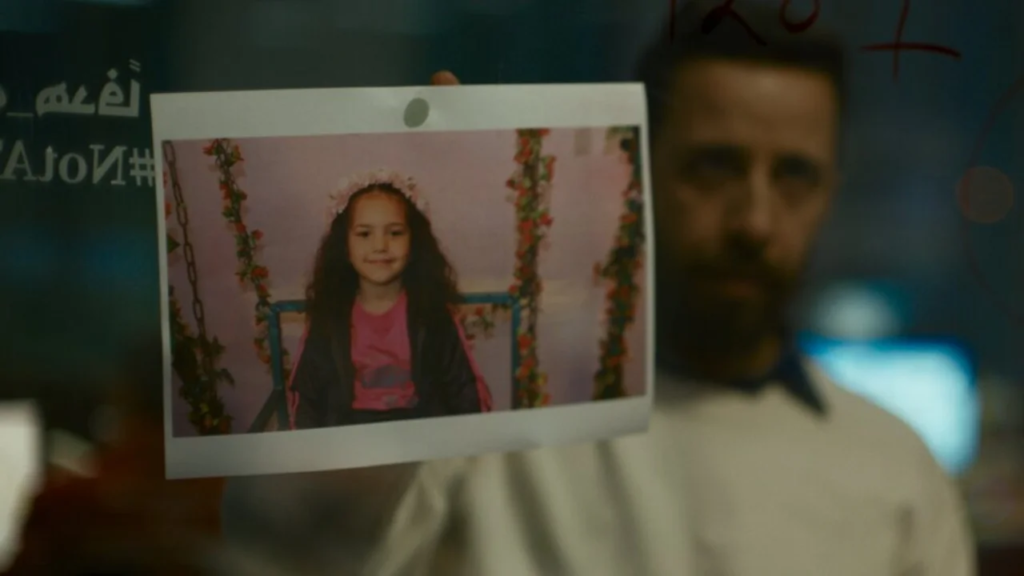
After months of uncertainty and political controversy surrounding its release, The Voice of Hind Rajab has officially secured theatrical clearance in India. The internationally acclaimed drama, directed by Kaouther Ben Hania, is now set to release in Indian theaters on June 19 after reportedly remaining stuck with the Central Board of Film Certification (CBFC) for months.
What initially appeared to be a routine certification delay gradually evolved into one of the most politically sensitive film controversies in recent Indian cinema, sparking debates around censorship, diplomacy, artistic freedom, and the role of geopolitical considerations in film certification decisions.
The film itself is based on the real-life story of five-year-old Palestinian girl Hind Rajab, whose death became one of the most emotionally devastating and internationally discussed incidents connected to the Israel-Gaza conflict in 2024. Hind Rajab was reportedly trapped inside a vehicle in Gaza after an attack involving the Israel Defense Forces (IDF), with emergency calls from the child and rescue workers later circulating globally and drawing widespread international attention to the tragedy.
Directed by Tunisian filmmaker Kaouther Ben Hania, The Voice of Hind Rajab dramatizes the child’s final hours while focusing heavily on the emotional intensity of the real emergency communications surrounding the tragedy. The film approaches the subject through an intimate and restrained perspective rather than large-scale political dramatization, a creative choice that critics later praised extensively during its international festival run.
The project is an international co-production involving Tunisia, France, Belgium, Qatar, and Saudi Arabia, further highlighting the global scale behind the film’s development and distribution. It premiered in the Venice Days section at the Venice Film Festival before continuing its festival journey through major international events including the Toronto International Film Festival, BFI London Film Festival, and Palm Springs International Film Festival.
The film later became Tunisia’s official submission for the Academy Awards and ultimately secured a nomination for Best International Feature Film, further elevating its international visibility. However, the conversation surrounding the film in India increasingly shifted away from awards recognition and toward censorship concerns.
Earlier reports surrounding the film’s delayed India release had already intensified attention around the project through debates surrounding certification delays, political sensitivities, and diplomatic concerns. The controversy escalated further after distributor Manoj Nandwana publicly alleged that a CBFC member informally told him the film’s release “would break up the India-Israel relationship.”
That statement quickly triggered criticism from journalists, filmmakers, politicians, and free speech advocates, many of whom questioned whether geopolitical considerations were influencing film certification decisions. Kaouther Ben Hania herself reportedly questioned the logic behind fears that a film release could negatively impact diplomatic relations, arguing that cinema and artistic expression should not threaten international relationships.
The film’s critical response following its international festival run further elevated global attention around the project. Critics widely praised Ben Hania’s restrained storytelling approach, emotional realism, and refusal to sensationalize the tragedy at the center of the narrative. Several reviews specifically highlighted the devastating emotional impact of the emergency call sequences, with the sound design and performance-driven filmmaking receiving particular acclaim.
Critics also praised the film for focusing on the human cost of conflict rather than reducing the story to purely political messaging. That approach helped the film resonate emotionally with audiences across multiple festivals while also positioning it within broader conversations surrounding cinema’s role in documenting humanitarian crises and contemporary warfare.
Now, after months of scrutiny and public debate, the CBFC has reportedly granted the film an ‘A’ certificate without cuts, allowing the theatrical release to finally proceed in India. Following the certification decision, distributor Manoj Nandwana publicly thanked the CBFC for allowing Indian audiences to experience what he described as an important cinematic work. “At Jai Viratra Entertainment Limited, we firmly believe that cinema serves as a powerful medium for storytelling, dialogue, and understanding diverse human experiences. We appreciate the thoughtful consideration extended by the CBFC in evaluating the film and facilitating its release in India,” Nandwana added in his statement, as quoted by agencies.
With its India release finally confirmed, The Voice of Hind Rajab now enters theaters carrying not only major international acclaim but also months of debate surrounding censorship, politics, diplomacy, and artistic freedom in India.
Read More: