
Every film feels complete when we watch it. A conversation begins, a relationship grows, a conflict unfolds and, eventually, the story reaches its end. It all appears to have happened in one uninterrupted flow.
But filmmaking has never worked that way.
A film is built in fragments. A scene filmed on the first day may appear near the end of the story. A heartfelt reunion might be shot before the actors have even met each other on screen. A climax can be completed months before the opening sequence. Between those shoots, locations change, budgets shift, seasons pass and life quietly continues outside the film while the film itself waits to become whole.
Yet, by the time it reaches us, none of those fragments are visible. They somehow merge into a single, seamless experience.
This raises an interesting question. Why do some films complete their shooting schedules in a few weeks while others take years? Why can two films of almost identical length have entirely different production journeys?
The answer lies in one simple truth, no two films are made the same way, because no two stories ask to be told in the same way.
Ideally, every filmmaker would like to let the story dictate every production decision. But filmmaking rarely happens under ideal circumstances.
Some directors have the privilege of extending schedules, revisiting locations years later or waiting until every condition feels right. Others, particularly independent filmmakers, don’t. They work within fixed budgets, limited shooting days and timelines that cannot endlessly move simply because the story asks them to. Every extra day means additional costs. Every delay affects an entire crew. Sometimes compromises become unavoidable.
And yet, regardless of whether a film is made with complete freedom or within immense restrictions, one thing remains constant. The production eventually bends itself around what the film requires.
American filmmaker Richard Linklater, throughout his career, has repeatedly made creative decisions that differ from conventional filmmaking, not for the sake of experimentation alone, but because the stories themselves demanded a different relationship with time.
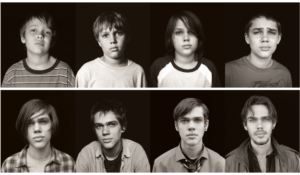
Boyhood (2014) remains one of the finest examples of this. The film follows the childhood of Mason from the age of six until he leaves for college. On paper, there are countless ways this story could have been made. Different actors could have portrayed different ages. Makeup could have aged the cast. Visual effects could have subtly altered appearances. Instead, he allowed time itself to become part of the filmmaking process.
He explained, “We shot it roughly every year. We’d shoot every six months to eighteen months, but we shot twelve times over twelve years.” Rather than recreating childhood, he simply let it happen organically with the film. The audience isn’t informed that years have passed. They quietly discover it themselves. A haircut looks different. A child’s voice becomes deeper. Parents appear slightly older. Someone has grown taller.
The smallest observations slowly accumulate until we realise that life has continued between the scenes, even when the film wasn’t being shot.
Linklater spoke about wanting those transitions to remain almost invisible. “The transitions were meant to be very subtle and just observational. I didn’t want the audience to be led in any way other than their own observation… I wanted the film to feel like a memory, almost like you’re older looking back.”
That is what makes Boyhood feel like a lived experience. The passing of time isn’t announced. It is observed.
Even outside the camera, life continued influencing the story. The actors weren’t frozen in time between shoots. They lived normally, grew older, developed new interests and changed as people. Linklater would often make small adjustments to the screenplay every year to accommodate these natural changes and even reflect the popular culture of that particular period. The film wasn’t forcing reality to resemble fiction. Rather, fiction was gently adapting itself to reality.
Interestingly, this extraordinary production wasn’t backed by an extraordinary budget either. Made for roughly $2.5 million, Boyhood was filmed over only a few days each year. Instead of treating it as one massive production, Linklater essentially approached it as a series of small shoots spread across twelve years. Individually, they were simply fragments. Together, they became one continuous life.
If Boyhood is about allowing life to pass naturally, Richard Linklater’s Before Trilogy explores what happens when life is allowed to return.
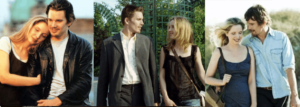
Before Sunrise (1995), Before Sunset (2004) and Before Midnight (2013) were released roughly nine years apart. Together, they tell the story of Jesse and Céline at three very different stages of their lives. The first film captures the excitement of possibility. The second is filled with questions of what could have been. By the third, love has settled into something far more complicated than romance alone. The passage of time is not simply written into these films. It is genuinely lived.
Ethan Hawke and Julie Delpy age because they themselves have aged. The trilogy could have easily continued the story with actors made to look older. Instead, Linklater once again chose patience over convenience and ease.
Of course, not every film asks for years to pass. Instead of stretching time, other films demand that everything happens within an impossibly small window. In such films, it is no longer the story spanning years that determines the production timeline. It is the technical language of the film itself.
Russian Ark (2002) is a great example of this. Directed by Russian filmmaker Aleksandr Sokurov, the film unfolds as one uninterrupted journey through the Winter Palace of the Hermitage Museum. The audience drifts through centuries of Russian history without ever feeling the interruption of a cut. To achieve that illusion, the film itself had to embrace an extraordinary production process. It was shot in one continuous eighty-seven-minute Steadicam take. Only one day was available to shoot inside the museum. More than two thousand performers, live orchestras, elaborate costumes, camera choreography and countless moving parts had to function perfectly together because there wasn’t the luxury of trying again over multiple production days.
The story demanded continuity. The production had no choice but to pursue it.
Years later, a German crime thriller film Victoria (2015) approached a similar idea from an entirely different perspective. Sebastian Schipper’s 138-minute thriller was also filmed in one continuous take, moving through the streets of Berlin between 4:30 and 7:00 in the morning. But what makes Victoria remarkable isn’t just that it was shot without visible cuts. It is also the freedom the film allowed itself during the process.
The screenplay was reduced to around twelve pages, leaving almost all of the dialogue to be improvised by the actors. Instead of dictating every spoken word, Schipper gave them the emotional destination of each scene and trusted them to discover the path themselves. On many productions, every line of dialogue has already been decided long before the actor steps onto the set. Here, the actors were given space to respond to one another naturally, as long as they remained truthful to the emotional needs of the story.
The film required spontaneity. So, the production made room for it.
The audience usually assumes that every production follows roughly the same process, only with different stories. In reality, even the process itself keeps changing from one film to another. Some directors meticulously plan every frame months in advance. Others deliberately leave room for discovery. Neither approach is inherently better or right. They simply belong to different films with different needs.
Even films attempting similar technical ideas often arrive there through entirely different journeys. Alfred Hitchcock’s Rope (1948) and Alejandro G. Iñárritu’s Birdman (2014) illustrates this beautifully.
Both films create the illusion of unfolding in one uninterrupted shot. Yet, neither is actually one continuous take. Instead, they are carefully constructed from multiple shots hidden so seamlessly that the audience rarely notices where one ends and another begins.
In Rope, Hitchcock’s ambition was limited by the technology of the 1940s. Film magazines could only hold roughly ten minutes of footage at a time. Rather than abandoning the idea of real-time storytelling because of this, he carefully choreographed actors, camera movements and even the movement of furniture so that every necessary cut could disappear behind a dark jacket, the back of a chair or a passing object. The technical limitation did not defeat the idea. It simply forced the production to invent around the available resources.
Birdman faced a different challenge altogether. By the time Alejandro G. Iñárritu conceived the film, digital technology had evolved enough to make much longer takes possible. But that did not suddenly make the production easier. Entire sequences involving long stretches of dialogue had to be rehearsed repeatedly. The actors weren’t simply remembering lines. They were remembering movements, timing, entrances, exits and interactions with a constantly moving camera. Camera operators, lighting technicians, and sound teams all had to function almost like dancers performing a single piece of choreography. One mistake several minutes into a take often meant beginning again. Months of preparation existed so that the finished film could feel effortless.
Ironically, the smoother a film appears on screen, the more invisible the labour behind it is.
Sometimes, the stretch of production is the pursuit of a very particular vision that extends the life of a film. K. Asif’s Mughal-e-Azam (1960) stands as one of Indian cinema’s most remarkable examples. The film took well over a decade to complete. That timeline wasn’t simply the result of production delays. It was shaped by Asif’s refusal to compromise on authenticity and scale. Museum-grade armour was specially commissioned. Footwear was crafted by artisans from Agra. The legendary Sheesh Mahal set alone reportedly took nearly two years to build, with thousands of mirrors carefully placed before filming could even begin. Lighting that set presented its own challenge, requiring entirely new approaches so that the countless reflections wouldn’t overwhelm the camera.
It is easy to look at a long production schedule and assume something must have gone wrong. However, sometimes a film simply refuses to become anything less than what its creator imagines it to be.
A filmmaker may know exactly how a scene should ideally be shot, yet choose another approach because that is the only one the production can realistically afford. Sometimes scenes are rewritten because locations become unavailable. Sometimes weather forces an entirely different solution. Sometimes the most memorable moments in a film are born not from careful planning but from adapting to circumstances that nobody could have predicted or some even from mistakes.
Filmmaking, in many ways, is simply the art of continuously solving problems without losing sight of the story.
That is why production timelines can never truly be compared. Two films may both run for two hours. One might have required twenty-five shooting days. Another might have spent years in development before the camera was ever switched on. Looking only at the finished runtime tells us almost nothing about the life the film lived before reaching the screen. And sometimes, that life never reaches completion at all.
Cinema is filled with films that were abandoned midway through production because funding disappeared, creative differences emerged or unforeseen circumstances made continuation impossible. Not every production reaches the finish line.
Frequently more than not, films have their own journey, almost as though the film itself becomes another character in the process. Sometimes that journey lasts only a few weeks. Sometimes it quietly stretches across years. Sometimes it changes direction midway. Sometimes it survives obstacles the audience will never know existed.
And sometimes, against all odds, every broken piece somehow finds its place.
Read More:
- Hollywood Box Office Failures 2025 Explained — What The Year’s Biggest Misses Taught Us
- From Water to Fire: How Avatar’s Visual Language Is Evolving
- Why James Cameron’s Films Refuse to Fade — Even When the Box Office Is Done
- Best Santa Claus Movies of All Time, Ranked by Impact and Legacy
- When Beauty Becomes a Prison: The Eternal Relevance of Jalsaghar