
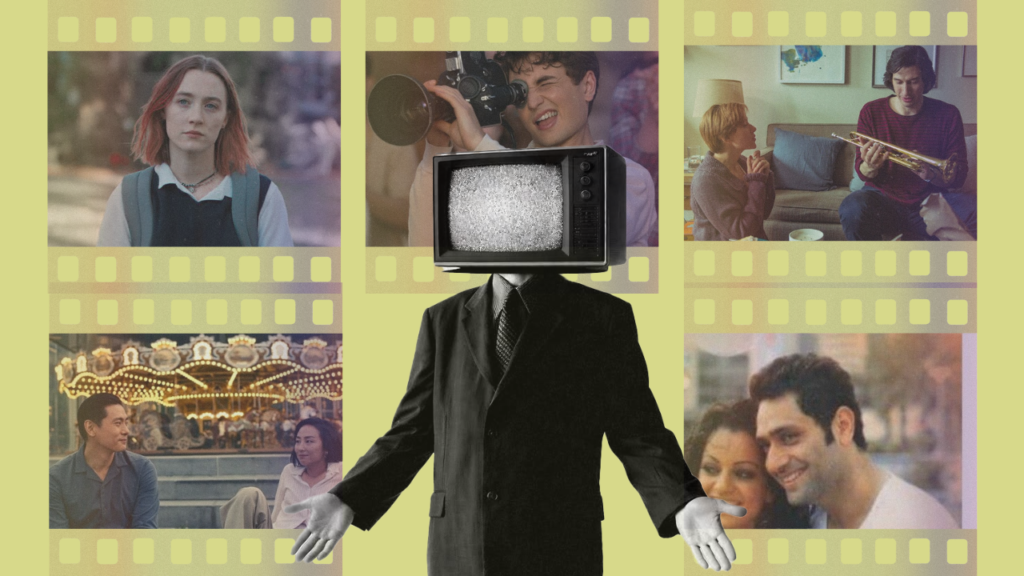
Semi-autobiographical cinema has always occupied a deeply personal space in filmmaking. Directors and writers have often cited inspiration from their own lives, though to what extent that inspiration shapes a film is always debatable. Some films recreate real events almost exactly as they happened, while others simply carry the emotional truth of a person’s life. But regardless of how direct or distant the connection may be, there is something monumental about art when it carries a personal touch.
As a filmmaker, the wish is probably always to make something that resonates with people, if not most, then at least a few. You try to create something where the feelings are on the surface, where they reach inside you rather than simply brush past you. The filmmaking process itself is incredibly intricate, every scene carefully detailed and constructed, but for the audience, it is meant to feel effortless, readily available, right there for you to feel and go on a trip with. A movie buff’s interpretation may differ, of course, but that is another conversation altogether.
A great filmmaker never lets you feel the effort behind every frame. The smoother and simpler a film feels, not simplistic, but simple, the more depth it usually carries. And often, that depth might come from something personal.
Autobiographical and semi-autobiographical films are born when lived experiences are transformed onto paper. Cinema history is filled with such films, where directors and writers borrow from memory, relationships, grief, childhood, or even fleeting moments from their own lives.

One of the most beautiful examples of this is the American coming-of-age comedy drama Lady Bird (2017), written and directed by Greta Gerwig in her solo directorial debut. What makes Lady Bird different from many semi-autobiographical films is that Greta is not necessarily recreating exact incidents from her life. Instead, she captures her perception of life, relationships, feelings, and home, and moulds the story around those truths.
The film follows Lady Bird, a rebellious teenager desperately trying to come into her own, refusing to be defined by the world around her, making her own rules, only to eventually circle back to where she started in search of the right answers. But while the film centres around Lady Bird, it is equally the story of her mother. At its heart, it becomes a love story between a mother and daughter.
Greta Gerwig once said, “Nothing in the movie literally happened in my life, but it has a core of truth that resonates with what I know. I really wanted to make a film that was a reflection on home and what does home mean and how does leaving home define what it is for you and your loved one.”
That emotional truth is what makes the film feel so intimate.
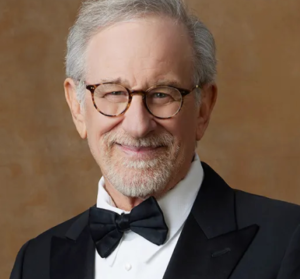
On the other hand, The Fabelmans (2022), the American coming-of-age drama directed by Steven Spielberg and co-written with Tony Kushner, feels far closer to a direct autobiography. The film is almost entirely shaped around Spielberg’s own childhood and journey into filmmaking. It traces his life from a very young age, how he saw the world, his struggles, his dreams, his first true love of cinema, and the role his family played in shaping that passion.
And perhaps that is what makes the film so emotionally overwhelming. It is one thing to write about your own life, but something entirely different to direct and recreate it yourself from start to finish.
Spielberg himself admitted how difficult the process became. He said, “Filming was hard because the more I shot in the house, the more I remembered how much I loved living there. I loved having my family around me. And so, I mourned the loss of my childhood as I was recreating aspects of my childhood.” The act of recreating memory became an act of reliving it.
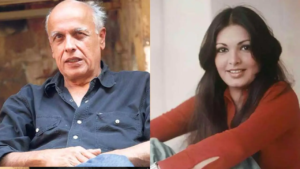
In Indian cinema, Woh Lamhe (2006), the Hindi-language romantic drama directed by Mohit Suri and written by Mahesh Bhatt, stands as another deeply personal film. The story recounts the relationship between actress Parveen Babi and Mahesh Bhatt, and the film is widely seen as a homage to her life and struggles. Both Bhatt and Suri have openly spoken about her influence, not just on this film, but on Bhatt’s filmmaking journey as a whole.
In many ways, Parveen Babi’s story echoes throughout Mahesh Bhatt’s work. Arth (1982), a Hindi drama film written and directed by Mahesh Bhatt, is another significant example where fragments of personal life were transformed into cinema. It shows how certain memories or relationships continue to follow filmmakers, reappearing in different forms across different films.

Another remarkable example is the American coming-of-age drama Dead Poets Society (1989), directed by Peter Weir and written by Tom Schulman, which also won him an Oscar for Best Original Screenplay. Inspired by Schulman’s own school and college experiences, the screenplay draws from people who existed in his real life, especially two teachers he deeply admired. The film follows Todd Anderson and Neil Perry, students at the strict Welton Academy boarding school, whose lives are transformed by their unconventional English teacher, John Keating. Though the story is fictionalized, its emotional roots feel deeply personal. Tom Schulman reflected on this while speaking about the screenplay, saying, “I think in some sense this was me writing about what I would hope I would have been at the time, my journey from that shy guy that I was to someone who could do something like this.” He also acknowledged the direct inspiration behind Mr. Keating, “The main inspiration of this movie was my love for those two teachers who were like my Mr. Keating.”
What is perhaps most interesting is how Schulman describes the process of fictionalizing one’s own self. He said, “It’s not really difficult to keep it objective if the character is about oneself because once you get into the fiction of it, you’re just dealing with the character.” This idea captures the essence of semi-autobiographical cinema perfectly. Even when filmmakers write about themselves, fiction creates enough distance for them to transform the littlest of personal experience into storytelling.
A more recent example is Past Lives (2023), the romantic drama written and directed by Celine Song in her feature directorial debut. Inspired by real moments from Song’s own life, the film explores reconnecting with a past love years later. It might feel like such a simple, everyday concept, something so many people might quietly carry within themselves, yet the way the film approaches it gives the story immense emotional nuance and weight. You feel the authenticity of the emotions, and that is what makes the film linger on.

Similarly, filmmaker Noah Baumbach has repeatedly transformed personal experiences into cinema. Both the American independent comedy-drama The Squid and the Whale (2005) and the drama Marriage Story (2019) are rooted in deeply personal experiences, one inspired by his parents’ divorce, and the other by his own.
What Baumbach captures so painfully well is not just divorce itself, but the emotional aftermath surrounding it. In The Squid and the Whale, the focus heavily rests on the capture of the entire family going through it, and everyone’s response to it, both individually and collectively. What I however find most touching is his capture of the children’s experience, who are caught within the chaos, the unfair victims trying to cope with something they do not fully understand. Marriage Story, meanwhile, captures the child’s experience through his parent’s separation more quietly, observing the emotional collapse primarily through the two individuals involved. Yet both films carry the same emotional honesty.
People often say that real life is different from cinema, and that is largely true. But to think that fictionalized stories are somehow more emotionally complicated or raw than reality itself feels wrong. Real life is often far stranger, messier, and more emotionally complex than imagination could ever fully recreate.
What writers imagine for films may feel shocking or extraordinary, but chances are that somewhere, someone has lived through something even more devastating, beautiful, or surreal. Different people walking down the street every day could be carrying stories that would feel too fictional to even believe if heard out loud.
Of course, many films are entirely fictional. But even within fiction, there is often something personal hidden underneath. A fear, a memory, a relationship, a longing, a regret, anything. I feel something belonging to the writer or director inevitably finds its way into the work. And perhaps that is why semi-autobiographical cinema feels so human. It reminds us that films are not created in isolation from life. They are more often than not reflections of it.
There are countless films like these across world cinema, some openly autobiographical, some loosely inspired, and some only emotionally personal in fragments. But almost every film contains some reflection of the person who made it, even if only in the smallest and most intimate ways.
Tom Schulman perhaps summed it up best when he said, “I think all scripts are really about the writer. You’re writing about yourself one way or the other.”
More Articles: