
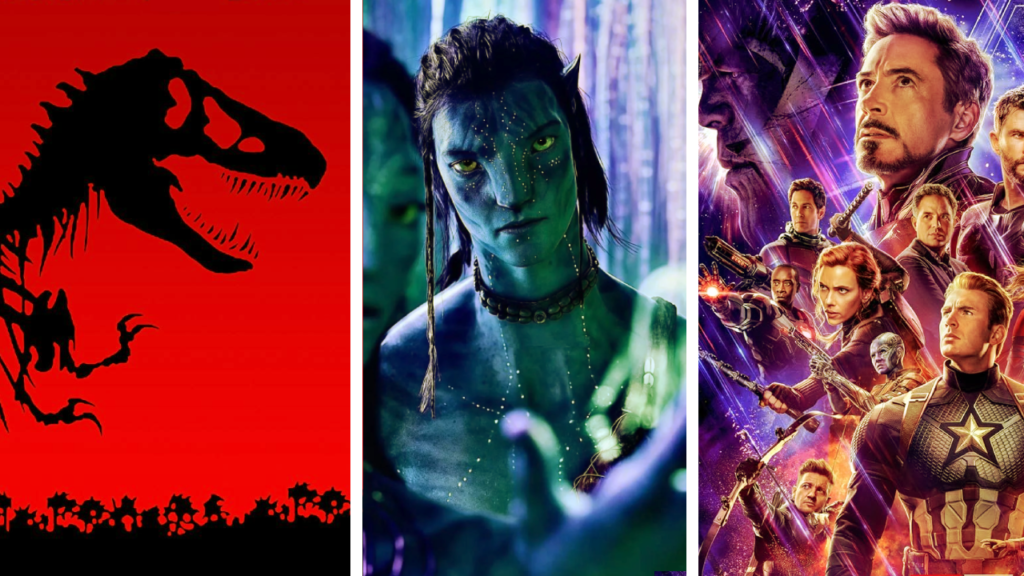
The most buzzing film around your theatres today, chances are, might be a Hollywood film.
Films like Obsession, Toy Story 5, Backrooms, and the obsessive buzz surrounding upcoming releases like The Odyssey and Spider-Man. Walk into a multiplex today and you’ll notice something interesting. These films aren’t simply releasing in India anymore. They’re becoming events. People are booking first-day shows, avoiding spoilers, watching breakdown videos before release, and in many cases, returning to theatres for a second or even a third watch. Some of these films stay in theatres for weeks because the demand simply doesn’t disappear.
But this is about today. Now, let’s go back a little. Because this wasn’t always the case.
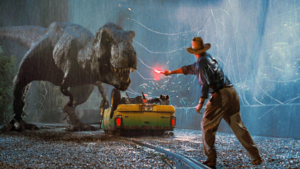
Some fifteen twenty years ago, Hollywood wasn’t competing for the Indian audience in the way it does today. It existed, but mostly within a very small audience that watched English films. Foreign releases made up only a tiny fraction of the Indian box office, largely because language itself was a barrier. Then, in 1994, Jurassic Park was released in Hindi, Tamil and Telugu. It sounds normal today, but back then it was a huge experiment. And it worked. Audiences who may have never watched a Hollywood film before suddenly found themselves watching dinosaurs on the big screen in their own language. That one decision quietly changed the way Hollywood looked at the Indian market. If spectacle could cross language, then the audience would too.
Then came the 2000s, and with it, multiplexes.
Theatres themselves started changing. There were bigger screens, better sound, cleaner auditoriums, multiple screens under one roof. More importantly, Hollywood films no longer reached India months after the rest of the world had seen them. They started releasing almost simultaneously with the US. Suddenly, watching Spider-Man, Harry Potter or Pirates of the Caribbean wasn’t something Indians had to wait for, like it was earlier. They became part of the same global conversation.
Then came Avatar. What it did was much bigger.
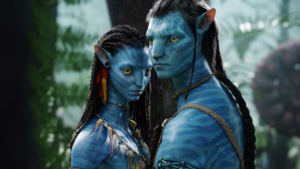
In 2009, it became the first Hollywood film to cross the ₹100 crore mark in India. That wasn’t just another box office milestone. It was proof that a Hollywood film could stand shoulder to shoulder with the biggest domestic releases. India wasn’t just an overseas market anymore. It had become one of Hollywood’s important theatrical audiences.
By the following decade, the relationship had become much stronger. Marvel had arrived. So had massive franchises like Fast & Furious, Mission: Impossible and Jurassic World. Every release wasn’t just another film, it was another chapter in a story people had already invested years into. That’s one thing Hollywood has understood exceptionally well. Franchises aren’t built overnight. They’re planned years in advance. Audiences don’t just return for characters; they return because they feel part of an evolving universe that gets better each time. By 2019, Hollywood films collectively earned nearly ₹1,600 crore in India, accounting for around fifteen percent of the country’s box office, the highest share the industry had seen before the pandemic. Regional dubbing played an enormous role in that growth. Hindi, Tamil and Telugu releases meant these films were no longer restricted to English-speaking audiences.
But box office numbers alone don’t explain why these films travel so well.
What people often call “Hollywood magic” usually begins years before a camera is even switched on. Studios spend years in development. Entire departments work only on concept art. Storyboards become animated pre-visualizations. Worlds are designed long before they’re built, production designers, sound engineers, production teams, VFX artists, and more experts behind the scenes, all shape the film long before audiences ever see a trailer. The objective isn’t simply making a film look expensive. It’s creating an experience that almost demands to be watched inside a theatre.
And that’s perhaps where Hollywood’s biggest strength lies. It experiments. Not every experiment succeeds, but it isn’t afraid to make them. A film about blue aliens living on another planet. An interconnected cinematic universe stretching across dozens of films. A three-hour historical drama about the man behind the atomic bomb.
None of these sound like obvious commercial ideas on paper. Yet, someone chose to back them. That’s an important distinction when looking at just a one-liner of a film.
Hollywood doesn’t become successful because every film works. It becomes successful because it’s willing to make films that might not.
The audience, after all, craves novelty. Not because they’re tired of one particular industry, but because that’s simply how entertainment works. The familiar eventually becomes ordinary. Stories that once felt exciting slowly become predictable. Whether it’s Hollywood, Bollywood, Korean cinema, or Japanese animation, audiences eventually look towards whatever offers them something they haven’t experienced before.
Another interesting detail is that India isn’t just consuming these films anymore. It’s helping create them. Over the last two decades, Indian VFX companies have become trusted partners on some of Hollywood’s biggest productions, contributing visual effects work to films across franchises like Avatar, Marvel, Disney and Star Wars. While the stories may be written and made elsewhere, pieces of these cinematic worlds are often being built by artists sitting in Indian studios.
Then the pandemic happened.
For a brief period, the momentum slowed. Superhero fatigue became a real conversation across the world, and India wasn’t immune to it either. But something interesting followed. Audiences didn’t stop watching Hollywood. They simply became more selective. Avatar: The Way of Water reminded everyone that large-scale spectacle still had an audience. Then Oppenheimer proved that even a three-hour dialogue-heavy historical drama could become a theatrical event if the filmmaking itself felt remarkable.
Which brings us back to today.
Walk around your nearest multiplex again. The buzz isn’t necessarily around a country anymore. It’s around an experience. It’s around the story.
People aren’t buying tickets because a film is American. They’re buying them because they’re curious. Because they want to witness something new. Because somewhere along the way, Hollywood mastered the art of turning a film release into an event that people don’t want to miss, and if they do, there’s fear of missing out.
And perhaps that’s the biggest reason its presence in India has only been growing.
Read More:
- From Water to Fire: How Avatar’s Visual Language Is Evolving
- Why India Still Doesn’t Have Its Own Pixar
- The Vanishing Art of Literary Adaptation in Indian Films
- Framing Emotions: The Invisible Language of Cinematography
- Cut, Cut, Cut! Bollywood’s Obsession with Hyperactive Editing