
We celebrate when a film gets a sequel. The announcement alone carries a strange kind of reassurance, something we loved is not over yet. The world will return. The characters will breathe again. But somewhere between excitement and expectation lies a quieter, more uncomfortable question, should every story be continued?
Cinema, at its most powerful, understands the value of an ending. And yet, modern filmmaking increasingly resists closure. Endings are no longer conclusions, they are invitations. Not to reflect, but to return.
Why Sequels Work
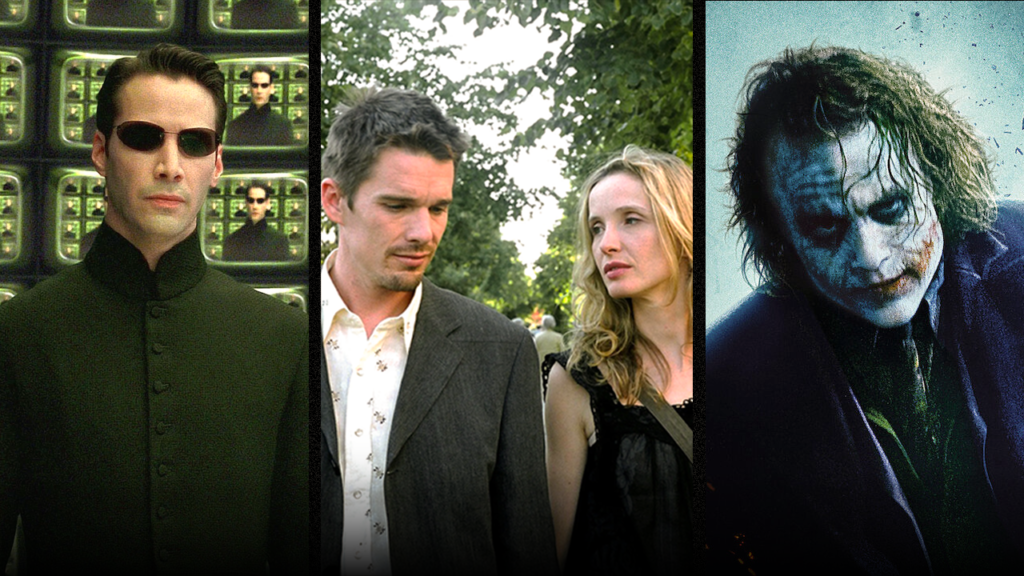
At their best, sequels do something rare, they don’t just revisit a story, they reframe it. There is a particular intimacy in returning to characters we already know. Time has passed, both for them and for us. The relationship is no longer built from scratch, it is remembered, carried forward. In films like Before Sunset, the sequel doesn’t rely on spectacle or scale. It relies on time. It trusts that what has changed between two people is more compelling than what is happening around them. Similarly, Toy Story 3 transforms nostalgia into acceptance. It does not merely continue the story of toys, it reflects on growing up, on letting go, on the quiet inevitability of change. The sequel becomes less about the plot and more about perspective. This is where sequels find their true strength not in expansion, but in evolution.
Even within larger cinematic worlds, a sequel can elevate what came before. The Dark Knight doesn’t just extend the narrative of its predecessor, it deepens its moral universe. It asks harder questions, takes greater risks, and in doing so, justifies its own existence. A meaningful sequel is not built on the success of the first film. It is built on what the first film could not yet say.
Where Sequels Fail
And yet, for every sequel that deepens, there are many that simply repeat. The most common failure of a sequel is not that it is bad, but that it is familiar in the wrong ways. The same structure, the same conflicts, the same emotion, only louder, bigger, more exaggerated. What was once fresh becomes formula. The Hangover Part 2 is often cited not because it fails completely, but because it mirrors its original too closely. The sense of surprise that defined the first film is replaced by predictability. The sequel does not build on the idea, it reproduces it. There is also a quieter, more damaging consequence, the dilution of the original film’s impact.
Some stories are powerful precisely because they end where they do. Their ambiguity, their restraint, their finality, these are not limitations, but strengths. When such stories are extended, the mystery can fade, the emotional clarity can blur. In cases like The Matrix Reloaded, the expansion of the narrative adds complexity, but not always depth. What was once elegant becomes dense. What was once intuitive becomes explained. And in that explanation, something is lost.
Perhaps the real issue is not that sequels exist, but that they are often created for reasons that have little to do with storytelling. A successful film generates demand. Demand creates opportunity. And opportunity, more often than not, leads to continuation. But continuation is not the same as necessity.
The Question Beneath the Sequel
A sequel is not merely a continuation of plot. It is a continuation of meaning. This is where the distinction lies, subtle but crucial. Does the sequel return to the story because there is something left to explore? Or does it return because there is something left to sell? The audience may not always articulate this difference, but they feel it. They sense when a film is unfolding naturally, and when it is being extended artificially. One invites engagement. The other demands patience.
The best sequels understand that they are not competing with other films, they are in conversation with their own past. They respect what came before, but they are not bound by it. They move forward, even if it means changing tone, shifting focus, or challenging expectations. The worst sequels, on the other hand, are trapped. They are afraid to lose what worked, and in trying to preserve it, they end up diminishing it.
Cinema and the Fear of Endings
There is also something deeper at play, a cultural discomfort with endings themselves. In a time where stories are increasingly designed as universes, where characters are treated as long-term assets rather than finite arcs, the idea of a story truly ending feels almost outdated. Franchises replace films. Continuity replaces closure. But cinema was never meant to be endless. A story gains meaning not just from what it shows, but from where it stops. The frame matters as much as the cut to black. Without an ending, there is no reflection, only consumption.
After the Last Frame
Perhaps the real question is not whether a film deserves a sequel, but whether the story has something left to say. Because when a film returns with purpose, it can deepen what we once felt. It can revisit emotions with greater clarity, expand ideas with greater maturity, and remind us why we cared in the first place. But when it returns without necessity, it does something far less powerful. It echoes.
And cinema, at its best, was never meant to echo. It was meant to resonate, and then quietly, to end.
Read More: