
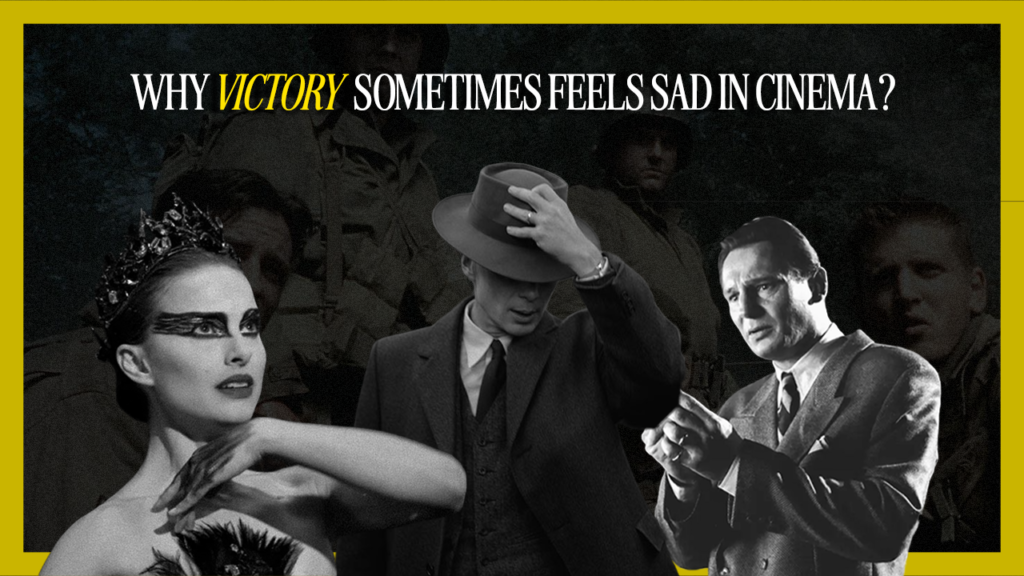
It’s a saying that if you’re your happiest but don’t have “your” people around to share in your happiness, the happiness itself starts feeling hollow and incomplete, like something is missing from the frame.
When you set out to achieve something, and you finally do, sometimes the victory does not feel like victory because of the loss you endure on the way to achieving it. And I think there comes a point where the loss begins to outweigh the achievement itself. Where you stop feeling grateful for what you achieved because all you can think about is what it took from you.
Cinema has explored this idea in some of the most heartbreaking ways possible. There are films where characters technically “win,” where the mission succeeds, where the goal is achieved, where history remembers them as victorious, and yet… yet, what stays with us is not the triumph, but the sadness surrounding it. Because the victory itself becomes too small compared to the emotional, moral, or human cost attached to it.

One of the most beautiful examples of this comes from Iranian cinema with Children of Heaven (1997), written and directed by Majid Majidi. The film follows Ali, a young boy from a struggling family in Tehran, who accidentally loses his sister Zahra’s shoes. Since their family cannot afford a new pair, the siblings begin sharing one pair of shoes between them every day, running through crowded streets and narrow alleys just to make it work.
The emotional genius of the film is that the problem sounds so small on paper, just a lost pair of shoes. But to Ali, it is everything. It is guilt, responsibility, and love for his sister. A desperate need to fix something himself because he knows his family simply cannot. Near the end of the film, Ali enters a race because the third prize is a pair of shoes. Not the first prize, but the third. And that detail changes everything.
To the world around him, first place is supreme victory. It means celebration, applause, recognition. But none of that matters to Ali. In his heart, third prize is the real first prize because third prize means his sister finally gets shoes. And then comes the heartbreaking irony, Ali accidentally wins first place.
Everyone around him celebrates him. The crowd cheers. But Ali himself is absent from the victory. He is completely emotionally disconnected from it. Because he did not get the thing that mattered most to him. Where the world sees achievement, Ali sees failure.
That is why it’s a kind of sad movie ending that hurts so much. The film understands that emotional value is personal. The world may tell you something is victory, but if it does not heal what is hurting inside you, then it can still feel devastatingly empty.
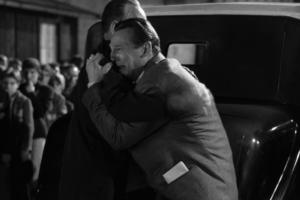
A very different but equally, or probably more painful version of this exists in Schindler’s List (1993), an American epic biographical drama film, directed by Steven Spielberg and adapted from Thomas Keneally’s novel Schindler’s Ark (1982). This is a film based on the true story of Oskar Schindler, a German businessman who saved more than a thousand Jewish people during the Holocaust by employing them in his factories.
There have been countless war films throughout cinema history, especially about World War II, but Schindler’s List feels different because it never lets victory become comforting. It never allows hope to erase horror. It is one of the rare films that understands how impossible it is to frame survival itself as a complete victory when the ground reality is genocide.
When watching the film, what overwhelms you is not just the violence, but the realization that human beings were capable of creating a world like this. A world where cruelty became routine. Where if you batted an eye at the horror happening around, you might face the horror yourself. Where innocent people were murdered like their lives meant nothing. Spielberg presents the Holocaust not just as a historical tragedy, but as a collapse of humanity itself.
And within all that darkness is Oskar Schindler, a man who initially only wants wealth, status, and success. He could have ignored everything happening around him because the system protected him. He was safe. But eventually he reaches a point where he cannot turn a blind eye anymore.
That choice matters deeply. Saving lives matters deeply. But the film also understands something devastating, saving some people does not erase the existence of all the people who were still lost. This is why the ending feels so emotionally heavy rather than triumphant. Schindler breaks down crying, saying he could have saved more people. Even after protecting so many lives, all he can think about are the ones he failed to save.
And that feeling completely destroys the idea of clean victory. Because how do you celebrate while simultaneously knowing people are still dying elsewhere? How do you feel victorious in a world that allowed such evil to exist in the first place? The film leaves a permanent sadness because goodness sure survived, but humanity itself still felt wounded.

In Darren Aronofsky’s Black Swan (2010), an American psychological horror thriller film, screenplay written by Mark Heyman, Andres Heinz, and John McLaughlin, based on a story by Heinz, the loss is much more internal and psychological. The film follows Nina Sayers, a ballerina whose entire life revolves around dance. She is obsessed with perfection and dreams of performing the lead role in Swan Lake as both Odette, the White Swan, and Odile, the Black Swan.
When she finally gets the role, her director tells her that while she naturally embodies the innocence of the White Swan, she lacks the darkness, sensuality, unpredictability, and freedom required for the Black Swan. And slowly, the role begins consuming her completely.
What makes Black Swan so tragic is that Nina’s victory comes through the destruction of herself. The closer she gets to becoming perfect, the more she loses her sense of identity, reality, and peace. Her body deteriorates. Her mind fractures. The film turns artistic ambition into psychological horror because it asks whether perfection is even worth pursuing if it costs you your humanity. And by the end, Nina finally achieves what she always wanted. The performance is perfect. The audience applauds her. She fully becomes the Black Swan.
But there is no happiness attached to it. Because she had to destroy herself to reach that perfection. The victory itself becomes terrifying. It feels unfair, almost cruel, that achieving greatness for her demanded the complete loss of her life.
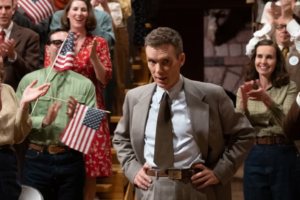
If we do Christopher Nolan’s Oppenheimer movie analysis, It’s an American epic biographical thriller film, adapted primarily from American Prometheus (2005) by Kai Bird and Martin J. Sherwin, explores this same contradiction on a historical and global scale. J. Robert Oppenheimer successfully creates the atomic bomb through the Manhattan Project during World War II. Technically, he succeeds in doing exactly what he was meant to do. Scientifically, it is an extraordinary achievement. But that success also introduces one of the deadliest creations in human history into the world.
And that is what makes the film so unsettling. Oppenheimer achieves greatness, but the achievement itself becomes inseparable from destruction. One of the most disturbing moments in the film comes after the bombings, during the scene where Oppenheimer addresses a cheering crowd celebrating victory. Everyone around him sees him as a hero. But internally, he is collapsing. The applause begins sounding horrifying. Faces blur. The celebration itself starts feeling grotesque because he understands what this “victory” truly cost humanity.
The film understands that accomplishment can become a burden. That succeeding at something does not necessarily mean feeling peace afterwards.

Steven Spielberg’s Saving Private Ryan (1998), an American epic war film, written by Robert Rodat, also presents victory as emotionally incomplete. Set during World War II after the Normandy invasion, the film follows Captain John Miller and his team as they search for Private James Ryan, whose brothers have all died in combat.
The mission itself is successful. Ryan is found. But the deeper the film goes, the more the emotional cost of that mission begins to overwhelm the achievement itself.
Soldiers die trying to save one man they do not even know personally. Fear and exhaustion slowly consume the group. Captain Miller continues leading them because he believes in duty, even when the mission begins feeling impossible. And by the end, when Miller dies after finally succeeding, the victory no longer feels celebratory. It feels painfully expensive.
Ryan survives, but survival itself becomes heavy. Especially after Miller’s final words to him, “Earn this.” Those words transform survival into responsibility, into guilt almost. The film leaves you questioning whether one saved life can ever emotionally compensate for the many lives sacrificed along the way.
And that is what connects all these films together despite being from different countries and genres. Whether it is family drama, psychological horror, historical drama, or war cinema, they all understand one painful truth, sometimes loss becomes larger than victory itself.
Sometimes people achieve exactly what they dreamed of and still feel empty afterwards. Sometimes the dream itself demands too much. Sometimes survival carries guilt. Sometimes success arrives alongside irreversible damage. And sometimes the thing you lost on the way there becomes the only thing you can think about once you finally arrive at the finish line.
That is why these victories feel sad. Because these films understand that human beings are not capable of measuring life only through accomplishment. Emotional loss cannot be mathematically balanced by success. One absence can overpower an entire celebration. One death can silence victory. One sacrifice can make achievement feel hollow forever.
And cinema, at its most honest, understands that sometimes the saddest thing is not failing to achieve your dream, but achieving it and realizing what it cost you.
More Articles for You: