
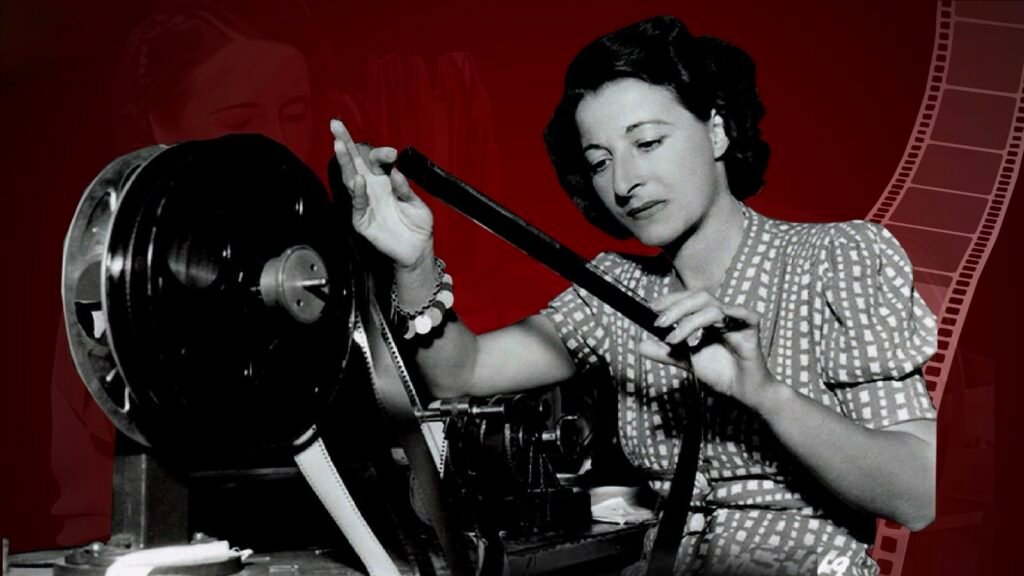
Wonder about a job that was only given to you because it was considered unimportant, easy, and non-creative, then be taken away from you only because you started excelling at it and made it into something creative by yourself.
Those were, in many ways, the origins of female editors.
For a long time, editing wasn’t considered filmmaking. It wasn’t glamorous, prestigious, or even particularly artistic. It was simply the tedious work of cutting strips of film, organizing footage and sticking it back together. Studios believed it required patience more than imagination, comparing it to sewing or embroidery, and so they handed the job to women. What they didn’t realize was that they were unknowingly placing some of cinema’s greatest storytellers inside the editing room.
Editing is where a film comes to its truthful place. Where a story is finally completed. A director can shoot a plethora of footage, but those are merely possibilities. They don’t become a film until they reach the editor. Every take is first organized into rushes, sorted into folders, labelled and assembled. Then begins the real work. Choosing which glance lingers, which silence speaks louder than dialogue, which cut makes your heart race and which one breaks it. An editor doesn’t simply shorten a film, they decide how you will experience it.
As, an Indian editor Deepa Bhatia beautifully puts it, “Eventually, it should never look like something was fixed. It should look like this is how it was meant to be.” That is the paradox of editing. The better it is, the less you notice it.
In 1926, the Los Angeles Times observed that “one of the most important positions in the motion picture industry is held almost entirely by women.” Many young women were hired as film catchers and negative cutters because the painstaking process of physically cutting and taping film strips together resembled sewing. What was dismissed as menial labour became, in their hands, an art form.
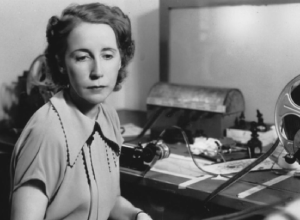
One of those women was American editor Margaret Booth. She often stayed back after work experimenting with unused footage, curious about what a different arrangement of shots could do to a scene. While working on Mutiny on the Bounty (1935), she discovered that inserting a close-up at just the right moment could dramatically heighten emotion. Her ideas impressed MGM’s head of production so much that he coined the title film editor to describe her role. Booth later became supervising film editor on classics like The Wizard of Oz (1939) and Ben-Hur (1959), helping define Hollywood’s visual language for generations.
The more cinema evolved, however, the more people realized that editing wasn’t mechanical at all. It was creative. It, shaped rhythm, emotion and meaning as profoundly as writing or directing. And once the profession began receiving artistic recognition, its demographics slowly began to change.
British editor Anne V. Coates explained it amazingly, “While it was just a background job, they let the women do it. But when people realized how interesting and creative editing could be, then the men elbowed the women out of the way and kind of took over.”
Today, editing is an industry largely dominated by men. Numbers may change, opportunities may shrink, but creativity cannot be erased. The women who entered editing when nobody cared about it had already rewritten it in its true artistic form.
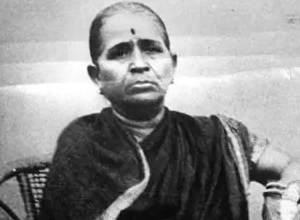
Among them was Saraswati Phalke, India’s first female film editor. Working alongside Dadasaheb Phalke, widely celebrated as the Father of Indian Cinema, she edited films like Raja Harishchandra (1913), Mohini Bhasmasur (1913), Lanka Dahan (1917), Kaliya Mardan (1919). She developed film, processed negatives, managed costumes and worked behind the scenes in almost every department, proving that Indian cinema was built through collaboration.
Across Hollywood, women like Viola Lawrence, Eda Warren, Dorothy Spencer and Barbara McLean quietly shaped the studio era, editing films such as The Lady from Shanghai (1947), Anything Goes (1936), My Darling Clementine (1946), All About Eve (1950). Anne Bauchens became the first woman to win the Academy Award for Film Editing for North West Mounted Police (1940) after decades of collaborating with Cecil B. DeMille.
Then came editors who completely redefined what editing itself could be. American editor Dede Allen began as a production runner before working her way through the editing department, eventually cutting her first feature, Odds Against Tomorrow (1959). Her editing style was bold, unconventional and emotionally charged. So provocative were her ideas on Bonnie and Clyde (1967) that she was fired by studio head Jack Warner. Warren Beatty, the film’s producer and actor, however, believed so strongly in her vision that he personally paid her salary to keep her on the film. The success of Bonnie and Clyde changed Hollywood forever, and Allen went on to edit Serpico (1973), Dog Day Afternoon (1975), The Breakfast Club (1985), and many others.
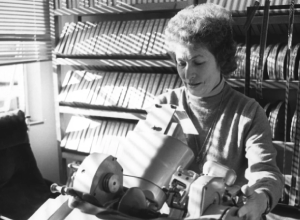
Anne V. Coates built an equally remarkable career, creating one of cinema’s most iconic cuts in Lawrence of Arabia (1962) before later editing The Elephant Man (1980), Out of Sight (1998). Verna Fields transformed suspense in Jaws (1975) by resisting the instinct to cut too quickly. As she explained, “There’s a feeling of movement in telling a story and there is a flow. A cut that is off-rhythm will be disturbing and you will feel it, unless you want it to be like that. On Jaws, each time I wanted to cut I didn’t, so that it would have an anticipatory feeling — and it worked.” Sometimes, tension comes not from what you show, but from what you refuse to cut away from.
Thelma Schoonmaker became Martin Scorsese’s lifelong collaborator, editing masterpieces such as Raging Bull (1980), Goodfellas (1990), Casino (1995). Sally Menke became the pulse behind Quentin Tarantino’s films, giving Reservoir Dogs (1992), Pulp Fiction (1994), Kill Bill (2003 & 2004), Inglourious Basterds (2009) their unmistakable rhythm.
Indian cinema has its own extraordinary lineage of women editors. Renu Saluja fundamentally changed the rhythm of Hindi cinema, moving effortlessly between parallel and mainstream filmmaking. Whether it was the satirical chaos of Jaane Bhi Do Yaaro (1983) or the emotional intensity of Bandit Queen (1995), her edits gave stories both urgency and soul.
In Malayalam cinema, Bina Paul became known for her quiet, deeply sensitive approach, allowing films like Munnariyippu (2014) to breathe rather than rush. Deepa Bhatia carried that same emotional instinct into contemporary Hindi cinema, helping shape films such as Taare Zameen Par (2007), where every pause and every silence became as important as the dialogue itself.
Editors like Aarti Bajaj brought a raw, kinetic energy to films including Dev.D (2009) and Rockstar (2011), while Shweta Venkat has continued that tradition in modern Indian cinema, balancing realism with emotional precision in films like Newton (2017) and Bhonsle (2018). Together, they prove that some of Indian cinema’s most powerful storytelling has been crafted not on the film set, but in the editing room.
Their work reminds us that editing has never simply been about cutting film. It is about shaping feeling. About knowing precisely when to hold on to a face, when to leave a silence untouched, and when to let a story breathe.
History may remember directors first, because they stand at the front of a film set. Editors rarely do. They work behind closed doors, most times long after the cameras stop rolling. Their names appear quietly near the end of the credits, often overlooked.
But truth forever remains, whether ignored or observed, that cinema finds its voice in the editing room. And some of its most important voices have always belonged to women, the creators in the shadows.
Read More:
- Spotlight: Making Injustice Heard in a World of Untouchable Power
- Harry Potter and the Question Every Reboot Must Answer
- Good Films Are Often Bad Experiences
- Top 10 Sequels That Elevated Cinema