
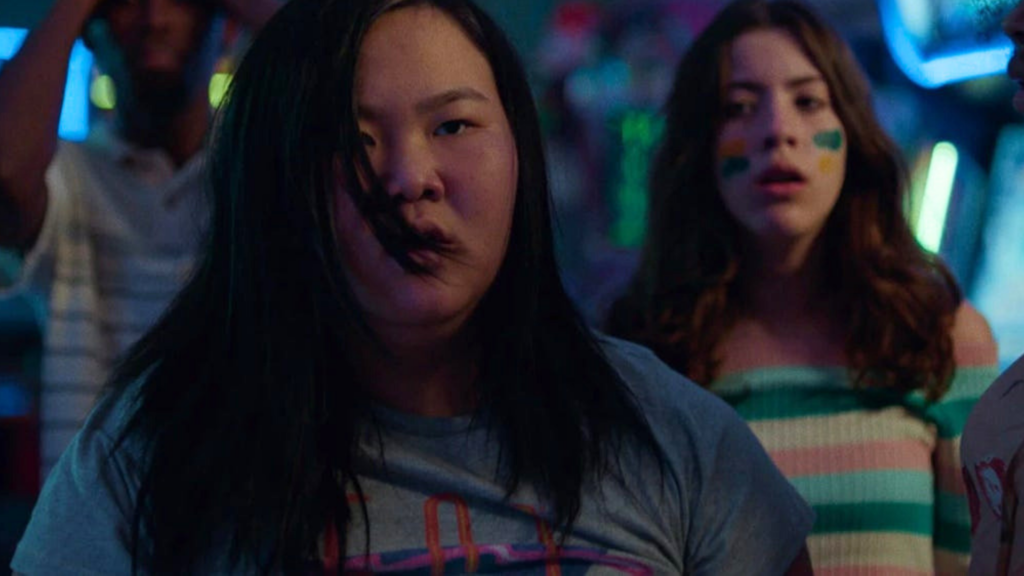
Japanese-Brazilian filmmaker André Hayato Saito is developing Yellow Chrysanthemum, a family drama exploring grief, cultural identity and the silences that can shape relationships across generations. The director’s debut feature has been selected for the 2026 Tokyo Gap-Financing Market, where its producers are seeking partners to complete the financing and help bring the project to international audiences.
Set in São Paulo in July 2014, as Brazil hosts the FIFA World Cup, the film follows Erika, a 16-year-old third-generation Japanese-Brazilian teenager who feels disconnected from her family’s heritage and struggles to find a sense of belonging in the country where she was born.
Her distance from her roots is connected to a painful childhood experience. When Erika was seven, her cousin Yam, who was also her closest friend, disappeared during a traditional festival in São Paulo’s Liberdade neighbourhood. Erika’s mother had been looking after the children at the time, and the loss left the family caught in years of guilt and silence.
As Erika grows older, her friendship with Bianca, a Black classmate grieving the recent death of her mother, begins to challenge how she has dealt with her own pain. Unlike Erika’s family, Bianca openly acknowledges her grief. Their growing bond forces Erika to confront feelings she has long suppressed and brings her family closer to addressing Yam’s disappearance.
Saito’s story draws on personal observations of how grief is expressed within families. Recalling a childhood moment when he asked his father what happens after death, the filmmaker described receiving a long, profound silence in response. Growing up in a Japanese-Brazilian household, he came to understand that silence could communicate love and respect while also concealing unresolved pain.
Yellow Chrysanthemum continues themes explored throughout Saito’s short-film work, including memory, loss and the experience of living between cultures. Rather than offering straightforward answers, the director hopes Erika’s journey will encourage audiences from different backgrounds to reflect on the things left unspoken within their own families.
The feature also develops ideas explored in Saito’s short film Amarela, which follows a Japanese-Brazilian teenager named Erika as she rejects her family’s traditions during a World Cup final between Brazil and France. The short competed for the Palme d’Or for Best Short Film at the 2024 Cannes Film Festival, was shortlisted for the live-action short film Oscar at the 98th Academy Awards and won Best Live-Action Short at Brazil’s Grande Otelo Awards. It forms part of a trilogy alongside Kokoro to Kokoro and Vento Dourado, produced with São Paulo-based MyMama Entertainment.
The feature is a co-production between Brazil, Japan, Germany and France. After several years of development, the project is now in pre-production. It previously participated in TorinoFilmLab, where it won the TorinoFilmLab Production Award, and was selected for Focus Copro at Cannes. The production team also plans to film a key sequence during a traditional Japanese Toro Nagashi ceremony in Brazil in November 2026.
Producer Mayra Faour Auad, founder of MyMama Entertainment, previously produced Amarela and has more than 20 production credits, largely involving international co-productions. MyMama is developing the feature alongside One Two Films, Loaded Films and Blue Monday.
At the Tokyo Gap-Financing Market, the team aims to close the remaining financing gap and establish connections with producers, distributors and sales agents who can help the film reach audiences, particularly in Asia. Faour Auad has emphasised the importance of finding an audience in Japan, given the project’s Japanese-Brazilian identity.
Saito is also developing his second feature, Little Faults. The film centres on an ageing Japanese-Brazilian woman living in Japan who begins committing minor offences in the hope of being sent to prison, where she believes she may finally receive care and find a sense of belonging.
As Yellow Chrysanthemum moves towards production, securing the remaining financing and building relationships with international partners will be important steps in bringing Saito’s story to the screen. Through its exploration of family grief, cultural identity and emotions left unspoken, the film aims to connect a specifically Japanese-Brazilian experience with audiences from different backgrounds.