
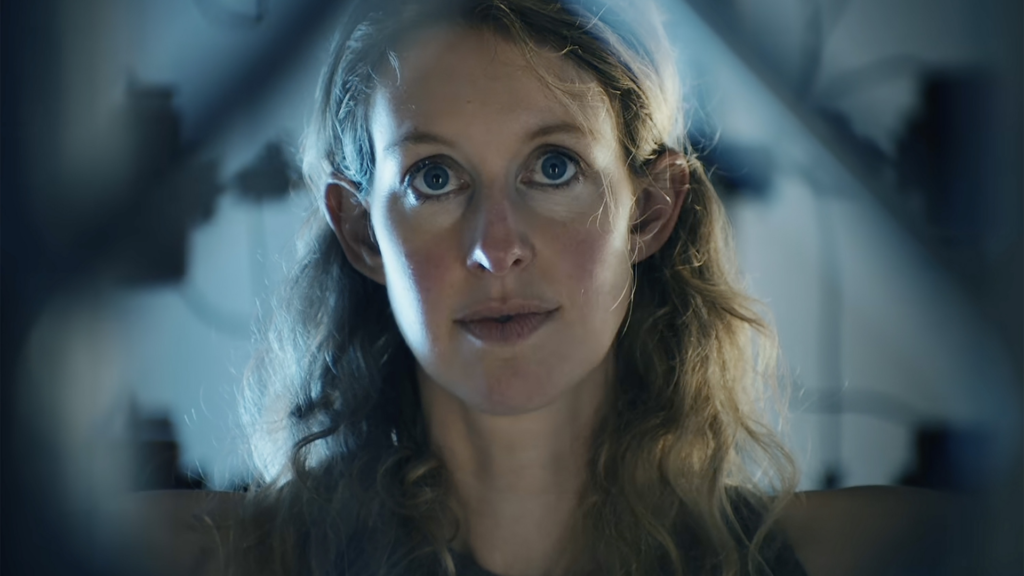
A24’s You Can See Everything has crossed $80 million at the North American box office after just four weekends, becoming the second-highest-grossing documentary in North American box-office history. Directed by Nathan Fielder and Lance Oppenheim, the 174-minute film has overtaken March of the Penguins, which earned approximately $77 million, and now trails only Michael Moore’s Fahrenheit 9/11, which collected $119 million. The achievement is particularly remarkable considering that the documentary was made on a production budget of approximately $7 million and follows former Theranos founder Elizabeth Holmes in the period leading up to the beginning of her prison sentence.
The documentary collected $8.8 million from 2,473 theatres during its fourth weekend, registering a decline of just 23% from the previous frame. Its domestic cumulative collection has now moved beyond the $80 million mark, placing it ahead of the approximately $77 million North American lifetime collection of March of the Penguins. The film has also surpassed the domestic lifetime collection of A24’s Everything Everywhere All at Once, which earned approximately $77 million. This makes You Can See Everything the studio’s third-biggest release, behind Backrooms and Marty Supreme.
For A24, the performance represents an exceptional theatrical result for a documentary with a reported production budget of just $7 million. The film’s ability to maintain strong audience interest through its fourth weekend has been an important factor in its continued box-office growth. Its international rollout is scheduled to begin later in November, giving the documentary additional theatrical markets beyond North America and an opportunity to extend its worldwide earnings.
The road to the screen was almost as unusual as the documentary itself. Nathan Fielder and Lance Oppenheim kept the project secret for years, with filming beginning before the public knew it was in development. Fielder also secured an unusual agreement with A24: if the directors failed to find a compelling story, they could abandon the project and discard the footage. Lance Oppenheim later described the provision as a “kill switch”. The arrangement gave the filmmakers the freedom to follow the material wherever it led, without the obligation to deliver a completed documentary if the story did not develop as they had hoped.
The story begins 34 days before Elizabeth Holmes reported to federal prison in 2023 to serve her sentence for defrauding investors through Theranos. Holmes and her partner, Billy Evans, invited the filmmakers and a crew into their home in Del Mar, California. Nathan Fielder moved in with the family, documenting their routines and conversations. What began as access to the final days before Holmes entered prison eventually developed into a three-year examination of Holmes, Evans and the public image surrounding them.
At 174 minutes, You Can See Everything is far removed from a conventional account of a corporate scandal. The documentary repeatedly blurs the line between observation and performance, using its unusual access to examine how public perception and personal identity are managed. Rather than limiting itself to the Theranos controversy and the events that led to Holmes’ conviction, the film explores the people and circumstances surrounding her life after the collapse of the company.
Amanda Seyfried, who won an Emmy for portraying Elizabeth Holmes in Hulu’s The Dropout, appears in sequences that revisit the actress’s portrayal and the real-life reactions it generated. The documentary also examines how Billy Evans manages aspects of Holmes’ public identity while she is incarcerated. With power of attorney, Evans has access to her social media accounts and discusses the possibility of using an AI version of Holmes. These sequences raise questions about personal representation, public image and who controls an individual’s identity when that person cannot speak for themselves.
The film’s commercial performance has been accompanied by a strong awards showing. At the 11th Critics Choice Documentary Awards on November 8, You Can See Everything won all five categories in which it was nominated. These included Best Documentary Feature, Best Director for Nathan Fielder and Lance Oppenheim, Best Cinematography for David Bolen, Best Editing for Adam Locke-Norton and Best Score for Ari Balouzian. Winning all five nominated categories gave the documentary a significant awards achievement alongside its continuing theatrical success.
For A24, You Can See Everything has become more than an unexpected box-office hit. Fielder and Oppenheim have approached a story already familiar to many audiences through unusual access, uncomfortable conversations and constructed scenes. The resulting documentary has attracted theatrical audiences on a scale rarely seen for the genre, demonstrating the commercial potential of a non-fiction release when its subject and filmmaking approach generate sustained interest.
With more than $80 million collected in North America, the film has already secured its position among the most successful documentaries in the region’s box-office history. Its upcoming international rollout will provide the next opportunity to expand its theatrical reach, while its five Critics Choice Documentary Awards wins add to an already significant run. Having overtaken March of the Penguins, the film now has only Fahrenheit 9/11 ahead of it on the North American documentary box-office chart.