
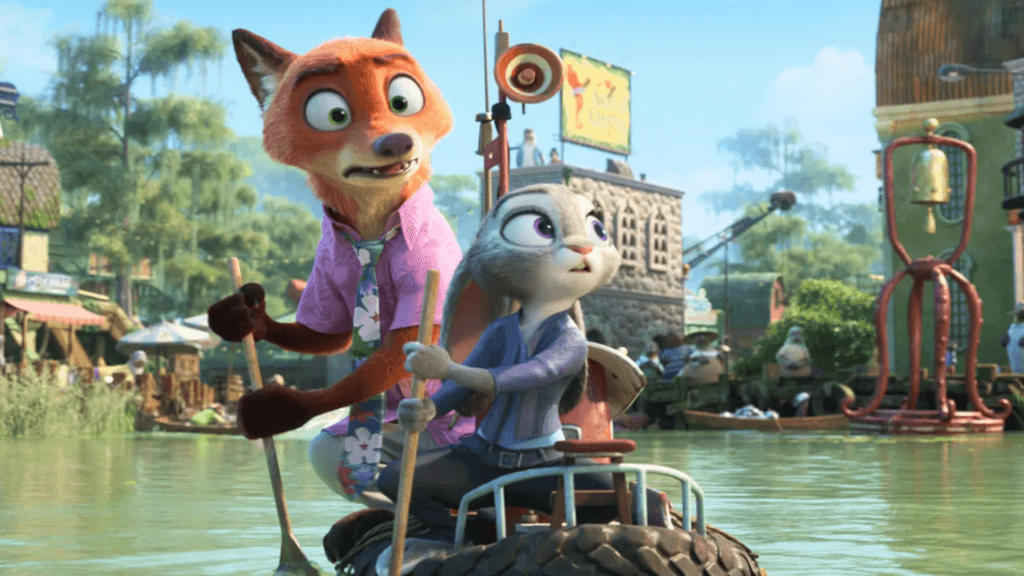
The Zootopia 2 box office debut has arrived with the kind of global impact that doesn’t just make headlines — it resets the theatrical narrative for 2025. Analysts expected strength, but what unfolded was a seismic theatrical event that began in the East and quickly reshaped the global conversation. In its first six days, the animated sequel roared through the Chinese market with an estimated $271–$275 million, a performance that shatters the recently cemented belief that Hollywood’s influence in China is fading.
For Disney, this isn’t merely a successful start — it’s a statistical anomaly. In a marketplace that has grown selective, self-reliant, and increasingly indifferent to Western franchises, Zootopia 2 has achieved full-spectrum dominance. It is a rare Hollywood title that has broken through cultural, scheduling, and strategic barriers at a time when foreign films struggle to even secure prime release windows.
China’s Box Office Breakout: Toppling the Endgame Benchmark
The numbers emerging from China are not merely “good for 2025” — they are historic. The scale, velocity, and cultural pull of Zootopia 2 over opening weekend position it as one of the strongest Hollywood debuts in China’s post-pandemic theatrical era.
On Saturday, Zootopia 2 became the first Hollywood release since 2019 to break the $100 million single-day ceiling in China. In doing so, it surpassed the peak set by Avengers: Endgame — a milestone widely regarded as unreachable in the current climate. In a market dominated by colossal domestic IPs, eclipsing a Marvel-era benchmark signals a level of audience enthusiasm that foreign studios have not seen in years.
Trade sources across Asia and North America confirm that this opening ranks as the second-biggest debut ever for a non-local film. Multiple studios have attempted to crack this threshold since 2020, but even top-tier superhero and franchise titles failed to come within striking distance. For Zootopia 2 to reach this tier signifies not just franchise strength but a cultural familiarity that resonates unusually deeply with Chinese audiences.
Why China Responded So Strongly
The film’s extraordinary performance was powered by two decisive ingredients that aligned at the perfect moment.
The first is the cultural stickiness of the original Zootopia. The 2016 film has maintained unusually strong affection in Mainland China, holding a high score on local platforms such as Douban — a critical factor in long-term box office resilience. The IP never faded; it evolved into a comfort brand.
The second is Disney’s Shanghai strategy. The new Zootopia-themed land at Shanghai Disney Resort became a promotional force unlike anything Hollywood studios can ordinarily deploy. It generated physical engagement, social media momentum, and immediate brand reinforcement. CEO Bob Iger’s visible presence in Shanghai further signaled Disney’s renewed commitment to the market. The result was a theatrical environment primed for impact — and audiences responded with unprecedented force.
Domestic Market: Holding the Line Against Wicked
While China provided the explosion, North America supplied the stability. The film closed out its Thanksgiving frame with domestic earnings reaching approximately $163 million, according to updated Sunday estimates — a result that comfortably beats early projections and reinforces the sequel’s broad-based appeal.
What makes this domestic tally even more noteworthy is the competition. Zootopia 2 launched during the same window as Universal’s Wicked: For Good, a tentpole performing at blockbuster levels. Instead of diminishing each other, both films thrived — a clear indication that audiences will expand their spending when multiple strong options collide during a holiday corridor.
This supports a crucial theatrical trend: high-quality variety grows the total market instead of splitting it. Families, teens, young adults, and seasonal moviegoers all found distinct reasons to visit cinemas, and the domestic marketplace benefited from the diversity.
The demographic spread also played an important role. Families with younger children rediscovered a franchise many kids never experienced theatrically. Young adults — who were children or teens in 2016 — turned out for nostalgia. General audiences were pulled in by the film’s strong marketing and critical reception. This cross-age pull is exceptionally rare in modern animation and is a major driver of the sequel’s resilience.
The Worldwide Picture: A $589M Global Surge
Across all markets, Zootopia 2 has now grossed $589,289,181 worldwide, placing it already at No. 10 on the 2025 global box office chart after just six days — an extraordinary feat for an animated sequel and a clear indicator of massive staying power.
China accounts for nearly half of the global total, but the film is performing strongly across all major territories, making it one of Disney’s most successful post-pandemic animated launches.
The next phase of the conversation centers on sustainability. China’s massive opening often suggests a front-loaded pattern, typically seen with superhero films that peak early and decline sharply. But animated titles in China behave differently. They rely heavily on strong word-of-mouth, repeat family viewing, and broader holiday windows.
If Zootopia 2 follows the traditional animated curve rather than a front-loaded blockbuster trajectory, its final gross could become extraordinary — potentially rewriting Disney’s modern animation earnings and setting a new regional benchmark for Hollywood titles.
Beyond the numbers, the film exemplifies Disney’s ecosystem-driven strategy, where physical destinations amplify digital and theatrical performance. The timing of the Zootopia land at Shanghai Disney Resort created a synergy that competitors cannot easily replicate. It allowed Disney to turn cultural presence into ticket sales, merchandise revenue, and global conversation.
This is the studio’s strongest example in years of how experiential branding can supercharge franchise performance. But industry analysts also caution that Zootopia 2 is the exception, not the rule. Its success stems from nearly a decade of accumulated goodwill and emotional attachment in China — a rare asset Hollywood films seldom possess.
Zootopia 2 has positioned itself as one of the defining global box office moments of 2025. It has demonstrated that the U.S.–China theatrical relationship, while strained, is still capable of producing earth-shaking commercial results — provided the content carries the right cultural weight.
With a record-setting Chinese launch, a stable and competitive domestic performance, and a worldwide total approaching $600 million in under a week, the sequel has rewritten the holiday-season narrative. As the film enters deeper into December and global word-of-mouth builds, the industry will watch closely to see how far this momentum can travel. If current trends hold, Zootopia 2 may emerge as one of Disney’s most profitable and culturally resonant animated releases of the decade.