
The 22nd Zurich Film Festival has unveiled its Gala Premieres selection, bringing a mix of international auteur cinema, awards-season contenders and major European productions to the festival’s 2026 edition. The festival runs from September 24 to October 4, while its full program is scheduled to be revealed on September 9.
Among the 10 announced Gala Premieres are Peter Farrelly’s I Play Rocky, Beth de Araújo’s Sundance breakout Josephine, Lee Chang-dong’s Possible Love, Casey Affleck’s Company and two German world premieres from Andreas Dresen and Doris Dörrie. The selection reflects Zurich’s positioning of the Gala Premieres section as a space for auteur cinema with broader audience appeal.
One of the most recognizable titles in the selection is I Play Rocky, directed by Peter Farrelly and starring Anthony Ippolito, Matt Dillon, Stephan James, AnnaSophia Robb, PJ Byrne, Toby Kebbell, Tracy Letts and Jay Duplass.
The film dramatizes the extraordinary story behind the making of Rocky. Ippolito plays a young Sylvester Stallone, who has written a screenplay about an underdog boxer but refuses to sell it unless he is allowed to play the lead himself.
The result is effectively an underdog story about the creation of one of cinema’s most famous underdog films. I Play Rocky will have its European premiere in Zurich, following its world premiere at the Toronto International Film Festival.
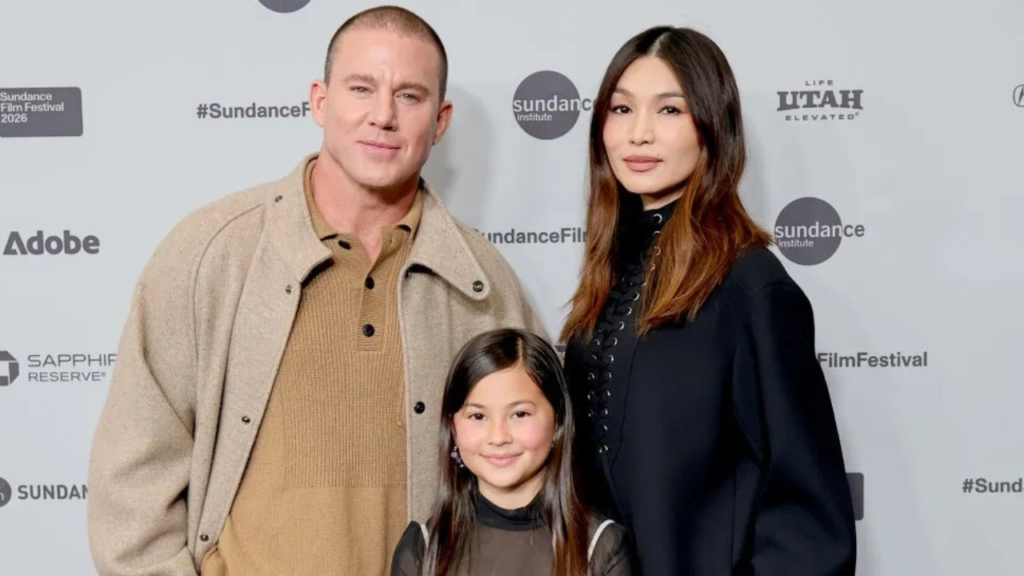
Beth de Araújo’s Josephine arrives in Zurich with significant festival momentum. The drama stars Channing Tatum, Gemma Chan and Mason Lily Reeves and follows an eight-year-old girl who witnesses a violent crime and struggles to regain a sense of security afterwards.
Her parents respond differently to the trauma. While her mother attempts to help her process what happened, her father believes in preparing her for the harsher realities of life, creating another layer of tension within the family.
The film won both the Grand Jury Prize: Dramatic and Audience Award: Dramatic at Sundance 2026, making it one of the festival’s most notable breakouts. It subsequently continued its festival journey, including a Berlin appearance and a Toronto selection, before arriving at Zurich.
The Zurich screening consequently places Josephine within an increasingly important autumn festival and awards-season circuit.
Swiss-Canadian drama 111 – Echoes From Halifax is directed by Mauro Mueller and stars Ursina Lardi, Kris Holden-Ried, Djebril Zonga, Fathia Youssouf and Natalie Brown.
The film looks back at the aftermath of the Swissair Flight 111 crash on September 2, 1998, focusing not simply on the disaster but on the lives it affected.
Relatives search for certainty about their loved ones, rescuers attempt to help those left behind and residents of the Canadian coast confront the consequences of the tragedy. The story subsequently examines grief, memory and the ways relationships change in the aftermath of loss.
The film’s Zurich appearance carries particular significance given its Swiss-Canadian identity. It is also scheduled to open the Atlantic International Film Festival in Halifax, giving it a festival journey directly connected to the real-world tragedy depicted in the film.
One of the most significant international auteur titles in the selection is Possible Love from acclaimed South Korean filmmaker Lee Chang-dong.
The film stars Jeon Do-yeon, Sul Kyung-gu, Zo In-sung and Cho Yeo-jeong and follows two married couples whose lives begin to intersect through a funeral and an encounter between people from very different social circumstances.
Mi-ok, played by Jeon Do-yeon, lives with her laid-off husband Ho-seok and their young son. Her life changes when she becomes connected to Ye-ji, a documentary filmmaker chronicling laid-off workers, and Ye-ji’s husband Sang-woo.
As Mi-ok becomes increasingly close to Ye-ji and drawn towards Sang-woo, the relationships begin to expose tensions and desires that had previously remained hidden.
The film is particularly notable because it marks Lee Chang-dong’s first feature in eight years. The director is known internationally for films including Burning, Poetry and Secret Sunshine. Possible Love is also part of Toronto’s 2026 program.
The Gala Premieres selection also includes two world premieres from major German filmmakers.
Andreas Dresen’s Love, After All stars Dagmar Manzel and Joachim Król as Lore and Harry, a married couple who have spent nearly four decades together.
Their relationship is increasingly tested by old arguments, missed opportunities and uncertainty about growing older. Their daughter’s decision to marry for a third time adds another source of tension to the couple’s already complicated domestic life.
The film is described as a warm-hearted love story inspired by real life, combining relationship drama with comedy.
The second German world premiere is Doris Dörrie’s How Can I Help?, starring Angela Winkler, Laura Tonke, Josef Ellers, Via Jikeli, Eugene Boateng and Zoë Baier.
Its premise is considerably more unusual. After Mrs. Winkler suffers a fall and becomes dependent on care, her daughter hires a care robot. The machine initially proves extremely helpful, but there is a disturbing condition attached to its programming: it is also expected to kill Mrs. Winkler if her condition deteriorates beyond a certain point.
The concept gives Dörrie room to explore ageing, family responsibility, technology and the meaning of compassionate care through a darkly comic setup.
Company, directed by Casey Affleck, stars Nick Nolte, Ben Mendelsohn, Adelaide Clemens, Scoot McNairy, Emily Alyn Lind and Caylee Cowan.
The mystery begins on a winter night in 1975 when a mysterious woman arrives unexpectedly at a holiday gathering and begins telling the story of an aging hermit who rescues an actress stranded during a Colorado blizzard in 1953.
The actress, in turn, tells another story involving a farming couple, a troubled young drifter and a series of murders.
As these stories intersect across different generations, the film explores grief, vengeance, forgiveness and compassion.
The Gala Premieres also include It Will Happen Tonight from Italian filmmaker Nanni Moretti, starring Louis Garrel, Jasmine Trinca, Hippolyte Girardot and Moretti himself, among others.
The selection also includes Burgundy, a documentary from Michael Dweck and Gregory Kershaw that explores the culture and traditions of one of the world’s most famous wine regions. The film combines documentary and fictional elements while focusing on the people working within Burgundy’s hospitality and viticulture communities.
The final announced title is The Hammer, directed by Simon Wallon. The documentary profiles celebrated auctioneer Simon de Pury, whose career has taken him through Sotheby’s and Phillips, major art collections, galleries, artists’ studios and international art fairs.
Shot across locations including New York, Tokyo, London, Cannes, Miami and Monaco, the film examines the relationship between art and commerce and the increasingly complicated question of what it means to be an artist in a global marketplace.
The Gala Premieres lineup places Zurich within an increasingly interconnected autumn festival circuit. Several of the announced titles are arriving after major premieres or festival appearances elsewhere, while the section also reserves space for genuine world premieres.
I Play Rocky, for example, travels to Zurich following its Toronto world premiere, while Josephine continues a festival run that began with its major Sundance breakthrough. Possible Love similarly arrives with the profile of a major international auteur film.
At the same time, Love, After All and How Can I Help? give Zurich two German world premieres, while 111 – Echoes From Halifax brings a particularly strong Swiss connection to the festival.
That mix reflects Zurich’s attempt to bring accessible auteur cinema to a broad audience, rather than limiting its Gala Premieres to either purely commercial titles or strictly arthouse fare.
The 22nd Zurich Film Festival runs from September 24 to October 4, 2026, with the complete festival program set to be announced on September 9. The Gala Premieres selection therefore represents only part of what Zurich has planned for its 2026 edition.