Large-format cinematography was once discussed as a format. Today, it feels closer to a philosophy — a discipline, a way of respecting the image.
And over the past year, that philosophy has quietly re-emerged with clarity. With Oppenheimer, The Brutalist, and now Sinners, we are seeing filmmakers return to large format and negative not out of nostalgia, but intent. These are not aesthetic choices made for spectacle alone, but decisions rooted in how an image is meant to be felt.
Because when the image truly matters, the format begins to matter too.
There is something unmistakable about large-format capture. The frame carries a weight that goes beyond resolution — it has presence. Grain feels alive. Light holds longer. Faces don’t just sit within the image, they exist inside it, with a depth that feels almost tangible.
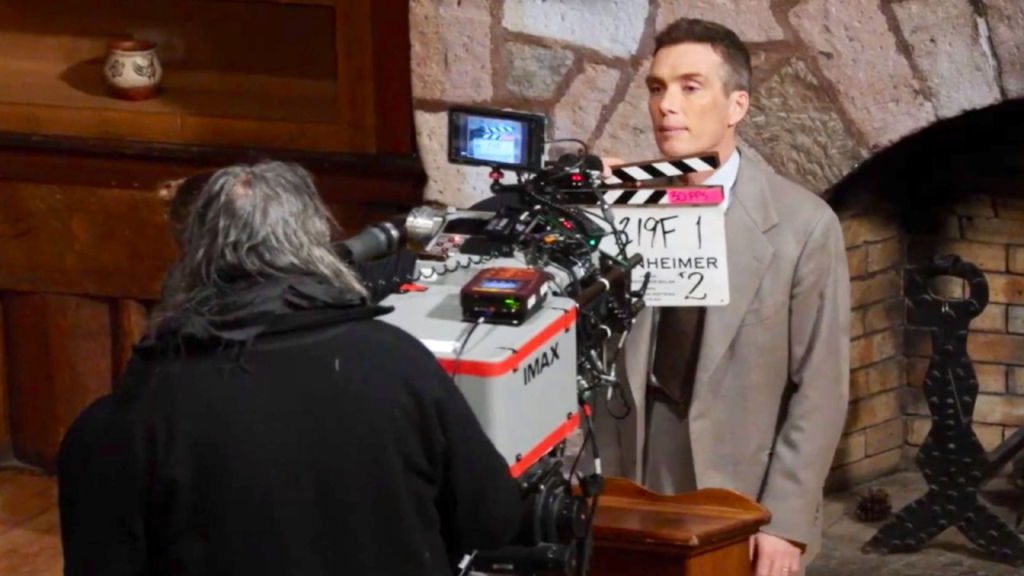
In Oppenheimer, that translated into scale and immersion, where the vastness of history and the intimacy of a human face could coexist within the same visual language. In The Brutalist, VistaVision brought architectural precision — frames that felt structured, deliberate, almost immovable in their stillness. And in Sinners, IMAX expands both emotional and physical space, allowing the story to feel at once intimate and monumental.
Different films. Different intentions. The same underlying truth — the image feels considered.
That sense of consideration begins long before the camera rolls. Large format has always asked more from the cinematographer. You don’t overshoot. You don’t rely on endless takes. You don’t postpone decisions. You arrive prepared — with clarity, with intent.
And that discipline leaves a trace. It shows up in composition, in the placement of light, in the control of movement. There is less excess, more purpose. The format, in a way, becomes a collaborator, quietly insisting that every choice carries weight.
What’s equally important is that these films didn’t just choose large format — they chose negative. That decision carries a philosophy of its own. Shooting on film isn’t about rejecting digital; it’s about shaping the image at the moment of capture, where texture, latitude, and even imperfection become part of the storytelling language.
In The Brutalist, VistaVision negative doesn’t just record — it interprets. In Oppenheimer, IMAX negative becomes scale itself. And in Sinners, it reinforces atmosphere and depth in a way that feels tactile, almost physical. It’s not about better or worse. It’s about feeling.
What makes One Battle After Another particularly significant is that it takes this philosophy a step further. It doesn’t just embrace VistaVision as a capture format — it completes the journey by returning to true VistaVision projection. For the first time in over six decades, since 1961’s One-Eyed Jacks, a modern film is being presented in the format as it was originally intended to be seen.
This is not a simple technical choice. Only a handful of theatres across the world are capable of supporting true VistaVision projection, which has meant restoring or sourcing vintage projectors, in some cases bringing museum-grade equipment back into working condition. That effort says everything. This is no longer just about how a film is shot, but how it is experienced.
In many ways, The Brutalist brought VistaVision back into conversation, reminding us of its strength in composition and scale. But One Battle After Another carries that conversation forward. It closes the loop between capture and projection, between intention and exhibition. The audience is no longer just watching a format — they are encountering it as it was meant to exist.
And yet, the most remarkable thing about all of this is how invisible it becomes.
You’re not watching IMAX. You’re not watching VistaVision. You’re simply inside the film.
In Oppenheimer, close-ups unfold with a depth and intimacy that feels almost rediscovered, as if the human face itself has taken on a new dimension. The shifts between colour and black and white don’t feel like techniques — they feel like thought, like memory unfolding in real time.
In The Brutalist, wide frames stretch with an architectural confidence, spaces that feel vast yet precise, inviting you not just to observe them, but to inhabit them.
And in Sinners, the transition between anamorphic and the IMAX frame moves so seamlessly with the storytelling that you don’t consciously register the change. You simply move with the film, guided by its rhythm.
That’s the quiet magic of large format. It doesn’t announce itself. It doesn’t ask to be noticed. It simply pulls you in until all that remains is the experience.
A reminder that even as technology evolves, certain choices remain timeless — choosing scale when it serves the story, choosing discipline when it sharpens the craft, choosing film when you want the image to carry something more than information.
Because when you give the image the respect it deserves, it gives you something rare. Something you don’t just see, but feel.
And maybe that’s why large format endures. Not because it stands apart, but because, time and again, it brings us closer to the essence of cinema itself.
Read More:
- Hollywood Box Office Failures 2025 Explained — What The Year’s Biggest Misses Taught Us
- From Water to Fire: How Avatar’s Visual Language Is Evolving
- Why James Cameron’s Films Refuse to Fade — Even When the Box Office Is Done
- Best Santa Claus Movies of All Time, Ranked by Impact and Legacy
- When Beauty Becomes a Prison: The Eternal Relevance of Jalsaghar