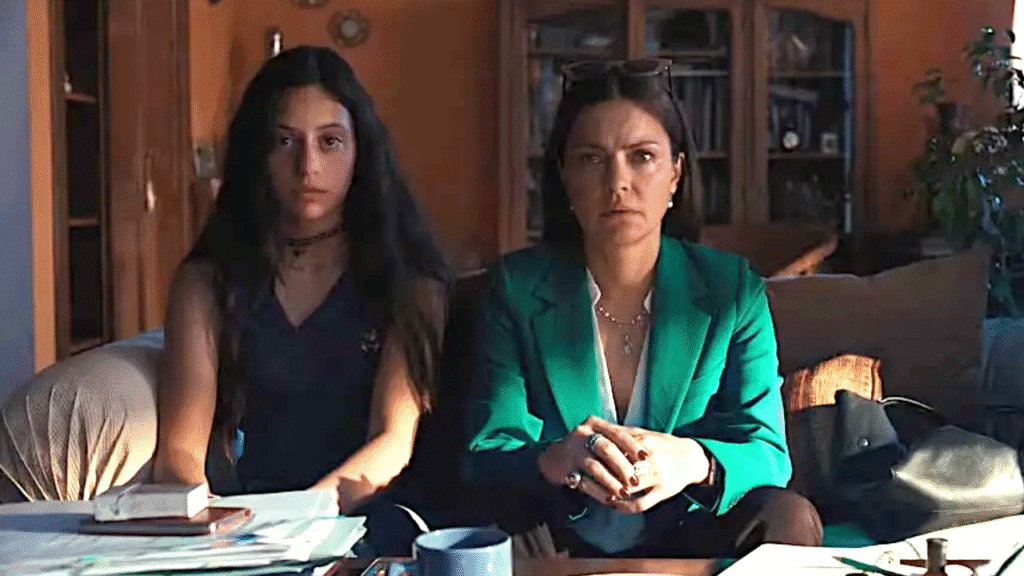
In Belén, actor-filmmaker Dolores Fonzi transforms one of Argentina’s most painful true stories into a quietly devastating courtroom drama. Based on journalist Ana Correa’s acclaimed non-fiction book Somos Belén, the film follows a young woman accused and imprisoned for having an illegal abortion after being hospitalised for a miscarriage. What begins as a legal case soon becomes a reflection on how the justice system, society, and patriarchal structures fail the very citizens they are meant to protect.
Co-written by Fonzi with Laura Paredes, Agustina San Martín and Nicolás Britos, Belén is at once a procedural and a portrait of resilience. As the director and lead performer, Fonzi grounds the story in empathy rather than outrage, letting the tension emerge through human encounters, institutional silence, and a search for truth. The film’s stark realism and emotional restraint turn what could have been a purely political message into an intimate human tragedy that resonates far beyond its national borders.
What Critics Are Saying
Critical response to Belén has been overwhelmingly positive, with some of the world’s most respected outlets praising its moral urgency and understated direction.
Variety called the film “a powerful dramatization of injustice,” commending Fonzi’s refusal to sensationalise and her ability to turn real events into compelling moral inquiry. IndieWire described Belén as “a lean, urgent legal drama” that keeps its focus on procedure and solidarity, creating a story that “burns with purpose without ever feeling didactic.”
The New York Times highlighted the film’s quiet intensity, calling it “a sobering reminder of how legal systems weaponize bureaucracy against women.” It admired the film’s documentary-like precision and its unflinching empathy. The Guardian, in its Cannes review, hailed Belén as “a gripping true story of systemic injustice told with both fury and tenderness,” praising its mix of courtroom tension and personal vulnerability.
Meanwhile, Next Best Picture emphasized the film’s balance between activism and art, noting that Fonzi “captures the political stakes without losing sight of the human heart of the story.” Some reviewers, however, offered measured criticism, suggesting that the film’s clarity sometimes comes at the cost of complexity. A few, like those writing for Latin American festival outlets, observed that its unbroken moral line leaves little room for ambiguity. Yet even these critiques concede that the film’s conviction gives it exceptional power.
Performances and Filmmaking Craft
Dolores Fonzi’s performance — as the lawyer who champions Belén’s case — anchors the film with authority and empathy. Critics have praised her restraint, noting that she commands every frame without grandstanding. Newcomer Camila Pláate, portraying Belén, delivers a deeply affecting performance built on silence, fragility, and quiet endurance. Their dynamic — one voice fighting, one surviving — embodies the film’s emotional architecture.
Visually, Belén opts for intimacy over spectacle. Cinematographer María Secco shoots with muted lighting and handheld realism, while the editing by Nicolás Goldbart maintains a documentary rhythm that keeps the viewer immersed in the unfolding case. The restrained score complements the film’s ethical tone, ensuring that emotion arises from the situation rather than manipulation. Fonzi’s directorial approach — simple, clear, unembellished — mirrors the clarity she demands from the institutions she critiques.
Film Details: Cast and Crew
Belén marks a milestone in Argentine cinema for the creative synergy it brings together. Directed by Dolores Fonzi, who also co-wrote the screenplay with Laura Paredes, Agustina San Martín, and Nicolás Britos, the film blends personal conviction with cinematic precision. Fonzi’s dual role as filmmaker and performer reflects the film’s own fusion of advocacy and artistry — a project made by women who understand both the emotional and political dimensions of the story they’re telling.
The cast is anchored by Camila Pláate in a remarkable performance as Belén, whose quiet endurance becomes the emotional spine of the film. Fonzi herself plays the determined lawyer who challenges a system built on silence, while the supporting ensemble — including Mara Bestelli, Juan Minujín, and Martín Slipak — lends authenticity to every institutional corridor and courtroom exchange. Each character, from judges to medical staff, is framed as part of the machinery of power that Fonzi’s lens interrogates.
Behind the camera, María Secco’s cinematography brings an unvarnished realism to the proceedings, favouring natural light and handheld framing to keep the story grounded in lived experience. The editing by Nicolás Goldbart sharpens the legal rhythm of the narrative, while the score by Santiago Motorizado is understated, designed to echo the quiet tension of Belén’s ordeal rather than to guide emotion.
Produced by Oh My Gómez Films in collaboration with several Argentine and European partners, Belén continues a growing movement in Latin American cinema — one that insists on justice through storytelling. The result is a film built by a team whose personal and professional commitments merge into a single vision: to restore humanity to a story the world once ignored.
Festival Journey and Awards Momentum
Belén premiered to acclaim on the international festival circuit, screening at San Sebastián and Rome before its wide release in Argentina. The film was subsequently selected as Argentina’s official entry for Best International Feature Film at the 98th Academy Awards, marking another milestone for Fonzi, who has steadily evolved from acclaimed actor to one of Latin America’s most confident new filmmakers.
On review aggregators, Belén currently holds a 92% rating on Rotten Tomatoes and 7.9 on IMDb, reflecting strong approval from critics and audiences alike. Its festival reception has included praise for the performances and screenplay, with juries and audiences responding to its quiet intensity and moral courage.
Audience Reactions and Cultural Impact
The public response in Argentina has been deeply emotional. Viewers familiar with the real-life case described the film as “painful but necessary,” while international audiences have commended it for transforming activism into art without losing authenticity. On social media, hashtags connected to the Marea Verde (Green Wave) movement have resurfaced, linking the film’s release to broader feminist and legal-reform discussions.
Cultural commentators note that Belén transcends its immediate subject matter to become a document of collective memory. By dramatizing the bureaucratic cruelty behind one woman’s suffering, it reopens a national conversation about reproductive rights and institutional accountability. For many, Fonzi’s film functions as both tribute and indictment — a work of art that insists remembrance itself can be an act of justice.
A Drama of Conscience and Compassion
What unites all critical perspectives is recognition of Belén’s sincerity and sense of purpose. It is a film that demands moral engagement without shouting for it. Fonzi’s achievement lies in crafting a story that is both personal and universal — about one woman’s wrongful imprisonment and every woman’s right to dignity.
Even those critics who find its tone occasionally didactic acknowledge the rare conviction behind its filmmaking. In an age of polarised narratives, Belén stands out for its clarity of empathy and cinematic restraint. It reminds audiences that justice, like storytelling, depends on listening — and that sometimes the quietest films speak the loudest.
Read More: