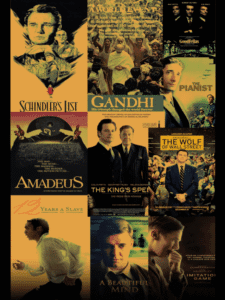
Biopics have a unique power in cinema. They allow audiences to witness real lives unfold on screen, blending historical truth with cinematic craft. From extraordinary leadership to unparalleled artistry, these films capture individuals who shaped our world.
However, not every biopic earns the title of “timeless.” The true masterpieces are recognized not just for awards, but for their enduring impact on culture and filmmaking. In this guide, we explore ten best biopic movies of all times that have left an indelible mark on cinema, alongside a curated set of honorable mentions showcasing global diversity, modern brilliance, and iconic performances.
Top 10 Biopics That Define the Genre
Schindler’s List (1993)
Director: Steven Spielberg | Key Star: Liam Neeson
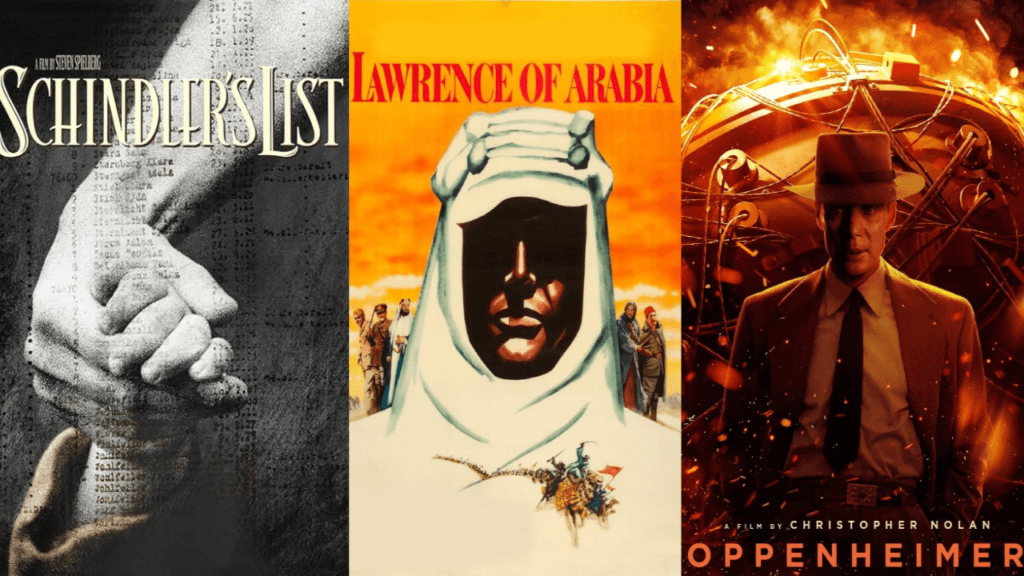
Spielberg’s magnum opus tells the story of Oskar Schindler, who saved more than a thousand Jewish lives during the Holocaust. Its stark black-and-white visuals and haunting score create a film of immense emotional weight. Winner of seven Academy Awards, it remains essential cinema.
Beyond its awards and historical gravity, the film reshaped how mainstream cinema portrays genocide, influencing countless documentaries and dramatizations. Its performances, especially Ralph Fiennes as Amon Göth, add moral complexity.
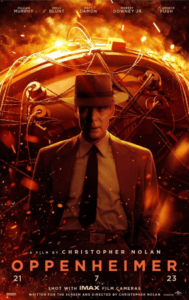
Oppenheimer (2023)
Director: Christopher Nolan | Key Star: Cillian Murphy
A modern masterpiece exploring the conflicted psyche of J. Robert Oppenheimer, the “father of the atomic bomb.” Nolan’s non-linear structure merges scientific innovation with political suspense on a grand scale.
The film’s immersive IMAX photography, intense courtroom sequences, and meticulous sound design elevate it beyond the traditional biopic. Murphy’s performance is widely considered career-defining.
Lawrence of Arabia (1962)
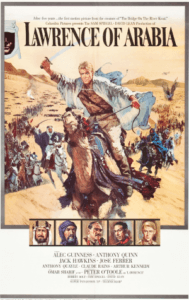
Director: David Lean | Key Star: Peter O’Toole
This sweeping epic follows T. E. Lawrence’s involvement in the Arab Revolt during WWI. Known for its magnificent desert cinematography and O’Toole’s iconic performance, it set the template for historical epics.
The film remains a technical landmark, with its use of 70mm film, large-scale battle staging, and nuanced depiction of colonial politics. Its influence extends across generations of filmmakers, from Spielberg to Ridley Scott, proving that epic storytelling can also be introspective and deeply character-driven.
Raging Bull (1980)
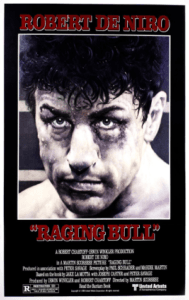
Director: Martin Scorsese | Key Star: Robert De Niro
Chronicling boxer Jake LaMotta’s violent brilliance, the film uses stark black-and-white visuals and groundbreaking editing to portray a man consumed by rage. De Niro’s transformative performance won him an Academy Award.
More than a sports biography, the film is a study in self-destruction — a raw, unfiltered look at jealousy, masculinity, and fractured relationships. Scorsese’s direction pushes emotional extremes, making it a foundational film for anyone exploring the darker side of the biographical drama.
Amadeus (1984)
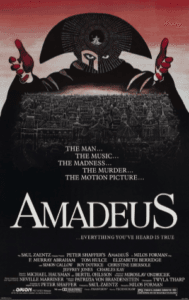
Director: Milos Forman | Key Star: F. Murray Abraham
This lavish drama explores Mozart’s genius through the envious eyes of rival composer Salieri. Winner of eight Oscars, it blends historical drama with operatic flair.
Its theatrical production design, intricate costumes, and psychological tension elevate the film beyond traditional period pieces. Abraham’s Salieri provides one of cinema’s most compelling narrative perspectives, transforming the story into a meditation on jealousy, ambition, and the tragedy of misunderstood genius.
The Pianist (2002)

Director: Roman Polanski | Key Star: Adrien Brody
A haunting and intimate portrayal of Władysław Szpilman’s survival during the Holocaust. Brody’s Oscar-winning performance masterfully conveys fragility and endurance.
Polanski’s personal history with war lends the film an authenticity that’s rare in the genre. The production design recreates wartime Warsaw with heartbreaking detail, and the film’s quiet moments — often without dialogue — showcase survival as both physical and psychological, making it one of the most human war films ever made.
Gandhi (1982)
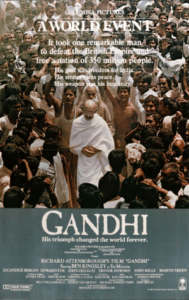
Director: Richard Attenborough | Key Star: Ben Kingsley
A monumental cinematic portrait of Mahatma Gandhi’s leadership and philosophy of non-violence. Kingsley’s transformation remains one of cinema’s greatest performances.
Its epic scale, spanning decades of political upheaval, is balanced by a deeply personal depiction of Gandhi’s internal conflicts. Massive crowd sequences, historically precise production design, and a commitment to authenticity have cemented it as a definitive portrayal of one of history’s most influential leaders.
A Beautiful Mind (2001)
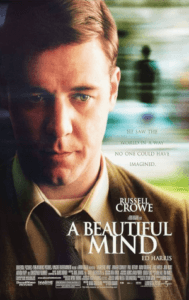
Director: Ron Howard | Key Star: Russell Crowe
The story of mathematician John Nash, whose brilliance is tested by paranoid schizophrenia. Winner of four Oscars, it is both emotionally gripping and intellectually rich.
The film’s depiction of mental illness helped shift public conversation toward empathy, making it culturally significant beyond awards. Jennifer Connelly’s performance adds emotional grounding, while the narrative structure offers a thoughtful blend of drama, romance, and psychological exploration.
12 Years a Slave (2013)
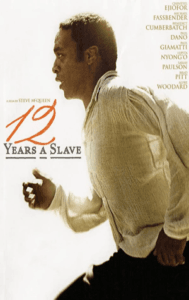
Director: Steve McQueen | Key Stars: Chiwetel Ejiofor, Lupita Nyong’o
Solomon Northup’s brutal kidnapping and enslavement is portrayed with unflinching honesty. Winner of three Academy Awards, including Best Picture.
McQueen’s direction delivers imagery that is both poetic and devastating. Ejiofor’s subtle yet powerful performance anchors the film, while Nyong’o’s breakout role remains one of the most unforgettable in modern cinema. Its cultural influence continues in discussions about representation and historical acknowledgment.
The Imitation Game (2014)
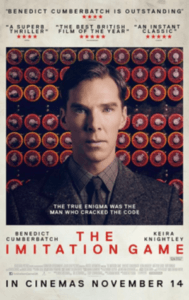
Director: Morten Tyldum | Key Star: Benedict Cumberbatch
A gripping portrayal of Alan Turing’s codebreaking genius and tragic persecution.
Beyond its historical revelations, the film serves as a sensitive character study of a man whose contributions remained unrecognized for decades. Cumberbatch’s layered performance captures Turing’s intellectual brilliance and emotional isolation, while the film highlights the cost of societal prejudice on human potential.
Honorable Mentions
The honorable mentions include a curated set of films that, while not in the Top 10, remain iconic, award-winning, and culturally significant. These biopics, while just outside the Top 10, remain landmark achievements that continue to influence filmmakers and audiences alike. They capture cultural impact, iconic performances, and a remarkable range of cinematic voices. This collection spans eras and styles — from Scorsese’s explosive The Wolf of Wall Street, which turned Jordan Belfort’s excesses into a cultural conversation, to the grandeur of The Last Emperor, whose breathtaking visuals and historical sweep defined epic filmmaking. It also includes The Social Network, a razor-sharp portrait of ambition in the digital age, and My Left Foot, featuring Daniel Day-Lewis’s deeply human portrayal of Christy Brown’s artistic triumphs.
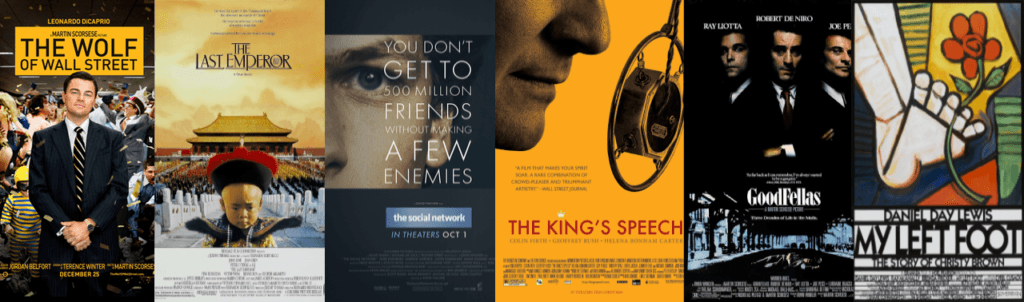
The set further expands with The King’s Speech, a moving and intimate story of personal courage at the highest level of leadership, and Goodfellas, Scorsese’s kinetic masterwork that remains one of the most influential crime biopics ever made. Together, these films form a powerful extension of the genre — works that embody artistic excellence, global perspective, and timeless storytelling. They stand as essential companions to the Top 10, enriching the conversation around what makes a biopic unforgettable.
The films highlighted here are cinematic milestones, combining artistry, awards, and cultural resonance. From the haunting realism of Schindler’s List to the psychological depth of Oppenheimer, these biopics set the benchmark for the genre. Each film demonstrates cinema’s power to transform reality into compelling stories and lasting cultural memory. Whether you are a casual viewer or a devoted cinephile, this list of Top 10 biopics and honorable mentions offers the ultimate guide to the best true-story films ever made.