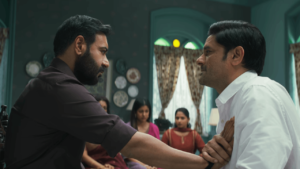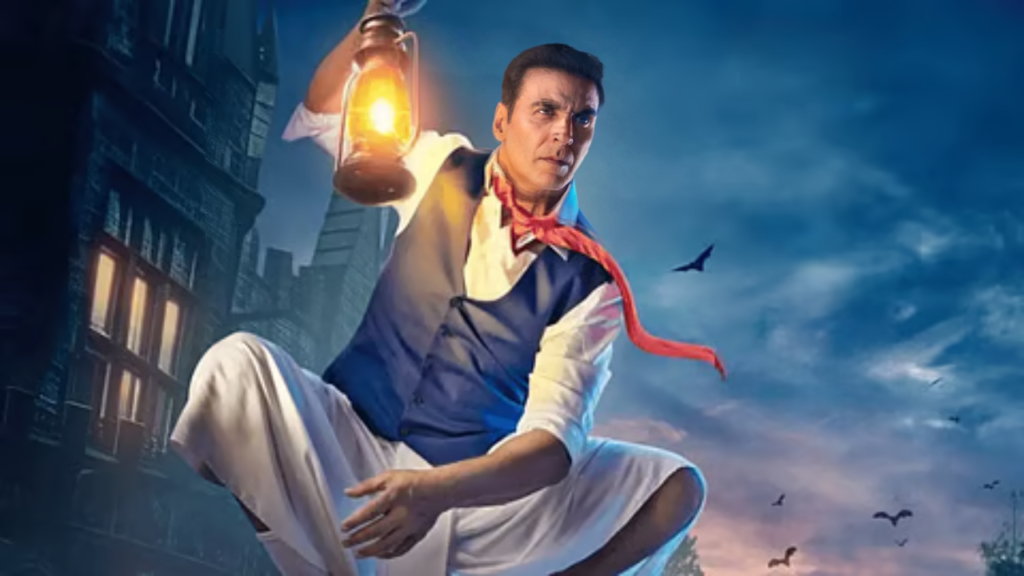
There was a time when Akshay Kumar represented consistency at the Hindi box office — not just as a star, but as a system. Multiple releases each year, steady returns, and a familiarity that translated into audience trust. That equation, however, has steadily shifted over the past few years, and as 2026 unfolds, the certainty that once defined his theatrical presence has given way to unpredictability.
This is not a perception shaped by isolated outcomes, but a pattern that has built over time. Films like Samrat Prithviraj attempted scale but failed to convert that ambition into engagement. The subsequent phase leaned heavily into action-driven spectacles such as Bade Miyan Chote Miyan and Sky Force, yet these too struggled to sustain audience interest beyond initial curiosity. At the same time, mid-tier dramas and remakes — including Raksha Bandhan, Selfiee and Mission Raniganj — opened modestly but quickly lost momentum, pointing toward a recurring issue of theatrical longevity.
Even established franchises have offered limited insulation. Housefull 5, despite its brand recall, could not generate the kind of sustained traction that such properties once guaranteed. The only partial exception in this period has been OMG 2, a film that performed well but did not function as a traditional Akshay Kumar-led commercial vehicle, leaving the question of his solo pull unresolved.
What emerges from this trajectory is not just a series of underperformers, but a consistent pattern — strong awareness followed by rapid drop-offs. The challenge is no longer about opening numbers, but about holding audience attention, about converting curiosity into approval.
It is within this context that Bhoot Bangla arrives.
Directed by Priyadarshan, the film carries with it the weight of a creative partnership that has historically delivered some of the most accessible and enduring entertainers in Hindi cinema. Their collaborations have thrived on rhythm, clarity of tone and repeat value — elements that feel particularly relevant in a market where audience retention has become the defining metric of success.
The choice of genre further aligns with that legacy. Horror-comedy, when executed effectively, has the ability to bridge demographics, combining immediacy with rewatch value. It is a space that allows for both theatrical engagement and word-of-mouth momentum — two factors that have become increasingly critical in the current landscape.
And that landscape, four months into 2026, presents a sharply defined contrast.
On one end, large-scale event films continue to dominate. Dhurandhar 2 has emerged as the year’s defining success, operating on scale and spectacle, while Border 2 has comfortably crossed the ₹300 crore net mark in India. These films reaffirm a key truth — audiences have not disengaged from theaters, but they have become more selective about what they choose to experience on the big screen.
On the other end, a wide range of mid-tier films have struggled to find footing. Shahid Kapoor’s O Romeo, despite collecting around ₹72 crore net, fell short of expectations when measured against its scale. Rani Mukerji’s Mardaani 3, hovering near ₹50 crore, sustained itself largely due to controlled costs rather than overwhelming audience turnout. Other releases — Ikkis, Do Deewane Seher Mein, Happy Patel, Assi, Rahu Ketu and The Kerala Story — have largely faded without leaving a significant impact.
What this indicates is a shift not in consumption, but in expectation. The market has moved from volume to value. Films are no longer judged by their presence alone, but by their ability to justify a theatrical experience.
This shift directly intersects with Akshay Kumar’s long-standing model. For years, frequency was a strength — multiple releases ensured visibility and diversified risk. In the current environment, that same approach faces greater scrutiny. Each film is now expected to stand apart, to offer a distinct identity strong enough to sustain audience interest.
Bhoot Bangla therefore arrives not just as another release, but as a point of recalibration.
It is also important to note that it is only the beginning of a larger slate. With Welcome to the Jungle and Haiwan scheduled to follow later in the year, 2026 is shaping up as a defining phase. The narrative will not be shaped by a single film, but by how consistently the slate performs across genres and expectations.
Read More:
- How much does responsibility seep into filmmaking? Or does it at all?
- Top 10 Visually Stunning Films Ever Made, Ranked by PoF
- Beyond Hype: The 10 Indian Films Defining Anticipation in 2026
- When Beauty Becomes a Prison: The Eternal Relevance of Jalsaghar
- When Fiction Predicts Reality: Movies That Became True