Roger Corman made more than 400 films. Yet his greatest production wasn’t a film at all. It was an entire generation of filmmakers.
It has never been easier to make a film.
A smartphone can shoot in 4K. Editing software is available for free. A finished film can be uploaded to the world in minutes. Technology has removed many of the barriers that once made filmmaking an expensive dream.
And yet, it has never been harder to build a career like Roger Corman‘s.
 At first glance, that sounds absurd. After all, Corman built an empire making films on shoestring budgets, often in a matter of days. If anyone should thrive in today’s era of affordable cameras and digital distribution, it should be someone like him.
But Roger Corman wasn’t merely a filmmaker who knew how to save money. He was the product of a film industry that rewarded speed, embraced risk, and allowed young talent to learn through relentless practice. That world has quietly disappeared.
The question, then, isn’t whether someone can make low-budget films today. Thousands do.
The real question is whether someone like Roger Corman could become Roger Corman today.
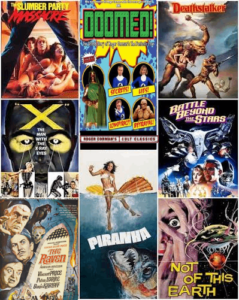
To answer that question, we first need to understand why Roger Corman became far more than just another independent filmmaker. For many, Roger Corman is remembered as the king of B-movies. Horror films, science fiction adventures, biker movies, crime thrillers, his filmography stretched across genres and decades. Critics often dismissed these films as inexpensive entertainment, but audiences kept watching them. More importantly, filmmakers kept learning from them.
Behind the seemingly chaotic world of monsters, aliens and outlaws was a producer with extraordinary discipline. Corman understood budgets better than most executives, schedules better than many directors, and audiences better than countless critics. He believed that films should be made, not endlessly discussed. If a film succeeded, he moved on to the next one. If it failed, he still moved on to the next one.
His greatest legacy, however, wasn’t the films themselves.
It was the people who made them.
The names that passed through Roger Corman’s productions read like a who’s who of modern American cinema. Before Titanic and Avatar made James Cameron one of the world’s most successful directors, he was designing miniature models and working in production design on Corman’s films. Francis Ford Coppola directed Dementia 13 under Corman’s guidance long before The Godfather redefined Hollywood, while Martin Scorsese sharpened his craft directing Boxcar Bertha before creating classics like Taxi Driver and Raging Bull. For many of cinema’s greatest filmmakers, Roger Corman wasn’t just an early employer, he was their first real classroom.

Actors like Jack Nicholson sharpened their craft under his watch.
He rarely offered luxury. He offered responsibility.
Young directors were trusted with real budgets, real deadlines and real consequences. They learned to solve problems instead of waiting for perfect conditions. They learned that filmmaking wasn’t about having every resource, it was about making the most of the resources they already had.
In many ways, Roger Corman built the greatest film school Hollywood never officially acknowledged.
But Corman’s success wasn’t built on determination alone. It depended on an ecosystem that no longer exists.
During the 1950s, 60s and 70s, American cinema had room for filmmakers like him. Drive-in theatres constantly needed fresh programming. Double features demanded more films. Regional distributors were willing to take chances on inexpensive productions. Audiences wanted variety, and exhibitors needed content to fill screens.
A film didn’t have to become a cultural phenomenon to justify its existence. It simply had to recover its cost and find its audience.
Because the budgets were modest, failure wasn’t catastrophic. One unsuccessful film didn’t destroy a career. The next project was often already in motion.
That environment encouraged experimentation and productivity.
Today’s film industry operates very differently.
Ironically, making a film has become easier, while building a sustainable filmmaking career has become considerably harder.
Hollywood has become increasingly dependent on franchises, familiar intellectual property and established brands. Studios invest hundreds of millions of dollars into individual projects, making failure far more expensive than it once was. As the financial stakes have grown, so has the industry’s reluctance to take creative risks.
Streaming platforms promised to democratize cinema, and in many ways they have. Independent filmmakers now have more tools than ever before. But they are also competing against an endless ocean of content. The challenge is no longer making a film.
The challenge is being discovered.
Where Roger Corman competed for screen space, today’s filmmakers compete for attention.
That may be the most valuable currency in contemporary cinema.
Algorithms influence visibility. Viewer retention influences recommendations. Marketing budgets often determine whether a film is noticed at all. The barriers haven’t disappeared; they have simply changed shape.
Even the independent film circuit has become more complicated. Thousands of films compete for limited festival slots. Distribution deals are increasingly difficult to secure. A completed film no longer guarantees an audience.
Cameras have become cheaper. Attention has become more expensive. Does that mean Roger Corman’s philosophy is no longer relevant?
Quite the opposite.
If anything, his working methods feel more important today than ever before.
Corman believed that waiting for ideal circumstances was the quickest way to stop making films altogether. He treated limitations as creative opportunities rather than excuses. He understood that experience comes from finishing projects, not endlessly preparing for them.
Many aspiring filmmakers spend years chasing perfect equipment, larger budgets or industry approval before beginning their first feature.
Roger Corman would probably have told them to start shooting tomorrow.
His career reminds us that consistency often matters more than perfection. That momentum can be more valuable than ambition. That every completed film teaches lessons no screenplay draft ever can.
Those principles remain timeless, even if the industry surrounding them has transformed.
So, can Roger Corman exist today?
Perhaps not in the way he once did.
The network of drive-ins has faded. The B-movie economy has largely disappeared. Hollywood no longer produces talent through the same apprenticeship system that Corman perfected. The conditions that allowed his remarkable career were unique to a particular moment in cinema history.
But the spirit behind his work hasn’t vanished.
It may emerge from a filmmaker uploading independent features online instead of screening them at drive-ins. It may come from creators building loyal audiences without waiting for studio approval. It may appear in regional cinemas, digital platforms, or entirely new forms of distribution that haven’t yet found their defining pioneers.
The next Roger Corman probably won’t look like the last one.
Yet whoever they are, they will likely share the same qualities that made Corman unforgettable. Curiosity over comfort, persistence over prestige, and an unwavering belief that the best way to become a filmmaker is simply to keep making films.
Roger Corman didn’t wait for permission. Perhaps that’s the lesson today’s filmmakers need most.
Read More:
- Spotlight: Making Injustice Heard in a World of Untouchable Power
- Harry Potter and the Question Every Reboot Must Answer
- Good Films Are Often Bad Experiences
- Top 10 Sequels That Elevated Cinema: When Hollywood Got Better the Second Time
- How much does responsibility seep into filmmaking? Or does it at all?