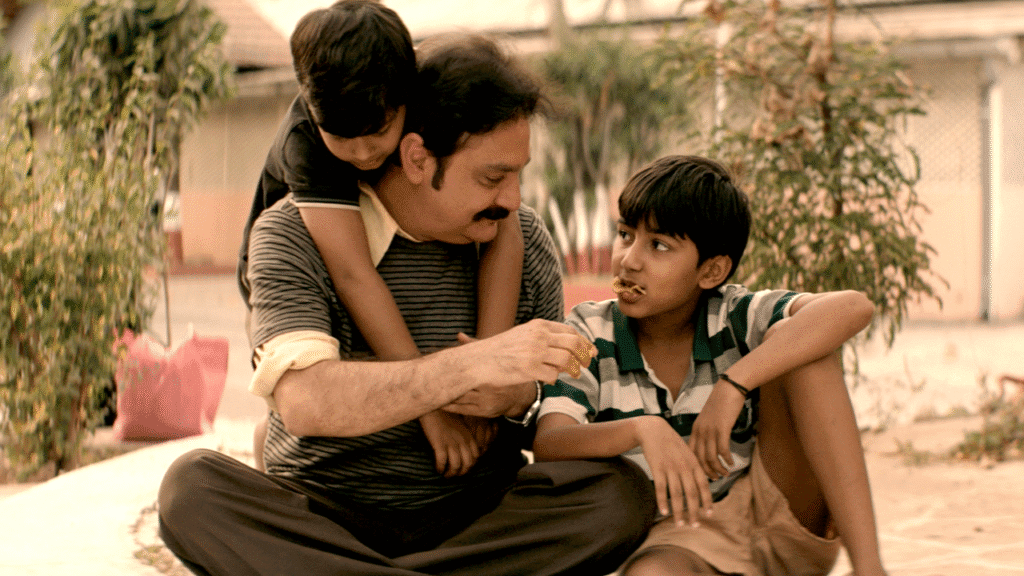
After nearly ten years of waiting and holding on through every possible challenge, Chidiya finally found its way to Indian theatres on 30 May 2025. What followed was nothing short of remarkable. The film, once considered a fragile indie project struggling for visibility, was instantly greeted as one of the year’s most heartfelt cinematic revelations. Directed by debutant Mehran Amrohi, Chidiya has been applauded for its gentleness, its warmth, and the rare emotional honesty it carries in every frame — qualities that have grown increasingly scarce in mainstream cinema.
Today, that long journey enters a new and meaningful chapter. Chidiya is now officially available on rent on Amazon Prime Video, allowing its tender universe to travel into households across India. What began as a deeply personal, decade-long dream has finally taken flight — not just in theatres and festivals, but in the hearts of everyday viewers discovering it at home.
A Heartfelt Ode to Childhood
Set within the tightly packed chawls of Mumbai — spaces that pulse with both chaos and community — Chidiya follows two young brothers, Shanu and Bua, who share a small one-room home with their widowed mother. Within these confined walls, the boys carve out a universe far bigger than the world adults occupy. Their days unfold through small adventures, misunderstood dangers, mischief that often masks longing, and dreams that soar high above the narrow lanes of their surroundings.
Mehran Amrohi’s direction brings an unusual gentleness to the film. His visual style is restrained and observant, never pushing emotion where it doesn’t naturally belong. Rather than sweeping background music or dramatic crescendos, the film breathes through moments — the pause after a question, the light shifting across a wall, the silence of two children communicating without words. Amrohi trusts these quiet details, letting the city and its rhythms become an unspoken character of their own.
The film’s themes emerge organically — childhood as something fragile yet resilient; poverty not as spectacle, but as circumstance; family as both anchor and emotional landscape; and joy as something found in the smallest, most unremarkable corners of life. Chidiya avoids sentimentality, despite its inherently emotional premise. It speaks softly, choosing honesty over melodrama, and in doing so becomes far more powerful.
What the Critics Are Saying: A Rare Critical Consensus
Rahul Desai (The Hollywood Reporter India) calls it “a self-contained, deeply felt portrait of childhood,” admiring the instinctive brilliance of the child actors and Amrohi’s restraint in refusing to over-stylise emotion.
Subhash K. Jha (The Statesman) describes Chidiya as “the most precious film of the year,” applauding the director’s ten-year perseverance and calling the film a triumph of sincerity and minimalism.
Amit Bhatia (ABP Live) recommends the film as essential viewing for anyone who values meaningful cinema, praising its emotional clarity, grounded writing, and refreshing simplicity.
Komal Nahta (Film Information) highlights the film’s emotional honesty and its smooth festival-calibrated texture, noting that its simple storytelling carries an ageless appeal.
On YouTube, RJ Raunak insists the film is unmissable, emphasising its heartfelt simplicity, while Yogi Bolta Hai praises its innocence, naturalistic writing, and emotionally resonant performances.
Dhaval Roy (The Times of India, 3.5/5) calls Chidiya a warm, uplifting slice-of-life drama, spotlighting the natural performances of the child actors and Amruta Subhash.
Rishabh Suri (Hindustan Times) sees the film as “a gentle reminder of the power of small dreams,” praising Vinay Pathak’s standout performance and the film’s old-school charm.
Devesh Sharma (Filmfare) calls it one of the finest children’s films in recent years — thoughtful, tender, and refreshingly non-preachy.
Sana Farzeen (India Today) describes it as a cosy, heartfelt experience that stays with the viewer long after the credits roll.
Priyanka Singh (Jagran) highlights the film’s emotional density and sensitive portrayal of social realities, praising its dialogue and art direction.
Rekha Khan (Navbharat Times, 3.5/5) commends its authentic production design, grounded performances and quiet cinematic power.
Bollywood Hungama appreciates the film’s emotional restraint and the long, determined journey that led to its release. Regional platforms — from The Tribune to FCG Reviews, Beyond Bollywood and NewsBytes — consistently praise Chidiya for its naturalism, its sensitive storytelling and its rare ability to portray childhood without romanticising poverty. Across the critical landscape, one consensus emerges clearly: Chidiya is a cinematic treasure — quiet, tender, rare, and profoundly human.
Performances & Filmmaking Craft: Cinema Rooted in Honesty
At the heart of Chidiya lie the performances of the child actors Svar Kamble and Ayush Pathak, who drive the emotional engine of the film with astonishing instinct and sincerity. Their exchanges — playful, vulnerable, occasionally stubborn — feel untouched by performance technique. They breathe life into the narrative the way only children can: without self-awareness, without artifice, and without fear of simplicity. Their bond becomes the film’s emotional core, turning everyday moments into something intimate and luminous.
Amruta Subhash brings remarkable depth to the role of the boys’ mother. She embodies the exhaustion of survival, the tenderness of caregiving, and the unspoken grief of someone who must carry more than she ever reveals. Her performance is not loud, but it is unforgettable. Vinay Pathak, as Balai, adds warmth and gentle humour, grounding the story with a presence that feels lived-in and deeply empathetic.
The filmmaking itself is defined by its clarity. The cinematography captures the chawl environment not as a site of poverty, but as a living, breathing space filled with textures, colours, shadows, and echoes. Every frame feels handmade, shaped with sensitivity to natural light and real human movement. The editing respects the film’s meditative pace, allowing conversations to settle and silences to absorb meaning. The music remains a quiet companion throughout — subtle enough to blend into the film’s emotional fabric, yet effective enough to elevate key moments without intruding upon them.

Cast & Crew: The Team Behind the Film
The creative force behind Chidiya is Mehran Amrohi, whose decade-long pursuit of this story has now become part of the film’s own legend. His direction reflects both patience and precision, shaped by years of trying, refining, and refusing to compromise the heart of his narrative.
The cast is led by Svar Kamble and Ayush Pathak as the two spirited siblings, Amruta Subhash and Vinay Pathak, both of whom deliver beautifully controlled performances rooted in emotional truth. The film’s real heartbeat, however, comes from its remarkable child actors, who carry the story with raw authenticity and instinctive brilliance. Their performances, combined with the screenplay’s emotional clarity, give the film its gentle yet powerful impact, along with Inaamulhaq and Brijendra Kala in memorable supporting roles. The crew is equally committed: Vikas Joshi’s cinematography brings the cramped Mumbai chawl to life with textured realism, Mohit Takalkar’s editing preserves the film’s patient, breathing rhythm, and the score by Shailendra Barve subtly underscores the emotional highs and lows. Together, this cast and crew create a film that feels quietly monumental — powered by sincerity, restraint and a deep love for the story.Every department contributes to a single overarching vision: cinema powered entirely by sincerity.
Audience Reactions
While critics have been unanimous, the audience response has been equally overwhelming. On IMDb, viewers describe Chidiya as “soul-touching,” “pure,” “real,” and “impossible to forget.” Many recount how the film resurrected memories of their childhood — afternoons spent in narrow lanes, innocent dreams, schoolyard mischief, or the quiet companionship of siblings.
Amaan calls the film flawless, praising its emotional honesty and its portrayal of childhood without unnecessary embellishment. ShrradhaS echoes the sentiment, noting how universal the film feels across families and generations.
On BookMyShow, audiences repeatedly highlight the authenticity of the child actors, the emotional pull of the narrative and the film’s absorbing simplicity. Parents especially describe it as one of the most meaningful films to watch with children — a story that entertains not through noise but through truth.
Across reviews and ratings, the reaction remains consistent: Chidiya has touched hearts everywhere, cutting across age, region and background.
Critical & Cultural Impact: Why Chidiya Matters Today
At a time when Indian cinema is dominated by high-concept spectacles, relentless marketing, and formula-driven storytelling, Chidiya arrives like a quiet rebellion. It is a reminder that films rooted in humanity, emotion and truth still have the power to cut through the noise. The film’s victory is not merely artistic — it is cultural.
Chidiya demonstrates that independent films, even those made with modest budgets and minimal resources, can find visibility, love and longevity when driven by conviction. Its journey — from festival screens across the world to a long wait for theatrical release, to finally reaching the masses through OTT — reflects the resilience of artists who choose heart over hype.
Most importantly, the film reaffirms the audience’s appetite for sincere storytelling. In a changing cinematic landscape, Chidiya stands as proof that gentleness is not a weakness, and that quiet films often echo the loudest.
Where to Watch Chidiya
Chidiya is now available on rent on Amazon Prime Video, bringing its tender world to audiences across India.
Chidiya is more than a film — it is an experience shaped by patience, heart and emotional truth. Its decade-long journey mirrors the sincerity at its core, proving that stories told with honesty always find their audience. Quiet, poetic and unforgettable, Chidiya is a small film with a soaring heart.
Read More: