If first day of CinemaCon 2026 day 2 was about setting the tone, Day 2 was about raising the stakes.
The spotlight shifted decisively to Warner Bros., and with it came a presentation that felt less like a preview slate and more like a statement of intent. This wasn’t just about showing films — it was about reinforcing belief in theatrical cinema at a time when the industry continues to navigate transition.
And the scale of that statement was evident the moment the studio took the stage.
A lineup of stars that included Tom Cruise, Timothée Chalamet, Zendaya, Nicole Kidman, Sandra Bullock and Jason Momoa signaled exactly what Warner Bros. wanted to communicate — that theatrical cinema remains an experience built on scale, spectacle and presence.
But beyond the star power, it was the diversity of the slate that defined the day.
The presentation built gradually, moving from familiarity to experimentation, before culminating in what is arguably one of the most anticipated films in development. Footage from Dune: Part Three, directed by Denis Villeneuve, positioned the film not just as a continuation, but as a tonal shift. Described as more intense and emotionally charged than its predecessors, the film appears to push deeper into the psychological transformation of its central character, signaling a conclusion that leans as much into internal conflict as it does into spectacle.
Yet, it was perhaps the unexpected that generated the strongest reaction.
In Digger, directed by Alejandro González Iñárritu, Tom Cruise appears in a form rarely seen before. The trailer reveals him as an eccentric, unstable billionaire — physically transformed, tonally unpredictable and far removed from the controlled precision that has defined much of his recent work. The performance, described as one of the most challenging of his career, suggests a film that is willing to embrace chaos, satire and discomfort in equal measure.
This willingness to step outside established expectations extended across the slate.
DC’s Clayface emerged as one of the most surprising tonal pivots of the day, leaning fully into body horror. The imagery — unsettling, fluid and deliberately grotesque — signals a version of the DC universe that is less concerned with traditional superhero spectacle and more interested in genre experimentation. It is a risk, but one that reflects a broader shift toward diversifying tone within franchise filmmaking.
At the same time, the studio did not lose sight of familiarity.
Practical Magic 2 brought Sandra Bullock and Nicole Kidman back together, tapping into nostalgia while positioning the film as an emotional continuation rather than a simple revisit. The response in the room suggested that legacy storytelling, when handled with care, continues to hold value.
The evolving DC landscape was further represented through Supergirl, led by Milly Alcock. The footage emphasized character as much as scale, presenting a protagonist shaped by conflict and isolation rather than idealism. The inclusion of Jason Momoa’s Lobo added an edge that suggests a more layered and less conventional direction for the franchise.
Alongside these projects, Warner Bros. reinforced its commitment to original storytelling.
J.J. Abrams’ The Great Beyond stood as a reminder that even within a franchise-driven ecosystem, there remains space for large-scale original ideas. Positioned as a science fiction thriller, the film reflects a studio strategy that balances established IP with new narrative possibilities — an approach increasingly necessary in a market that demands both familiarity and novelty.
Even outside Warner Bros., Day 2 carried a sense of expansion.
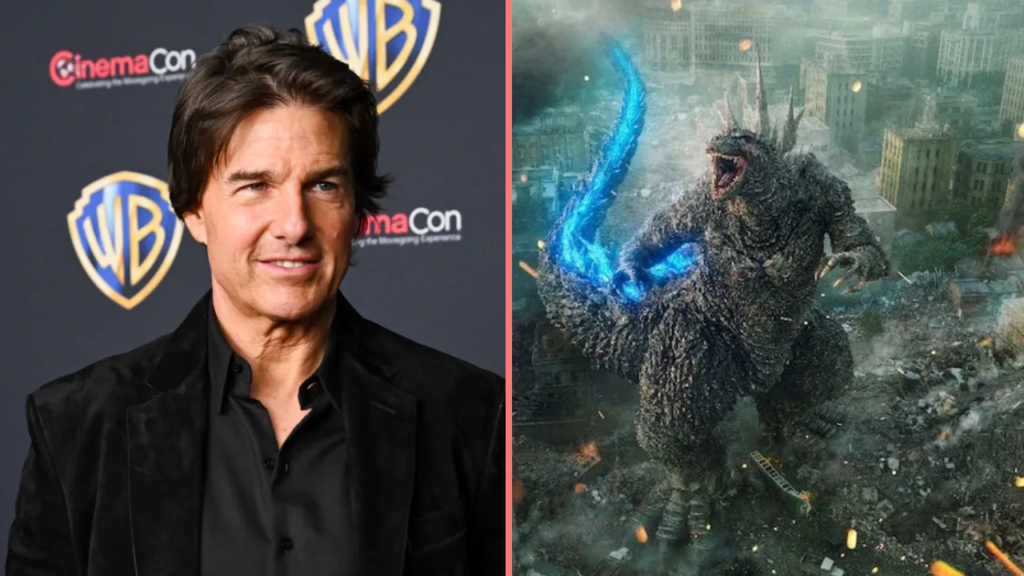
The first look at the Godzilla Minus Zero sequel hinted at a shift from contained storytelling to global spectacle, with imagery placing the iconic creature against the backdrop of New York City. It is a visual that immediately communicates scale, but also suggests a broader ambition — one that seeks to move beyond its origins into a more internationally resonant narrative space.
Read More:
- CinemaCon 2026 Day 1: Resident Evil, Spider-Verse and More Kick Off Hollywood’s Big Showcase
- Top 10 Sequels That Elevated Cinema: When Hollywood Got Better the Second Time
- From Hogwarts to Hollywood: Where the Harry Potter Cast Is Today
- Beyond Hype: The 10 Indian Films Defining Anticipation in 2026
- Top 10 Visually Stunning Films Ever Made, Ranked by PoF