When someone strips you of your freedom, they’re not just taking your freedom away. I believe they’re inflicting the beginning of horror upon a society at large, even if, at that moment, it is only one person being deprived of that freedom.
Film certification, I feel, is somewhat like that.
Just yesterday, I was made aware that The Voice of Hind Rajab, a 2025 docudrama written and directed by Kaouther Ben Hania, had finally passed film certification and been released in India. The film had received an Academy Award nomination for Best International Feature Film at the 98th Academy Awards as Tunisia’s official entry.
This is the same film that was initially blocked for theatrical release by the very same board.
Everyone mostly knows about Hind Rajab because her story became one of the defining tragedies of 2024. Hind, a five-year-old Palestinian girl, was trapped inside a car in the Gaza strip amidst heavy firing, surrounded by the dead bodies of her family members, before she too was killed. The film is essentially built around the emergency call she made to Red Crescent volunteers while trapped inside that car, her entire talk with them, one final conversation that the world would later hear.
And that raises a simple question. What exactly is the job of a film certification board?
Its purpose is to certify films according to who can watch them, not in terms of what section of society can watch them, but what age group can. A film receives a “U” certification if it can be watched universally without parental guidance. A film receives a “U/A” certification if parental guidance is advised for younger viewers, with further distinctions such as U/A 7+, U/A 13+, and U/A 16+. An “A” certification is reserved for films that can only be viewed by adults.
At least, that is what film certification is supposed to be.
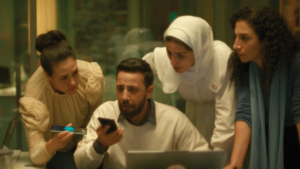
When I first heard that The Voice of Hind Rajab had been blocked, I was baffled. I could not fathom why a film that shines a light on the horrors of war could be considered harmful enough to prevent people from seeing it. And not just criticised, debated, or challenged; but blocked.
I am of the opinion that no film, no piece of art, no book, no song, no comic, should ever be banned. Of course, films are often prohibited on the grounds that they are supposedly harmful to society in some way. But shouldn’t I be allowed to decide that for myself? Shouldn’t you?
Maybe there is a film you will dislike. Maybe there is a film that you will find deeply irresponsible. You may debate the filmmaker’s intent, their ethics, their politics, and their responsibility. But surely the audience should first be allowed to encounter the work before making that judgement.
To deny a film the chance to exist in public is to deny the audience the choice itself.
A film that reached the Oscars, how can you attempt to block that film? And what is blocking a film, if not the first step towards banning it?
What confused me most about The Voice of Hind Rajab was that it had nothing to do with India.
I can understand, even if I disagree with it, why a film dealing with Indian society, religion, or politics might be considered sensitive by a certification board. But here was a film that had nothing to do with Indian institutions, Indian communities, or Indian politics. And yet it was still stopped, or tried to.
We know why it likely happened. International geopolitics rarely stays outside the doors of domestic institutions. But why should that matter?
Is a film certification board meant to serve the government of a country, or its people? The answer is simple, and only one. Whether it does or not, differs.
As a citizen, I have the Right to Information. I can access official records concerning the functioning of my government. Yet somehow, I can be denied the right to watch a film. There is something deeply contradictory about that.
The purpose of art has never been singular.
The assumption that films exist solely for entertainment is false. Art is not bound by someone else’s expectations. It is free of conditions, free of prescribed purposes and ideals. While a film is ultimately consumed by an audience, the process of making it should not be governed by what will be most liked by that audience. The process of making it has to be independently governed by the story itself, and nothing else.
Different filmmakers pursue different goals. Some make large-scale commercial entertainers. Others create works that force introspection, reflection, and discomfort. The purpose of art is not merely to entertain. Its purpose is also to unsettle you. To challenge you. To make you introspect. To make you aware. To make you even kinder.
Its purpose is to allow you to find your own purpose within it.
People often try to separate politics from art. But politics has always existed within art. Your art is, in many ways, a reflection of who you are. What you believe inevitably finds its way into what you create. Even when politics is not explicitly present, a worldview still is.
And if a filmmaker chooses to make a film directly about politics, that choice belongs to the filmmaker alone. Similarly, the choice to watch that film, or not, belongs to the audience.
But sadly, that’s not how it works, or has for a long time.
Throughout history, film certification and censorship bodies have continued to suppress films and other forms of artistic expression.
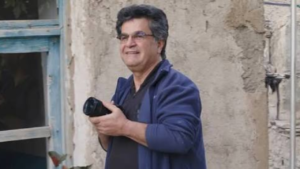
Jafar Panahi, the Iranian filmmaker, has been officially banned from making films by the Iranian government since 2010. And why? Simply because he dared challenge the ruling regime directly in his films. Yet he continued making films underground. His 2025 film It Was Just an Accident went on to win the Palme d’Or at Cannes.
In India itself, Santosh, Sandhya Suri’s 2024 Hindi-language police procedural drama, has effectively been banned after the Central Board of Film Certification refused to clear it for theatrical release. The board reportedly demanded extensive cuts to scenes dealing with police brutality, caste discrimination, misogyny, and institutional corruption. From the filmmakers’ perspective, refusing those cuts makes complete sense.
If a film is fundamentally about those issues, and the very centre of the film is removed, what would even remain?
And this is a film set in India itself. A film about discrimination that I cannot legally watch because a board believes I should not. Even more frustratingly, while Santosh did not receive an Oscar nomination, it was selected as the United Kingdom’s official entry for Best International Feature Film at the 97th Academy Awards. I would have been prouder if it had been India’s entry.
But while you can block a way, you can’t block all ways. While you can silence the artist, you can’t silence the art.
That brings me back to The Voice of Hind Rajab.
Yesterday, I finally watched the film. I had originally planned to watch it later, when I had more time on my hand. Instead, I watched it with little sleep, knowing that the film would anyway wake me up, and it did.
Even before pressing play, I knew there was nothing that I would find in the film that could justify the initial blocking of the film. Yet a part of me wanted to be proven wrong. I wanted a reason. I wanted something that would explain why preventing people from seeing it had ever seemed necessary at all.
But to no one’s surprise, there was none.
Watching the film makes you realise that it is not fundamentally about geopolitics. It is about humanity, and the loss of it. Throughout the film, all you feel is loss. You do not care about your country’s geopolitical position. You do not care about diplomatic relationships. You are furious. You are devastated. You are atrociously angry.
Even after knowing the truth, you wish for Hind to live. You wish to go back in time yourself and save her. You wish for time travel. You wish the world wasn’t so cruel. You wish people weren’t so crazy that they would ever feel powerful by killing people. You wish for humanity.
Every word she speaks becomes heavier because you know the truth. You know that this conversation is her last. You know that this is the last time you’re hearing her voice.
There are countless children whose lives have been taken by war, at the hands of cowardly men. Each child had a story. Each had a voice. But cinema can give that voice a face. And when it does, it forces people to confront the reality of war in a way statistic can’t.
That is why films like these are essential. That is why films should exist.
And when you attempt to take away the autonomy of such a film, or any film, you are not merely censoring art. You are looting the country of its freedom, its democracy, its identity.
Read More: