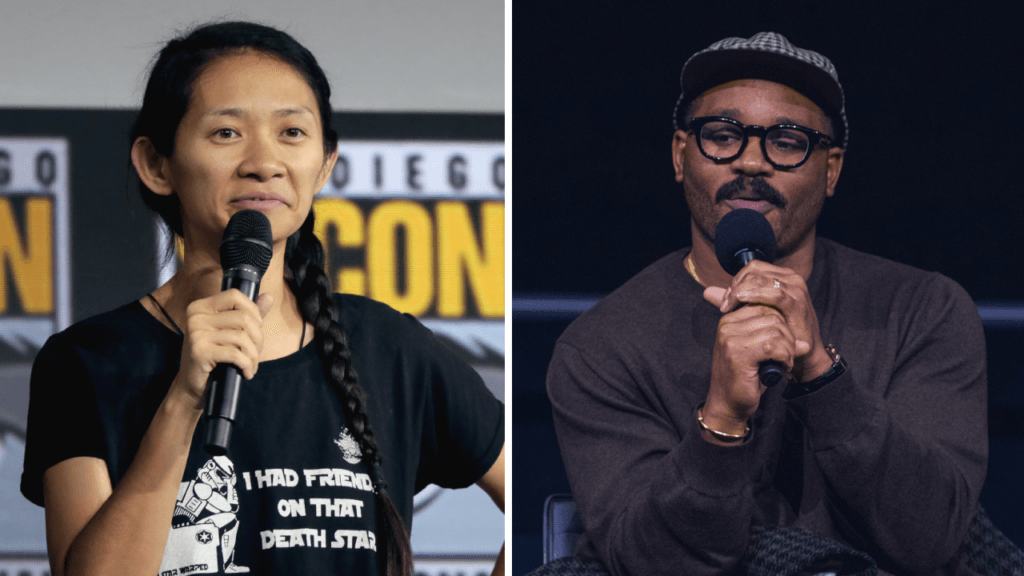
The Directors Guild of America unveiled its nominations for the 2026 DGA Awards, and while the lineup reinforces many of the season’s dominant narratives, it also sends a far more restrictive message about who is truly allowed into the Oscar directing race. Much like the recent Actor Awards nominations, the DGA slate clarifies momentum not by its surprises, but by its exclusions — revealing an awards ecosystem that continues to privilege scale, studio infrastructure, and domestic visibility over global acclaim and quieter prestige.
The five filmmakers nominated for Outstanding Directorial Achievement in Theatrical Feature Film — Paul Thomas Anderson for One Battle After Another, Ryan Coogler for Sinners, Guillermo del Toro for Frankenstein, Josh Safdie for Marty Supreme, and Chloé Zhao for Hamnet — represent a group that is artistically varied but institutionally aligned. Every nominee sits comfortably within the Hollywood studio system, and every nominated film benefited from robust theatrical presence, high guild visibility, and sustained awards campaigning.
That alignment becomes even clearer at the studio level. Warner Bros. placed two directors in the top category, underscoring how decisively it has positioned itself at the center of this year’s awards season. Historically, the DGA has gravitated toward films that represent large-scale crew leadership, long production timelines, and significant below-the-line employment — areas where major studios, particularly legacy ones, retain an edge over streamers and independent distributors. The result is a lineup that feels less like a snapshot of the year’s full cinematic breadth and more like a consolidation of industrial power.
Coogler’s nomination carries undeniable historical weight, as recognition for Black filmmakers at the DGA level remains exceedingly rare. Yet the broader context tempers any sense of progress. While the nomination marks a breakthrough moment, no Black director has ever won the DGA’s top prize, highlighting a persistent gap between recognition and reward. In that sense, Coogler’s inclusion reflects both advancement and the limits of institutional change — a familiar pattern across multiple guilds this season.
Zhao’s nomination reinforces a different but related dynamic. Already an Oscar and DGA winner, she has now been absorbed into the guild’s core circle of repeat-approved auteurs. While her continued presence is significant, it also underscores how narrow the pathway remains for women and filmmakers of color. Repeat nominations often circulate among a small, established group rather than expanding opportunities for new voices, suggesting that progress within the DGA tends to be incremental rather than transformative.
Del Toro occupies a unique space in this ecosystem. Though internationally born, his decades-long integration into Hollywood positions him as an insider rather than an outsider. His nomination for Frankenstein illustrates a crucial distinction in DGA voting patterns: the guild is not resistant to foreign filmmakers per se, but it consistently favors those who have fully embedded themselves within the American studio system. Global acclaim alone is rarely sufficient without that institutional familiarity.
Safdie’s first-ever DGA nomination, meanwhile, functions less as a genuine win threat and more as a career-validation moment. First-time nominees almost never take the top prize, and historically, such nods serve as markers of future leverage rather than immediate dominance. The recognition signals that Safdie has crossed an important threshold, moving from boundary-pushing independent filmmaker to accepted studio auteur — a transition the DGA has often rewarded in retrospect rather than in real time.
If the nominees reflect consolidation, the omissions tell the more revealing story. Despite widespread critical consensus that 2025 was a banner year for international cinema, the DGA shut out the entire non-English-language field. Acclaimed filmmakers such as Joachim Trier (Sentimental Value), Park Chan-wook (No Other Choice), Oliver Laxe (Sirât), and Kleber Mendonça Filho (The Secret Agent) were all excluded, mirroring the Actor Awards’ earlier rejection of international performances. This is not an anomaly but a recurring structural pattern. The DGA’s voting body remains heavily domestic, and its nominations consistently favor films that circulate widely within American guild infrastructure, regardless of global impact.
Notably, even respected American auteurs were not immune. Clint Bentley’s elegiac Train Dreams failed to land a nomination, as did both of Richard Linklater’s 2025 efforts, Blue Moon and Nouvelle Vague. These omissions complicate any simplistic narrative of national bias and instead point toward a deeper preference for scale, visibility, and campaign saturation. Quiet prestige, even when American-made, continues to struggle with guild traction.
The contrast becomes especially stark when viewed alongside the DGA’s First-Time Theatrical Feature Film category, which has quietly evolved into one of the most forward-looking indicators in awards season. Introduced in 2015, the category has increasingly highlighted filmmakers who later emerge as major Oscar players. Last year’s winner, RaMell Ross for Nickel Boys, went on to secure a best picture nomination, demonstrating that innovation and risk-taking are often acknowledged — but carefully siloed away from the main race.
Statistically, the DGA remains the most powerful Oscar bellwether in the industry. Only eight DGA winners have failed to convert their victory into an Academy Award for Best Director, and only two films in Oscar history have won Best Picture without receiving a DGA directing nomination. These numbers reinforce why a DGA nod is less about celebration and more about survival. In modern awards campaigning, a nomination is effectively a prerequisite for winning.
Taken together, the 2026 DGA nominations do not predict the Oscars so much as define the battlefield. They clarify which films and filmmakers are institutionally viable, which ones must fight uphill battles, and which have been quietly removed from contention altogether. For all its prestige, the DGA remains a conservative force — one that rewards authority, infrastructure, and familiarity over discovery. As the Oscar race accelerates, the guild has not crowned a winner, but it has made one thing unmistakably clear: the circle is smaller than it appears.