Aditya Dhar’s Dhurandhar arrives with the weight of expectation that naturally follows a filmmaker whose debut (Uri: The Surgical Strike) reshaped modern Hindi cinema’s relationship with patriotism and spectacle. Headlined by Ranveer Singh and supported by powerhouses like Sanjay Dutt and Akshaye Khanna, the film positions itself as a geopolitical espionage drama that refuses comfort, clarity, or easy applause. This Dhurandhar review roundup reveals a rare critical consensus: the film is ambitious, aggressively moody, and technically assured — but also exhausting and deliberately overwhelming.
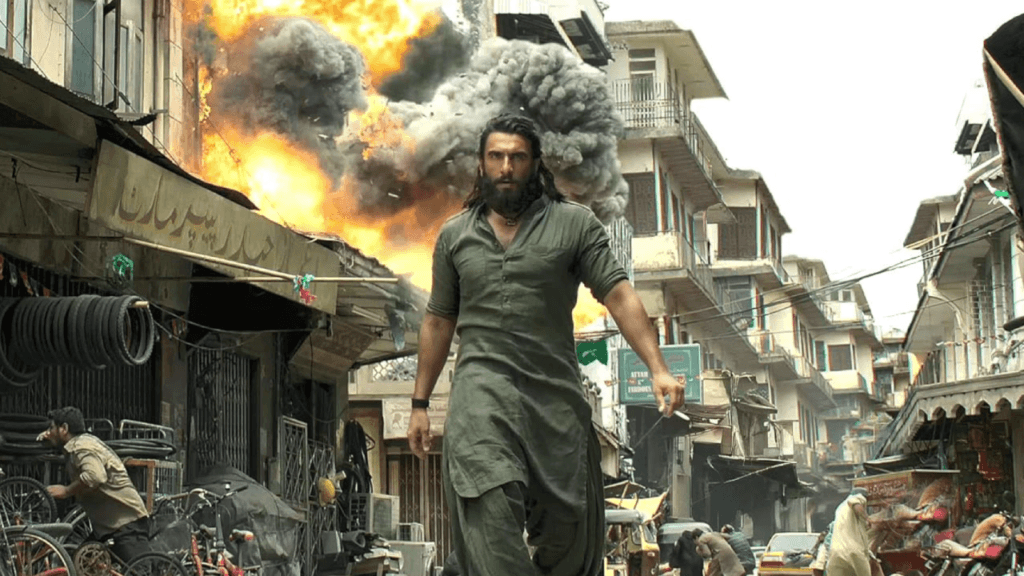
Set against a tense international backdrop, Dhurandhar plunges into a morally grey world of covert operations, fractured allegiances, and ideological disillusionment. The storyline avoids simplistic binaries, choosing instead to explore how power operates in shadows rather than on flags or speeches. Critics have largely appreciated this refusal to spoon-feed heroism, even if the narrative density and scale push viewer patience to its limits. Hindustan Times praised the film’s immersive world-building, while The Times of India highlighted its Karachi-set underworld atmosphere, suggesting that the setting itself becomes an active character. LiveMint, however, described the film’s tone as steeped in “expert bad vibes,” signalling how deliberately uncomfortable the storytelling feels.
Across reviews, one idea repeats: Dhurandhar is not a film designed to please everyone. India Today noted that while the film remains gripping in parts, its relentless seriousness and prolonged runtime make it a demanding watch. Filmfare echoed this sentiment, calling the film technically impressive but emotionally unyielding. Even critics who admired the craft admitted that the narrative tests endurance rather than offering release.
Where critical voices align most strongly is in the assessment of performances. Ranveer Singh’s lead turn has become the film’s defining talking point. NDTV famously described his performance as “feral,” highlighting a physical unpredictability rarely seen in mainstream Hindi cinema. Singh strips away charm, leaning into rage, paranoia, and emotional volatility — a choice that critics largely applauded. India Today and Filmfare both acknowledged that while the writing may stumble, Singh’s commitment never does.
Akshaye Khanna, meanwhile, has emerged as a near-universal scene-stealer. India Today bluntly stated that he “rules” the film whenever he appears, and several critics suggested his calm, controlled menace provides the film’s most unsettling moments. Sanjay Dutt’s understated presence has also drawn appreciation, particularly for resisting theatrics in favour of restrained authority. Rediff.com praised the ensemble performances even while criticising the film’s excessive violence.
Aditya Dhar’s direction has prompted more divided reactions. Many critics recognise Dhurandhar as a conscious departure from Uri’s muscular nationalism. LiveMint observed that the film keeps a noticeable distance from patriotic spectacle, choosing political ambiguity over chest-thumping. The Hindu similarly appreciated the film’s darker gaze, though it questioned whether the complexity translated into depth. The Federal was less forgiving, arguing that beneath the polish and seriousness lies a narrative that struggles to justify its length and self-importance.
From a craft perspective, Dhurandhar earns consistent praise. The cinematography’s muted palette and oppressive framing reinforce the film’s psychological weight. The Times of India and Filmfare both applauded the visual scale and sound design, though reactions to the background score were mixed. Some critics found the music effective in sustaining tension; others felt it contributed to sensory fatigue rather than emotional layering.
Pacing, however, stands out as the film’s most repeated criticism. Koimoi pointed to a first half that stretches its setup far beyond necessity, while Hindustan Times flagged narrative repetition in the middle act. India Today also noted that the film’s refusal to ease up eventually works against its impact. Even reviewers sympathetic to the film’s intentions conceded that sharper editing could have elevated its power significantly.
Interestingly, early audience reaction appears marginally warmer than critical reception. Social media chatter has focused on Ranveer Singh’s intensity and the film’s unapologetically dark tone. NDTV’s tone suggests that viewers more tolerant of grim narratives and extended runtimes may find Dhurandhar rewarding, even if critics demand tighter storytelling.
Taken together, Dhurandhar emerges as a bold but bruising cinematic experience. It is a film driven by conviction rather than compromise, anchored by formidable performances and a heavy political atmosphere, yet weighed down by its own scale and seriousness. This review roundup makes one thing clear: Dhurandhar is less a crowd-pleaser and more a conversation starter — a film that challenges, frustrates, and unsettles in equal measure.
Directed by Aditya Dhar and starring Ranveer Singh, Sanjay Dutt, R. Madhvan, Arjun Rampal and Akshaye Khanna, Dhurandhar stands as one of the most polarising Hindi releases in recent years — a reminder that ambition, while admirable, often comes at a cinematic cost.
Read more POF Reviews Roundups