Director Denis Villeneuve unveiled the first trailer for Dune: Part Three at a special event in Los Angeles, offering journalists and industry insiders an early look at the concluding chapter of his ambitious science-fiction trilogy. The presentation, held at an AMC theater shortly after the 2026 Oscars, brought together a packed audience of critics, bloggers and creators. Looking out at the crowded auditorium before introducing the footage, Villeneuve joked that the gathering felt less like a promotional screening and more like a full movie premiere.
The event featured appearances by returning cast members Zendaya and Javier Bardem, along with newcomers Anya Taylor-Joy and Robert Pattinson, who join the ensemble for the final installment. Franchise lead Timothée Chalamet, whose portrayal of Paul Atreides anchors the series, addressed the audience through a recorded video message, reflecting on the journey of bringing the saga to life over the past several years.
Villeneuve explained that the third film arrived sooner than originally planned. After completing Dune: Part Two, the director had intended to step away from the franchise and direct a completely different project before returning to Arrakis. But the extraordinary response to the second installment — including massive fan events and global enthusiasm for the series — convinced him to complete the story immediately. The director described feeling a responsibility to audiences who had embraced the films so passionately.
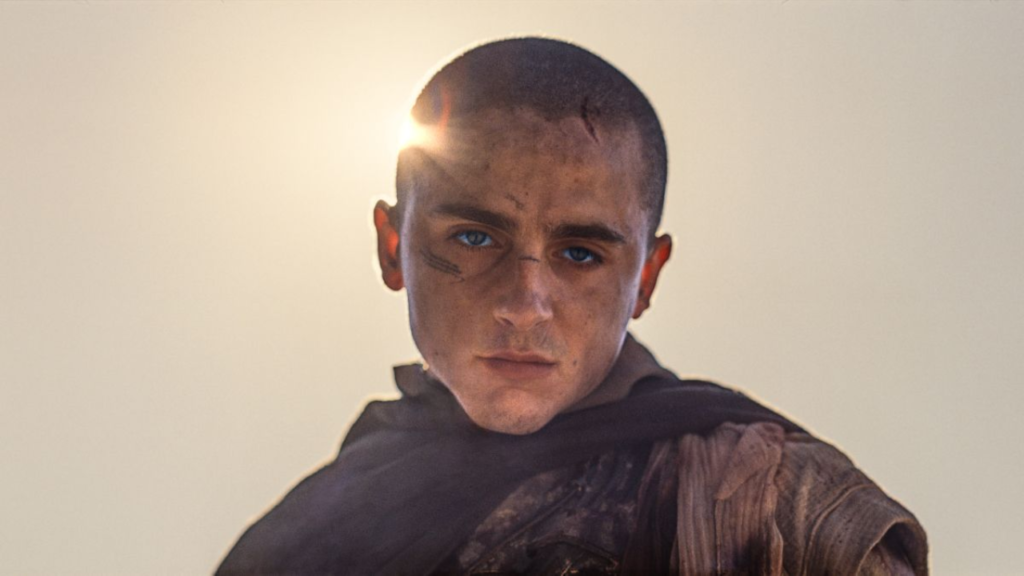
Like its predecessors, the new installment is rooted in the work of Frank Herbert, drawing specifically from the novel Dune Messiah. The story takes a darker turn from the earlier films, shifting focus from Paul Atreides’ rise to power to the consequences of the empire he has created. Having defeated the Harkonnen dynasty and claimed the imperial throne, Paul now rules the galaxy as both emperor and messianic figure to the Fremen people. The trailer suggests that the religious war fought in his name has begun reshaping the political balance of the universe.
Central to the film’s narrative is Paul’s complicated personal life. In order to stabilize his political position, he enters a strategic marriage with Princess Irulan, portrayed by Florence Pugh, a decision that strains his relationship with Chani. Zendaya’s character has served as the emotional center of Villeneuve’s trilogy, and the new footage reportedly emphasizes the growing distance between Paul and the woman who once fought beside him. Early scenes show the pair sharing a quiet moment discussing their future and the possibility of children — a conversation that hints at deeper elements of Herbert’s mythology.
For readers familiar with the books, references to names such as Leto and Ghanima carry special meaning. These characters represent the next generation of the Atreides lineage and play an important role in the wider universe created by Herbert. Villeneuve’s decision to weave such lore into intimate character moments reflects the approach that has defined the trilogy from the beginning: pairing epic world-building with personal drama.
At the same time, the trailer showcases the scale audiences have come to expect from the franchise. Sweeping desert landscapes, enormous battle sequences and hints of galactic conflict appear throughout the footage. Villeneuve’s Dune films have become known for their large-format visual style and immersive cinematic design, and the third installment appears poised to continue that tradition with another spectacle built for IMAX screens.
The ensemble cast also expands the political landscape surrounding Paul’s rule. Robert Pattinson joins the film as one of the mysterious figures operating within the web of conspiracies targeting the emperor, while Anya Taylor-Joy takes on a role connected to the evolving Atreides legacy. Their arrival signals that the final chapter will widen the universe even as it concludes Paul’s personal journey.
For Villeneuve, Dune: Part Three represents the culmination of a cinematic vision that began with Dune and continued with the widely acclaimed second installment. Across those films, the director has sought to translate Herbert’s philosophical science fiction into a sweeping cinematic epic, blending massive spectacle with questions about power, prophecy and destiny.
That thematic exploration becomes even more pronounced in the trilogy’s final act. Herbert wrote Dune Messiah as a deliberate subversion of the “chosen one” narrative, portraying Paul not as a triumphant hero but as a leader trapped by the myth built around him. The trailer hints that Villeneuve intends to preserve that perspective, framing the emperor’s victory not as the end of the story but as the beginning of a more complicated and morally uncertain chapter.
Judging from the enthusiastic reaction inside the Los Angeles theater, anticipation for the film is already running high. Over the past few years, Villeneuve’s adaptation has redefined what large-scale science-fiction filmmaking can look like in the modern era. With Dune: Part Three, the director now prepares to bring one of contemporary cinema’s most ambitious genre trilogies to its conclusion.
Read More:
- Beyond Hype: The 10 Indian Films Defining Anticipation in 2026
- Hollywood Box Office Failures 2025 Explained — What The Year’s Biggest Misses Taught Us
- Why James Cameron’s Films Refuse to Fade — Even When the Box Office Is Done
- Best Santa Claus Movies of All Time, Ranked by Impact and Legacy
- 35 Years Later: From Traps to Triumphs: Where Are the Stars of ‘Home Alone’ Now?