
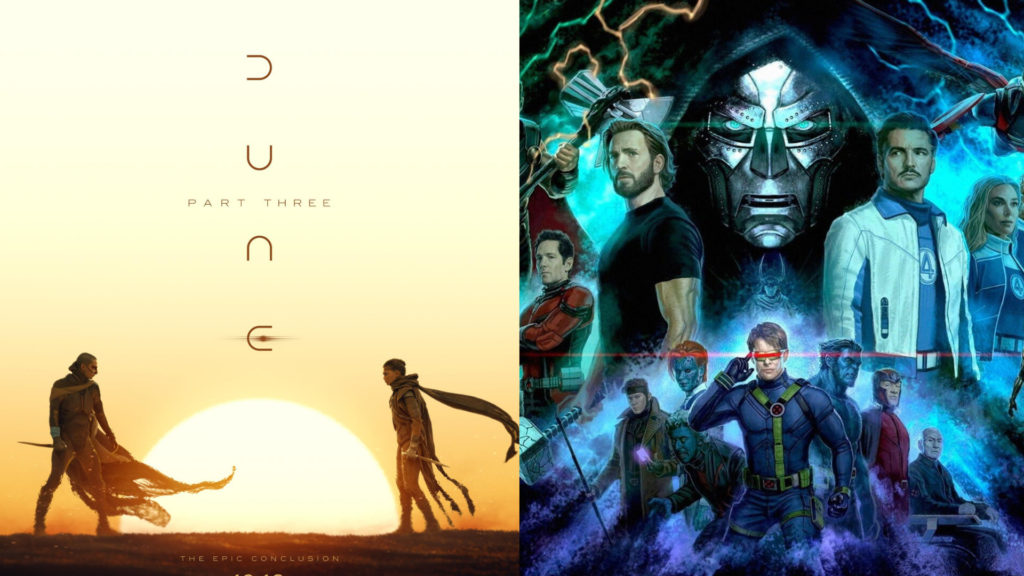
The release of the final trailer for Denis Villeneuve’s Dune: Part Three has brought renewed attention to one of the year’s biggest potential theatrical clashes. The film is scheduled to arrive in cinemas on December 18, the same day as Marvel Studios’ Avengers: Doomsday, setting up a contest between two major science-fiction franchises. Fans have already given the collision a name: Dunesday. The focus now is on how the holiday box office will accommodate two blockbusters with different approaches to spectacle and franchise storytelling.
Comparisons with Barbenheimer are inevitable, but the circumstances are different. Barbie and Oppenheimer offered contrasting cinematic experiences that encouraged audiences to watch both films. Dune: Part Three and Avengers: Doomsday, by contrast, promise elaborate worlds, large-scale visual effects and stories built around established franchises. Some moviegoers may choose to watch both, while others will have to decide which film gets their time, money and access to premium-format screens first.
Dune: Part Three has a distinct selling point in Denis Villeneuve’s approach to the material. Across the previous films, Villeneuve has built Arrakis through immense landscapes, measured pacing and sound design that makes the desert feel almost alive. Positioned as the concluding chapter of his trilogy, the film offers audiences a reason to return to the story of Paul Atreides and Chani, alongside the promise of large-scale cinematic spectacle. Its appeal rests on a carefully constructed world and an immersive theatrical experience rather than a succession of action sequences.
Avengers: Doomsday offers a different proposition: a major gathering of characters from across the Marvel universe. Anthony Russo and Joe Russo, the directors behind Avengers: Infinity War and Avengers: Endgame, return to the franchise. Robert Downey Jr. is also back in the Marvel Cinematic Universe, but not as Tony Stark or Iron Man. He plays Victor von Doom, the villain at the centre of the story. By bringing together characters from several corners of the franchise, Marvel is banking on audience recognition, the prospect of unexpected encounters and the appeal of a large-scale crossover.
The competition extends beyond advertising campaigns and opening-weekend headlines. Premium large-format screens are valuable theatrical territory, and Dune: Part Three has secured a significant IMAX presence. Advance 70mm screenings and reported strong early demand at venues including London’s BFI IMAX have added to interest in the film’s large-format presentation. Its photography and visual scale give Warner Bros. a clear reason to emphasise the biggest-screen experience.
Disney, meanwhile, is promoting Infinity Vision, its certification for premium large-format cinemas, as another way to attract audiences seeking an enhanced theatrical experience for Avengers: Doomsday. The availability of premium screens, however, varies by cinema and market. How exhibitors divide their schedules between the two releases could influence audience access, particularly during the opening days of the Christmas period.
Screen formats alone will not determine the outcome. The number of screenings, ticket prices, audience response and word of mouth will all contribute to the films’ box-office performance. Reports of strong advance sales indicate that both projects have generated interest, but figures from different ticketing trackers and territories are not always directly comparable. Without consistent, verified data, claims that either film has already won the race should be treated cautiously.
The international release calendar adds another dimension to the contest. Dune: Part Three is scheduled to begin its international rollout on December 16, ahead of its North American opening on December 18. Avengers: Doomsday also has a December 18 US release, although dates may differ across international markets. As a result, the competition will not play out identically in every territory. Local release schedules, screen availability and audience demand will influence the films’ performances, while their worldwide totals will depend on the timing and scale of their respective international rollouts.
Dunesday puts two blockbuster strategies to the test. Dune: Part Three offers the concluding chapter of a carefully developed cinematic saga, while Avengers: Doomsday brings together a vast superhero universe under a returning directorial team and introduces Downey Jr. in a dramatically different role. Both films have established franchise audiences, but their theatrical appeal extends beyond brand recognition to the experience each promises on the big screen.
The Christmas release window can accommodate major hits, yet audiences have limited time and money, and premium screens cannot show every film at once. The eventual outcome will depend on how effectively each title converts anticipation into ticket sales and sustains audience interest after its opening. When the two films arrive, the central question will be whether their distinct appeals can support two substantial theatrical runs or whether one draws enough attention away from the other to reshape the holiday box-office race.
