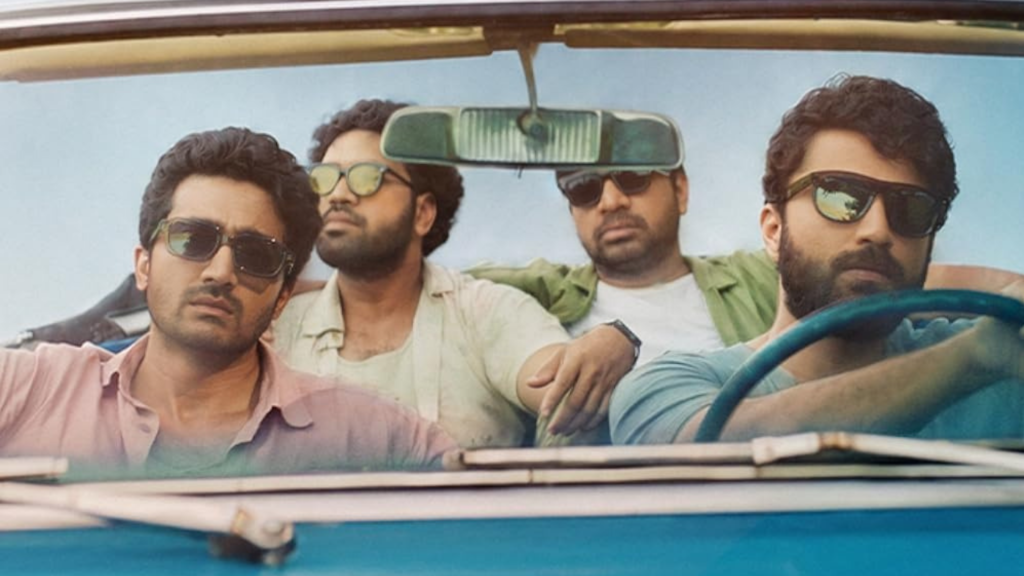
Eight years after Ee Nagaraniki Emaindi became a cult favourite, director Tharun Bhascker Dhaassyam reunites its central group of friends for ENE Repeat. The Telugu sequel stars Vishwak Sen, Abhinav Gomatam, Venkatesh Kakumanu and Srinath Maganti, alongside Anisha Ambrose and Shivathmika Rajasekhar. Released in theatres on November 19, 2026, the film has received a mixed response from critics. While its humour, performances and affection for the original have found appreciation, reviewers are divided over whether the sequel’s writing, character development and emotional depth match the appeal of its predecessor.
ENE Repeat follows Vivek, Kaushik, Uppu and Karthik as they navigate changing circumstances in their personal lives and their attempts to establish themselves in cinema. After a film they make fails at the box office, the setback affects their friendship and pushes them towards another filmmaking attempt. This time, the group travels to Thailand to make a survival drama. The sequel brings back the familiar characters while introducing new circumstances and relationships into their lives. Srinath Maganti takes over the role of Karthik, previously played by Sai Sushanth Reddy, while Anisha Ambrose returns as Shirley and Shivathmika Rajasekhar joins the cast as Keerthana.
One of the strongest points of agreement among the reviews is the film’s humour and its callbacks to the 2018 original. Sangeetha Devi Dundoo, writing for The Hindu, describes the sequel as an entertaining love letter to friendship and cinema. She appreciates its observations about the film industry, the growing influence of social media personalities and the pressure to follow conventional career paths. Dundoo also likes the time Bhascker takes to re-establish the characters and their relationships, rather than rushing through the reunion simply to move the story forward. For her, the film’s understanding of the characters and its affectionate engagement with cinema contribute significantly to its appeal.
Sruthi Ganapathy Raman of The Hollywood Reporter India is more reserved about the sequel’s reliance on familiarity. She finds that the characters’ recognisable traits and inside jokes work particularly well for viewers who have revisited the first film. However, she feels that the writing depends too heavily on callbacks and one-liners, leaving less room for the warmth and emotional connection that made the original friendship compelling. The familiarity of the characters is not necessarily enough to recreate the emotional investment audiences had in their earlier story.
Yashaswini Sri of The Indian Express shares some of these reservations, observing that the friends initially seem reassembled rather than genuinely reconnected. The reunion does not immediately establish the emotional ease that defined the original group. However, Sri notes that the comedy finds a stronger rhythm during the final 40 minutes, particularly after the friends reach Thailand. The change in setting gives the film a more engaging stretch, although the slower opening creates an uneven experience.
The performances emerge as one of the sequel’s more consistent strengths, with Abhinav Gomatam receiving particular appreciation for his portrayal of Kaushik. Dundoo calls him the film’s scene-stealer, while Sri highlights his understated comic timing and ability to find humour in reactions and pauses. Raman also praises Gomatam’s confident performance. His work is among the elements that help the film maintain its comic appeal, even when the writing does not consistently deliver the emotional depth expected from the reunion.
Both Raman and Dundoo also single out Mahesh Chintala, who plays Robin, for his comic presence. His contribution adds to the film’s lighter moments and strengthens the ensemble’s humour. Vishwak Sen, meanwhile, is described by Dundoo as a quiet anchor for the group. Sri, however, feels that the writing gives Vivek less emotional depth than he had in the original film. The character remains central to the story, but the sequel does not always give him enough material to develop beyond his familiar traits.
The recasting of Karthik is another point addressed by the reviewers. Dundoo appreciates Srinath Maganti’s handling of the role, while Sri notes that he makes the character his own even as Sai Sushanth Reddy’s absence remains noticeable. Venkatesh Kakumanu’s portrayal of Uppu also receives appreciation from Dundoo. These performances help maintain continuity within the group, although the changed circumstances and the passage of time create a different dynamic from the original film.
The reviews become more divided when discussing the sequel’s emotional themes and supporting characters. Dundoo finds the film’s discussions of male toxicity, control and patriarchy effective, particularly through Keerthana’s efforts to pursue cinematography despite her father’s opposition. This aspect gives the story an opportunity to explore expectations placed on women and the challenges of pursuing a career against family resistance. However, Dundoo also observes that the film’s treatment of mental health does not always land as effectively as intended.
Raman feels that Keerthana needed greater nuance and that some of the sequel’s earnest moments become preachy because they lack sufficient emotional groundwork. Sri similarly finds her character’s journey too abrupt, suggesting that the film does not develop the progression convincingly enough. The supporting female characters also receive limited space. Sri notes that Anisha Ambrose and Karuna Kumar are underused, while Dundoo believes Ambrose and Shivathmika Rajasekhar have an easy screen presence but deserved more substantial material. These observations point towards a broader concern about the sequel’s handling of characters outside its central group of friends.
The second half and the film’s technical craft receive differing assessments as well. The Hindu is appreciative of the Thailand sequences, which Dundoo finds more engaging, along with the cameos that she considers organic and enjoyable. Vivek Sagar’s music and AJ Aaron’s cinematography also receive praise, contributing to the film’s overall presentation. The Indian Express, however, feels that the songs do not match the impact of the original and identifies a considerable gap between the slower opening and the more engaging final stretch.
Sri also identifies filmmaking as the story’s central conviction, with the film presenting art as something necessary rather than optional. This idea connects with the group’s continued efforts to make cinema despite professional setbacks. Raman, on the other hand, feels that the cameos and slapstick humour occasionally make the sequel indulgent, diverting attention from the wit and interactions of the central group. What one reviewer sees as an affectionate celebration of cinema and friendship, another considers an excess that affects the film’s narrative focus.
Overall, the critical response suggests that ENE Repeat succeeds most consistently when it relies on its ensemble’s comic chemistry and the familiarity of the characters. Abhinav Gomatam’s performance, the humour and the Thailand sequences provide several of the film’s stronger moments. However, the sequel faces criticism for depending too heavily on callbacks, leaving some characters underdeveloped and failing to recreate the emotional warmth that made the original memorable.
Among the three reviews considered here, The Hindu offers the most positive assessment, appreciating the film’s humour, social observations, performances and affection for cinema. The Hollywood Reporter India and The Indian Express are more critical of the writing, character development and uneven execution, even while acknowledging the strengths of the performances and portions of the comedy. The result is a sequel that offers an entertaining return to familiar characters but does not consistently recapture the friendship and emotional charm of Ee Nagaraniki Emaindi.
Watch Trailer:
Film Details: ENE Repeat
- Director and Writer: Tharun Bhascker Dhaassyam
- Cast: Vishwak Sen, Abhinav Gomatam, Venkatesh Kakumanu
- Language: Telugu
- Release Date: November 19, 2026
- Release: Theatrical