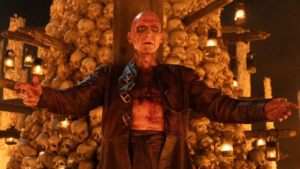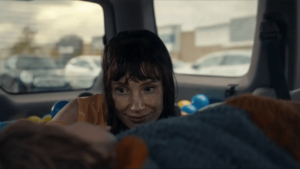
Evil Dead Burn reviews have arrived, and critics agree on one thing almost immediately: Sébastien Vaniček has delivered one of the bloodiest, most relentlessly violent entries in the franchise’s 45-year history. The sixth installment of Sam Raimi’s iconic horror series has earned praise for its inventive practical effects, bone-crunching kills and uncompromising brutality, with many reviewers hailing Vaniček as an exciting new creative force for the franchise. But once the blood begins to settle, the critical conversation shifts. While many applaud the film’s technical craftsmanship and unflinching intensity, others argue that familiar storytelling, thin characterization and the near-total absence of Sam Raimi’s trademark horror-comedy keep Evil Dead Burn from joining the franchise’s very best entries.
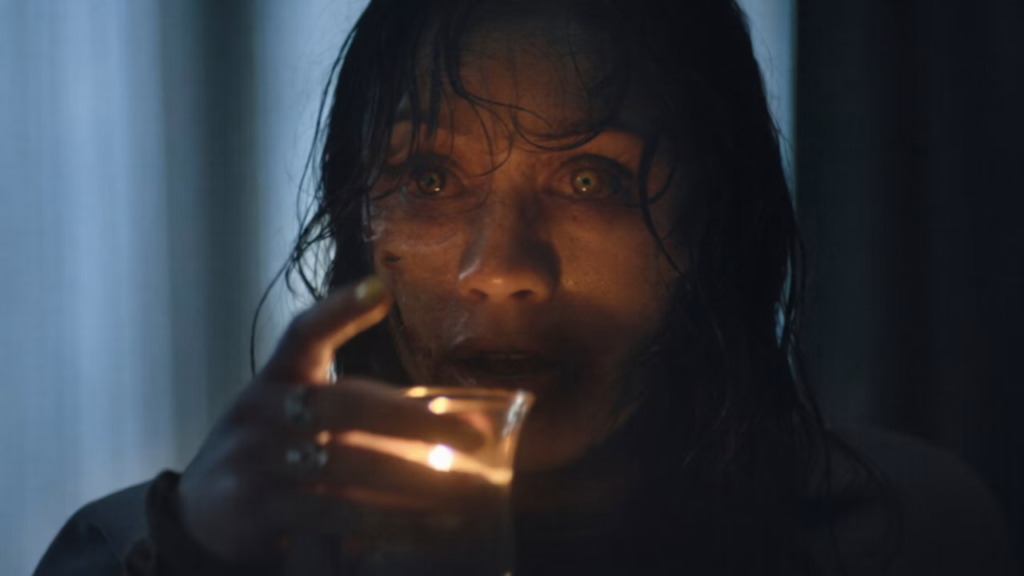
Directed by Sébastien Vaniček, Evil Dead Burn follows Alice (Souheila Yacoub), a newly widowed French woman who reluctantly seeks refuge with her late husband’s estranged American family. When an ancient evil is unleashed after the discovery of the infamous Necronomicon, grief quickly turns into a blood-soaked nightmare as family members become possessed by Deadites one by one. Trapped inside an isolated home, Alice must survive an escalating massacre while searching for the legendary Kandarian dagger—the only weapon capable of ending the demonic outbreak for good. Continuing the darker direction established by Evil Dead (2013) and Evil Dead Rise, the film replaces slapstick horror with brutal survival, psychological trauma and relentless carnage.
If there is one unanimous winner in the review landscape, it is Sébastien Vaniček. Across both mainstream critics and horror publications, reviewers consistently praise the French filmmaker’s confidence behind the camera, with many describing him as a worthy new custodian of the franchise. David Rooney of The Hollywood Reporter applauds the film’s visual energy, kinetic camerawork and commitment to practical effects, while Spencer Perry of ComicBook.com goes even further, calling Vaniček the “heir apparent” to Sam Raimi for the way he embraces the franchise’s signature visual language without merely imitating it. Alison Foreman of IndieWire similarly argues that Evil Dead Burn expands the possibilities of the series while leaving audiences excited to see where the franchise heads next. Even critics who were disappointed by the film’s screenplay rarely questioned Vaniček’s talent as a horror director.
The film’s gruesome practical effects have earned even broader acclaim. Critics repeatedly describe Evil Dead Burn as relentless, vicious, grotesque and imaginatively disgusting, with many arguing it delivers some of the franchise’s most inventive kill sequences. Rooney memorably calls it “an orgy of unmodulated mayhem,” while Aidan Kelley of Collider sums up his reaction with a single word: “Groovy.” Nicolás Delgadillo of Knotfest believes the film’s shortcomings are overwhelmed by its “morbid imagination,” and Elliott Collins of Movie Files calls it arguably the most vicious Evil Dead film yet. Across dozens of reviews, critics praise Vaniček’s preference for practical gore over digital effects, inventive weaponry, and increasingly elaborate Deadite set pieces that push the series’ appetite for carnage to new extremes.
Leading the chaos is Souheila Yacoub, whose committed performance has emerged as another point of broad agreement. Critics praise the Swiss actress for grounding the film’s escalating madness with vulnerability, resilience and emotional conviction, even as the screenplay gives her relatively little opportunity for deeper character development. Rooney highlights Alice’s physical and psychological endurance, while several reviewers argue that Yacoub’s emotional commitment prevents the film from becoming little more than a showcase for gore. Although most supporting characters receive limited development before becoming Deadite victims, Yacoub consistently earns recognition as the film’s emotional anchor.
Where critics begin to diverge is with the screenplay. The most common criticism across reviews is that Evil Dead Burn offers little that longtime fans haven’t already seen. Rooney argues the narrative introduces almost nothing unfamiliar beyond its brutality, while Screen Daily neatly summarizes the problem as “lots of gore, little substance.” Mark Kennedy of the Associated Press goes even further, arguing the series has moved away from the qualities that once made it unique, while Kristy Puchko of Mashable dismisses the sequel as tedious, gray and soulless. Several reviewers also criticize the film’s thin characterization, arguing that many characters exist primarily to serve the next elaborate kill rather than to generate genuine emotional investment. Even many positive reviews acknowledge that the screenplay follows a familiar formula, relying on increasingly extreme violence rather than fresh narrative ideas.
One of the most fascinating debates surrounding Evil Dead Burn centers on the franchise’s evolving identity. For some critics, Vaniček’s decision to embrace relentless brutality over mischievous horror-comedy represents a natural continuation of the darker path established by Evil Dead (2013) and Evil Dead Rise. Others believe something essential has been lost. Rooney laments the disappearance of Raimi’s anarchic humor and Bruce Campbell’s gleefully unhinged Ash Williams, arguing that the newer films prioritize “orgiastic slaughter” over the mischievous spirit that originally defined the series. Ben Travis of Empire similarly describes Burn as the darkest Evil Dead yet, while Kimberley Elizabeth of Nightmare on Film Street and several longtime franchise fans admit they missed the quirky, offbeat comedy that once balanced the bloodshed. Conversely, critics from Collider, ComicBook.com and IndieWire embrace the darker direction, viewing it as a legitimate evolution rather than a betrayal of the series’ roots.
The film’s handling of domestic abuse and family trauma has also generated sharply divided reactions. Several reviewers argue that the emotional subtext gives Burn greater thematic weight than a typical splatter film. Preston Barta of the Denton Record-Chronicle praises the way the film explores generational trauma beneath its relentless violence, while Andrea Chase sees the story as a surprisingly effective metaphor wrapped inside a family dinner from hell. Others are far less convinced. Angelica Jade Bastién of New York Magazine/Vulture questions whether the film truly earns its graphic treatment of domestic violence, while Kevin Maher of The Times criticizes what he sees as excessive brutality inflicted upon women for shock value. These contrasting readings make the film’s thematic ambitions one of the most contested aspects of its critical reception.
Ultimately, Evil Dead Burn finds itself in an unusual position within the franchise. Many critics rank it comfortably alongside the stronger modern entries, praising its technical craftsmanship and uncompromising horror, while others consider it one of the weaker installments because of its formulaic storytelling and emotional emptiness. What almost no one disputes, however, is that Vaniček has delivered exactly what horror fans expect on a visceral level: bigger kills, nastier Deadites and enough blood to satisfy even the franchise’s most devoted gorehounds.
Evil Dead Burn succeeds because it understands how to shock audiences. It struggles because it isn’t always sure what should remain once the shock wears off. Critics broadly agree that Sébastien Vaniček proves himself an outstanding horror stylist, delivering some of the franchise’s most inventive practical effects, kinetic camerawork and savage set pieces. Yet many also believe the screenplay never matches that technical confidence, leaving memorable carnage to carry emotional weight that stronger characters and sharper storytelling should have provided. Whether viewers embrace or reject the film may ultimately depend on what they expect from Evil Dead: gleeful horror-comedy or uncompromising nightmare fuel. On that question, Burn has sparked one of the franchise’s most fascinating debates in years.
Film Details: Evil Dead Burn
Director: Sébastien Vaniček
Writers: Sébastien Vaniček, Florent Bernard
Cast: Souheila Yacoub, Hunter Doohan, Tandi Wright, Luciane Buchanan, Erroll Shand, Maude Davey, George Pullar
Genre: Horror, Supernatural, Gore
Runtime: 1 hour 50 minutes
Release Date: July 10, 2026
Read More Review Roundups on POF