
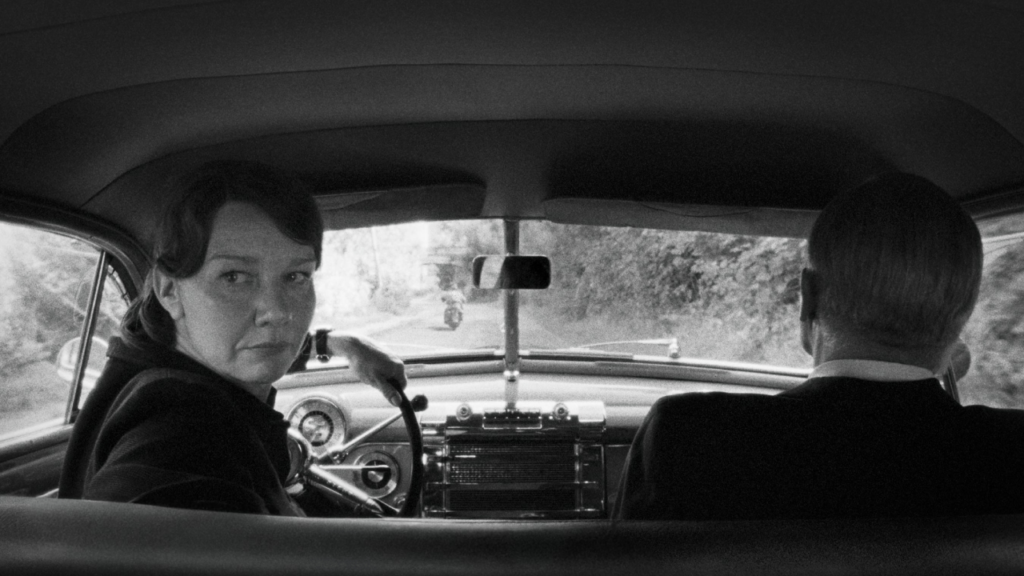
Paweł Pawlikowski’s Fatherland arrives at the 51st Polish Film Festival in Gdynia carrying an unusual weight. It is not only Poland’s official submission for the 2027 Academy Awards’ International Feature Film category, but also the film that earned Pawlikowski a second Cannes Best Director prize. Starring Sandra Hüller as Erika Mann and Hanns Zischler as Thomas Mann, the 82-minute drama enters Gdynia’s Main Competition as one of the year’s most closely watched Polish films.
The festival runs through September 26, placing Fatherland before a home audience at an important point in its international campaign. Its Cannes victory was shared ex aequo with Javier Calvo and Javier Ambrossi for La bola negra, but it nonetheless adds another major festival distinction to Pawlikowski’s record. His previous Cannes Best Director win came in 2018 for Cold War, while Ida won the Academy Award for Best Foreign Language Film in 2015. Cold War later collected three Oscar nominations, including Best Director and Best Cinematography.
Set in 1949, Fatherland follows Thomas Mann and Erika Mann on a road trip through a Germany devastated by war and divided between American and Soviet control. The film’s striking black-and-white photography comes from Łukasz Żal, Pawlikowski’s longtime collaborator on Ida and Cold War. The monochrome images turn ruined streets, empty spaces and fractured landscapes into something simultaneously beautiful and unsettling, matching a story about a country and family struggling with what remains after catastrophe.
Yet the film’s most intriguing element is also its boldest historical departure. Fatherland imagines Erika Mann travelling with her father from Frankfurt to Weimar. In reality, Thomas Mann made the 1949 journey with his wife, Katia Mann, while Erika deliberately stayed away and opposed the visit. The disagreement reflected a deeper political and personal conflict: Erika feared that her father’s appearance in Germany could be interpreted as legitimising the new political order.
Pawlikowski therefore uses fiction to bring a real family argument physically onto the road.
That tension becomes more painful because 1949 was also the year Erika’s beloved brother Klaus Mann died by suicide. The film folds grief, exile, guilt and the question of belonging into the father-daughter journey, turning a historical return into an intimate confrontation with memory. It is less a conventional biopic than a concentrated family drama set against a divided continent.
Sandra Hüller gives the fictionalised Erika a formidable presence, bringing the sharp intelligence and emotional restraint associated with her acclaimed performances in Anatomy of a Fall and The Zone of Interest. Opposite her, Hanns Zischler presents Thomas Mann not simply as a literary giant but as a father navigating political conviction, family fracture and the consequences of returning home.
Its compact scale is another distinctive choice. At just 82 minutes, Pawlikowski compresses a historical period into one journey, relying on glances, silences and controlled exchanges rather than exposition. The approach keeps the Mann family story at the centre while the divided German landscape becomes a reminder of the rupture surrounding them. This balance gives the film its dramatic force.
The film also has a carefully built international route. MUBI holds rights across North America, Latin America, the United Kingdom, Ireland, Germany, Austria, Benelux, Italy, Spain, Turkey, Australia, New Zealand and India, while The Match Factory handles remaining international sales. That reach gives a Polish Oscar submission an unusually broad theatrical pathway, allowing its festival momentum to travel well beyond Poland.
Gdynia now offers Fatherland another crucial test: a home-country showcase before its wider international rollout. With Pawlikowski’s Cannes recognition, Poland’s Oscar selection and MUBI’s global distribution behind it, the film enters the festival not merely as a historical drama, but as a major meeting point between Polish cinema, European history and the world’s awards season.