The idea that women don’t enjoy their sexuality as much as men do is simply barbaric. Maybe not so barbaric, but it is presumptuous. When you speak to a female, you’ll find their answers very different from what you’ve been hearing. And yet, this presumption quietly shapes not just our everyday conversations, but also the stories we tell on screen. The discomfort around acknowledging female desire doesn’t just exist in society, it directly translates into Hindi cinema.
Male gaze is one of the ways patriarchy sustains itself in the cultural bloodstream. For years on end, films have been made from this lens, one that positions women as objects of desire rather than subjects who experience desire themselves. In a society that is deeply patriarchal in its functioning, this is not surprising. What is surprising, however, is how normalized this has become.
Cinema not just mirrors real life, but it also reinforces it. The male gaze in films feeds into a pre-existing idea of what is “normal,” shaping how audiences perceive women. And this might have felt balanced, if there was an equally normalized presence of the female gaze. But that is precisely what Hindi cinema continues to shy away from. If you were to look up Hindi films centered on female desire, the list feels strikingly short. That, in itself, is a point of reflection.
While we have come a long way in the portrayal of our female characters from just being side roles in support of their male counterparts; like they’re now shown as having careers, conflicts and narratives of their own. However, in some ways, we haven’t at all, particularly when it comes to portraying desire in a film.
This hesitation is not limited to cinema, it reflects a deeper societal double standard. A man is labeled a “stud,” while a woman is labeled a “slut.” Now, I don’t think there’s anything wrong with being a slut. A slut is someone who enjoys having casual sex. There is nothing inherently immoral about that. The problem begins when neutral descriptions are turned into insults as per our own convenience and self-found definitions, which builds collective consciousness. This distortion then seeps into storytelling.
What we, as a society, often do is deny the existence of female desire altogether. We treat it as something inappropriate, something to be hidden, talked behind curtains, even something threatening like a virus. And when conversations themselves are avoided; representation inevitably suffers. How do we expect cinema to explore female desire when society resists even the acknowledgment of it?
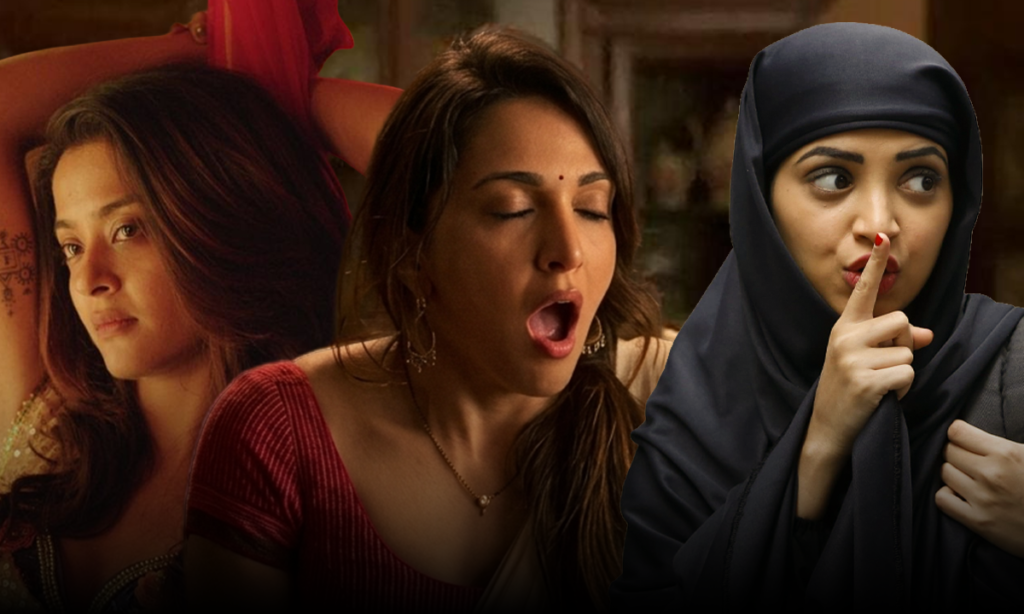
While films like Fire, Lipstick Under My Burkha, Lust Stories, Thank You for Coming and Parched do exist, but beyond these, the portrayal seems extremely limited, and rarely occupy the mainstream space.
When Deepa Mehta made Fire (1996), her intention highlights how layered this conversation is. She said, “I never thought that I was making a film on lesbians. I thought I was making a film about patriarchy and how it defines women’s loneliness, where women find themselves, and if it were not for the loneliness, maybe they would have never discovered their own sexuality. That was the way I was thinking about it, and it made perfect sense to me. It was very important that I was addressing the barrenness of emotional relationships and what women do when they find themselves in that situation. Maybe they find their own sexuality. So, that was it for me. I never want to apologies for Fire. I think it is such a beautiful film. It is filled with gentleness and exploration.”
Her perspective reframes female desire not as something sensational, but as something deeply human, emerging from emotional realities, loneliness, and self-discovery. And yet, such nuanced portrayals have met with discomfort and resistance.
Similarly, talking about the current state of representation, Leena Yadav, the director of Parched (2015), said, “To be honest, the depiction of sexuality on screen is a distant goal right now. I am appalled at the content now, where one sees such underdeveloped female characters, at times. If the conversation has progressed to discussing sexuality, let’s at least see female characters being portrayed properly. Within the setup of any blockbuster, there’s nothing preventing filmmakers from better defining the female characters – it wouldn’t make the film less commercial. But, in 90% of our commercial cinema, the depiction of fully developed female characters is lacking. There are a few films that pose as feminist films but actually are male fantasies of feminism. The depiction of female desire on screen was still ahead in the 70s.”
Her critique exposes an important contradiction. Even when films attempt to appear progressive, they often fall back into familiar patterns, presenting “boldness” without depth, or feminism filtered through a male perspective. In that sense, one could argue that the discomfort is not just about showing female desire, but about understanding it.
So, while the conversation has started, and while there are a few films that attempt to explore it, Hindi cinema still seems uncomfortable fully adopting female desire. It exists, but on the margins. It is spoken about, but not normalized. And until it becomes just another part of storytelling, without hesitation, without any moral weight, it will continue to feel like something the industry is still trying to avoid, rather than accept and embrace.
Read More: