Lisbon is becoming a meeting point for Chinese and Portuguese cinema as the 2026 Portugal China Film Week brings five contemporary Chinese films to local audiences. Taking place at Cinema Ideal and Cinema Fernando Lopes, the showcase features A Table for Two, A Writer’s Odyssey II, Nobody, Her Story and As the Water Flows. Organised as part of the Shanghai International Film Festival’s international film-exchange efforts, the event gives Portuguese audiences a chance to discover different sides of modern Chinese cinema while bringing the two countries’ film cultures closer together.
Presented by the Shanghai International Film Festival (SIFF) in collaboration with Associação Il Sorpasso, the Film Week extends SIFF’s international outreach beyond Shanghai. The event is supported by the China Film Administration and the Embassy of China in Portugal, guided by the Shanghai Film Bureau and hosted by the Shanghai International Film & TV Events Center. Its arrival in Lisbon gives local audiences an opportunity to encounter recent Chinese stories directly, while creating another meeting point between filmmakers, cinema professionals and viewers.
The opening film, A Table for Two, is a Shanghai-produced romantic drama directed by Wu Jing. It follows a young book editor and a programmer who meet after sharing a lunch table and discover a common interest in food. Producer Jessica Chen attended the opening-night post-screening discussion, giving audiences an opportunity to hear behind-the-scenes perspectives on the film.
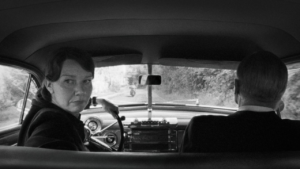
The selection then moves across very different cinematic territory. A Writer’s Odyssey II, directed by Lu Yang, combines drama, dark comedy, fantasy and animation, demonstrating the range of contemporary Chinese genre filmmaking. Nobody, directed by Yu Shui and produced by the Shanghai Animation Film Studio, draws on traditional Chinese culture through animation, fantasy and comedy. Its inclusion gives the programme a distinctive connection to China’s animation heritage.
Her Story, directed by Shao Yihui, explores friendship, family and new beginnings through the experiences of urban women. The film became a major cultural and box-office success in China after its release. As the Water Flows, directed by Bian Zhuo, takes a quieter independent approach, examining grief, generational conflict and the complexities of contemporary Chinese family life. The contrast between these films makes the programme more than a showcase of one cinematic style.
Another striking feature is accessibility. Every screening is free, with Portuguese subtitles, allowing audiences to experience the films without an admission fee or a language barrier. That decision can broaden participation and make the Film Week accessible to viewers who may not normally seek out international cinema.
The venues also matter. Cinema Ideal and Cinema Fernando Lopes place the Chinese films within Lisbon’s established film culture, allowing contemporary Chinese stories to enter spaces already connected to local audiences and cinema communities. The choice reinforces the idea that international exchange works best when films are not simply exported, but actively experienced in new cultural settings.
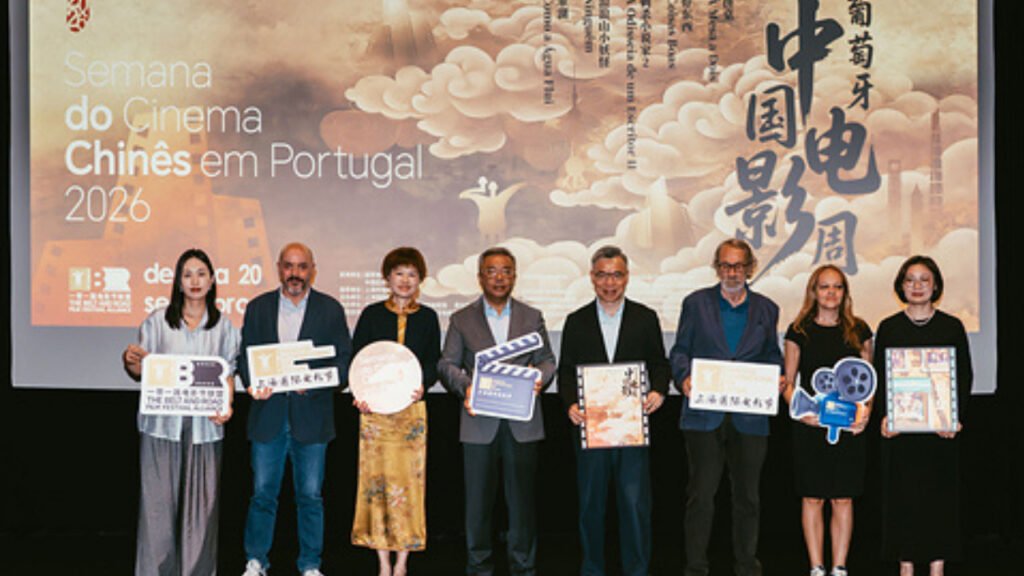
The opening ceremony brought together Chinese and Portuguese cultural figures, including Yang Yirui, Ambassador of China to Portugal, Fang Shizhong, Director of the Shanghai Film Bureau and Vice Chairman and Secretary-General of the Shanghai International Film Festival Organizing Committee, and Portuguese actor José Martins. Their presence reflected the institutional support behind an event centred ultimately on audiences and films.
As the Film Week reaches its final day, its value lies in what happens beyond the screenings. Five films can offer five different windows into contemporary China, from urban relationships and animation to women’s lives and family bonds. By placing those stories before Portuguese audiences, the event shows how cinema can turn distance into curiosity, conversation and a continuing connection between film cultures. For Chinese filmmakers, that journey opens a door to viewers and future conversations. For Portuguese audiences, it offers a chance to discover a changing national cinema through stories that are personal, accessible and unmistakably contemporary.