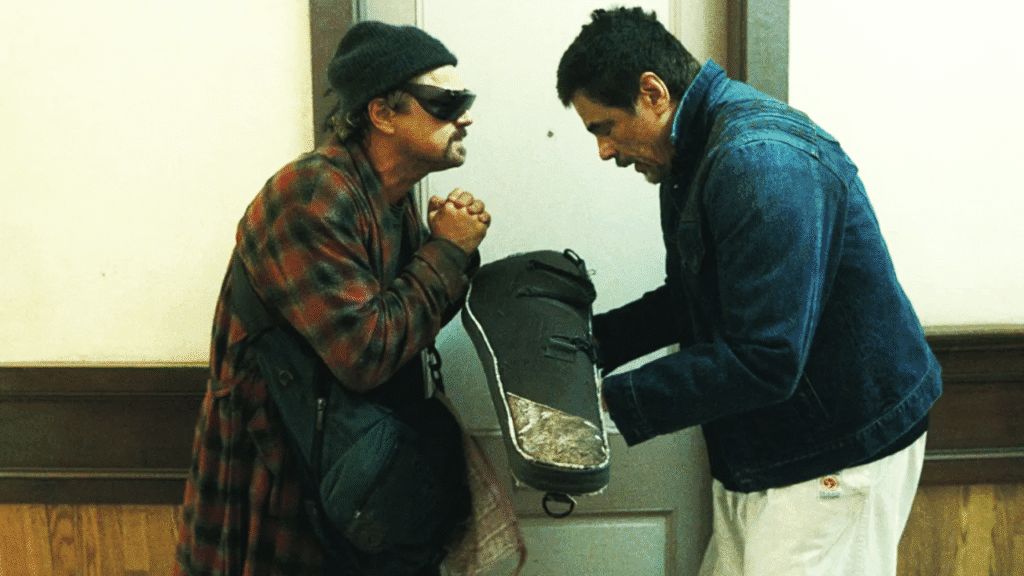
Paul Thomas Anderson’s action epic One Battle After Another has emerged as the frontrunner at the 2025 Gotham Awards, earning six nominations — the most of any film this year and the highest total in Gotham history. Despite its blockbuster scale and a reported budget of $130 million, the film stands alongside smaller festival darlings like Lurker and Sorry, Baby, symbolizing the Gotham Awards’ continued commitment to recognizing artistic independence over commercial muscle.
This year marks a significant shift in the Gotham Awards format. For the first time, the Best Feature category includes ten nominees instead of the usual five, broadening the playing field and offering greater diversity in cinematic storytelling. Yet even as the awards opened their gates to films with bigger budgets, the nominations reflect an enduring preference for independent spirit and creative vision.
An Expanded Field, But The Same Independent Heart
The expansion of eligibility criteria — first introduced in 2022 when the Gotham Awards dropped their budget cap of $35 million — sparked speculation that more mainstream films might dominate. However, the 2025 nominations tell a different story. The Gotham Film & Media Institute seems intent on preserving its roots, honoring films defined by artistic daring rather than financial heft.
Joining One Battle After Another in the Best Feature lineup are Bugonia, East of Wall, Familiar Touch, Hamnet, If I Had Legs I’d Kick You, Lurker, Sorry, Baby, The Testament of Ann Lee, and Train Dreams. Each of these titles represents a distinct creative voice — from festival discoveries to underdog releases without major marketing muscle — underscoring Gotham’s eclectic mix of storytelling traditions.
Executive Director Jeffrey Sharp described this year’s nominees as “a celebration of bold, original storytelling and filmmakers whose independent vision extends across studios and streamers.” That blend of art-house sensibility and platform accessibility defines the modern Gotham ethos — one that encourages big ideas, regardless of where or how they are made.
Blockbusters Stay on the Sidelines
Interestingly, the Gotham committee’s decisions also highlight what wasn’t nominated. Films like Ryan Coogler’s Sinners — the fifth-highest-grossing U.S. release of the year — and Joachim Trier’s Sentimental Value, a critical favorite with an 89 Metacritic score and Norway’s Oscar submission, both missed out on top-category nominations.
These omissions demonstrate how the Gotham Awards continue to resist the gravitational pull of box office performance or global Oscar buzz. Despite being eligible under the new budget guidelines, the Gotham committees — composed largely of film critics, journalists, and curators — remain loyal to works that embody narrative risk and directorial individuality.
This approach isn’t new. When the Academy Awards expanded its Best Picture category to ten nominees in 2009 after Christopher Nolan’s The Dark Knight was snubbed, many predicted that blockbuster inclusivity would reshape awards culture. Yet it was Kathryn Bigelow’s The Hurt Locker — a low-budget war drama — that ultimately triumphed. Similarly, the Gotham Awards’ current inclusiveness hasn’t diluted their identity; if anything, it has reinforced the artistic value of smaller-scale filmmaking.
The Nomination Landscape: Gotham Awards 2025
While One Battle After Another leads the pack, the variety of nominated films paints a picture of cinematic diversity. If I Had Legs I’d Kick You, directed by Mary Bronstein, and Hamnet, starring Jessie Buckley, exemplify how the Gothams champion fresh perspectives and gender-neutral performance categories.
The Best Director nominees — Mary Bronstein (If I Had Legs I’d Kick You), Jafar Panahi (It Was Just an Accident), Kelly Reichardt (The Mastermind), Paul Thomas Anderson (One Battle After Another), and Oliver Laxe (Sirât) — represent a mix of global artistry and genre innovation. This lineup underscores the Gotham Awards’ evolution into a space that honors both emerging voices and seasoned auteurs.
In the lead performance category, talent such as Jessie Buckley (Hamnet), Lee Byung-hun (No Other Choice), Rose Byrne (If I Had Legs I’d Kick You), Jennifer Lawrence (Die My Love), and Tessa Thompson (Hedda) reflect the breadth of international storytelling. The supporting performance category includes standout turns by Jacob Elordi (Frankenstein), Wunmi Mosaku (Sinners), and Adam Sandler (Jay Kelly), while breakthrough nominees like Chase Infiniti (One Battle After Another) and Sebiye Behtiyar (Preparation for the Next Life) add new energy to the awards narrative.



Looking Ahead to the Gotham Awards 2025
The Gotham Awards’ willingness to include films like One Battle After Another shows an openness to evolution — but its continued prioritization of smaller, risk-taking cinema reveals its true DNA. Even as budgets balloon and distribution models shift toward streaming and global rollouts, the Gothams continue to serve as a corrective to commercial saturation in awards season.
Films like Familiar Touch, released by Music Box Films, exemplify this ethos. Without the marketing resources of major studios, such films depend on Gotham recognition to remain part of the awards conversation. The Gothams effectively become a launchpad — a way for quieter titles to gain visibility before the bigger Oscar machinery takes over.
That balance between independent integrity and expanded eligibility makes the 2025 nominations particularly revealing. Big-budget contenders may now qualify, but artistic discovery still defines who gets recognized.
The winners of the 35th Annual Gotham Awards will be announced on December 1, 2025, in New York City. As always, the event will mark the unofficial start of awards season, shaping the conversation around which films carry momentum heading into the Critics’ Choice and Oscars.
If history is any indicator, the Gotham Awards could once again spotlight the films that later dominate the awards circuit. Past Gotham winners like Moonlight, Spotlight, and Everything Everywhere All at Once all went on to claim the Academy Award for Best Picture — a testament to the Gotham juries’ ability to identify groundbreaking cinema early.
This year’s nominations make one thing clear: even with expanded categories and loosened eligibility, the Gotham Awards remain steadfast in celebrating stories that defy convention. Whether it’s a $130 million studio-backed epic or a shoestring indie from Sundance, the Gothams continue to champion the same spirit that has defined them for 35 years — bold, original, and unshakably independent.
Read More: