2025 brought theatres back to life — packed Friday nights, billion-dollar headlines, red carpets that finally felt like culture again. On the surface, Hollywood’s pulse returned. Yet when the dust settled, many major titles slid through the year like ghosts — present, expensive, but quickly forgotten. The audience didn’t disappear; it evolved. Viewers stopped attending out of habit and started attending only when the film felt essential.
This is Hollywood box office failures 2025 explained — an autopsy of ten U.S. releases that underperformed financially, emotionally or culturally. Each failure has a unique cause. Together, they paint a blueprint of how theatrical value has changed. This is not a list — it’s a 2025 movie flops box office data breakdown of how perception, aesthetics, marketing and timing became as important as box office itself. Cinema didn’t collapse. The audience simply raised its standards.
Snow White — Nostalgia Has an Expiry Date
Disney didn’t just remake a fairy tale — it revived the crown jewel that started its empire. A project carrying heritage, iconography, and emotional lineage. The studio spent over $270M mounted on legacy confidence, believing that a familiar classic simply needed a modern polish to command the box office. Instead, Snow White opened to ~42.2–43M domestic, eventually reaching ~$205.7M worldwide, a far cry from breakeven.

The reaction was not outrage — it was indifference, which is far more fatal.
Audiences didn’t boycott Snow White. They just didn’t feel summoned by it.
Marketing leaned on memory — the apple, the dress, the mirror — imagery that evoked childhood, but didn’t justify returning to the story. In an era where theatrical spending must feel like an occasion, the film positioned itself like a reminder, not an event. The campaign answered the what, but not the why. And without urgency, nostalgia becomes wallpaper — visible, but ignorable.
This leads to the first crucial insight: nostalgia used to be a ticket. In 2025, nostalgia is merely context. Audiences now ask: Why now? Why again? Why me? What went wrong with Snow White 2025 is simple — recognition without reinvention. The film reminded us who she was, but never why she mattered.
These early cracks set the tone for big films that flopped in 2025 and why audiences turned away — indifference is deadlier than dislike.
Mickey 17 — Prestige Cinema, Streaming Behaviour

Bong Joon-ho + Robert Pattinson + original sci-fi should have screamed “event.” Instead Mickey 17 earned ~131.8M worldwide against ~118M production, a soft theatrical return once marketing is factored. The film wasn’t misunderstood — it was misplaced. Prestige cinema thrives where reflection is allowed. In theatres, time is money — attention has urgency.
The audience wanted to watch Mickey 17 — just not in a cinema. It’s a streaming-era masterpiece trapped in a theatrical schedule.
2025 movie flops box office data breakdown shows a shift: event cinema now demands sensory spectacle or social conversation. Mickey 17 offered thought, interpretation and patience — three things audiences now reserve for home.
Captain America: Brave New World — A Hit That Still Felt Like a Loss

Budget officially sits near 180M, though reports suggest reshoots may have pushed internal costs substantially higher. The film opened strong with ~100M domestic, closing ~411–415M global and ~199–200M U.S. On paper? A success. In reality? A recalibration moment.
A Captain America Brave New World box office analysis 2025 reveals the shift: superhero movies no longer feel mandatory. Fans didn’t line up to be part of the conversation — they waited for reviews. Marvel still draws crowds, but not commitment. The FOMO era ended.
This wasn’t collapse — it was loss of inevitability. The franchise survived. The spell broke.
A second look at Captain America Brave New World box office analysis 2025 shows numbers are no longer the only metric. Impact is.
Elio — The Corporate-Memphis Animation Backlash
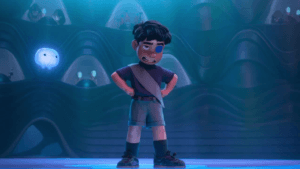
Pixar’s Elio closed around ~153.7M worldwide with ~20.8M opening, ~73M domestic, ~81M international, against a budget estimated near 200M. But box office didn’t kill it — design language did. Online discourse labelled Elio another victim of the “Corporate Memphis / GrubHub art style” — smooth, rounded faces and colour-flat shading associated with apps and explainer videos rather than cinematic spectacle.
In a post-Spider-Verse world, audiences demand personality from animation. Elio looked like UX branding, not wonder.
Parents said, we’ll wait for Disney+. They did. Once Pixar was a theatre requirement — now it’s a streaming expectation.
This reinforces 2025 movie flops box office data breakdown patterns: animation succeeds when it feels hand-crafted, vivid, inventive.
Warmth isn’t enough. Style sells seats.
Black Bag — When a Good Film Becomes a Bad Deal
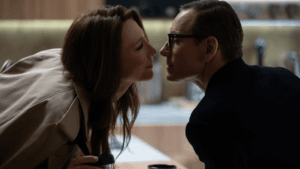
Steven Soderbergh’s Black Bag was a critical darling, tense and beautifully acted, opening near ~$7.6M domestic, finishing roughly ~$42.7M worldwide on a ~$50M budget. A decade ago, that would be respectable. In 2025, it’s a theatrical fade-out.
Today, cinema rewards extremes — spectacle on one end, conversation-igniters on the other. Black Bag sat in the middle: solid, elegant, but not culturally urgent. A film too good for dismissal, too quiet for stampede. Theatrical windows no longer nurture mid-range cinema. PVOD and streaming have adopted that role.
While the box office was low, the internal industry failure was actually the $60 million “negative pickup” deal Focus Features signed to acquire the film. Unlike typical studio productions, the distributor paid a massive premium upfront for a finished product. This meant that while the film’s $43M gross might have been okay for a smaller indie, it left Focus with a significant financial hole because they had already “overpaid” for the rights before seeing the market’s response..
The middle space — once Hollywood’s backbone — is now a no-man’s-land. Theatres reward extremes: either massive spectacle or cultural electricity. Big films that flopped in 2025 and why becomes clear here — “good” is invisible now.
Love Hurts — Super Bowl Scheduling Suicide

With a reported ~$18M budget, ~$5.8M domestic opening, and worldwide earnings hovering near ~$17.5M, Love Hurts became a quiet casualty of shifting comedy culture. Reviews, reportedly around ~19% RT, didn’t help momentum.
Comedy thrives only when it escapes the auditorium. When jokes migrate to TikTok, when punchlines become memes, when friends say “you have to see this.” Love Hurts produced laughter, maybe moments — but no echoes. Silence is more fatal than criticism.
Also Love Hurts suffered from catastrophic scheduling. It opened on February 7, 2025—the Friday of Super Bowl LIX weekend. Historically, studios avoid this weekend because the largest target demographic for an R-rated action-comedy is distracted by the biggest TV event of the year. By the time the game was over, the “echo” you mentioned had already been drowned out by Super Bowl commercials and memes.
Death of a Unicorn — No Nationwide Heat
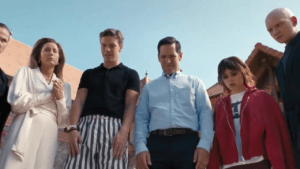
Jenna Ortega plus A24 should have equaled cult fever. Instead, Death of a Unicorn reportedly grossed ~16–17M worldwide on a ~$15M cost, reaching break-even territory but never cultural altitude. Well-liked isn’t enough when a film needs to be shared, argued, rewatched.
A24 thrives when cinema becomes discourse. Unicorn was admired — not dissected. Cool branding cannot replace urgency anymore. Indie prestige is valuable, but theatrical fuel now needs spark, not taste.
The film fell victim to “Festival Ceiling.” After premiering at SXSW in March, the film’s “cool factor” peaked too early. The hyper-specific, neon-drenched aesthetic appealed perfectly to the Austin festival crowd, but A24’s marketing struggled to translate that niche “weirdness” into a reason for a general audience in middle America to buy a ticket three weeks later. It was a film that “lived and died in the bubble.
Good films die quietly when no one argues about them.
Opus — The Contractual Dump Wide Release Disaster
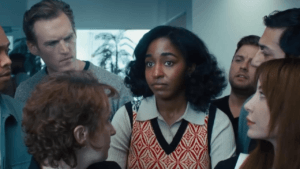
One of 2025’s clearest cautionary tales. Opus (~$10M) opened wide across 1,700+ screens, earning only ~$1.03M domestic first weekend, ending near ~$2.2M worldwide — devastating commercially. Yet the failure wasn’t creative. It was logistical.
Opus needed platform rollout — two cities, early praise, slow nationwide expansion. Instead it was thrown into a storm without oxygen. A slow-burn art film was marketed as weekend spectacle. Discovery was replaced by exposure — and exposure drowned it.
Opus is being cited by analysts as a “Contractual Dump.” Reports suggest A24 was contractually obligated to a wide release (1,700+ screens) to satisfy talent or financier agreements, even though internal tracking showed it wasn’t ready. By skipping the traditional “platform” (limited) release, they essentially “spoiled the milk”—the $1M opening was so low that theaters dropped it by week two before word-of-mouth could even begin.
Wide isn’t always bigger. Sometimes wide is fatal.
In the Lost Lands — A Fantasy Epic That Was Never Given a World to Rule

Despite star power in Milla Jovovich and Dave Bautista, In the Lost Lands reportedly earned just ~$6–7M worldwide on a ~$55M budget, with a weak ~$1.1M domestic opening. The failure wasn’t just commercial — it was structural. From its first trailer, the film communicated tone but not destination. Fantasy fans want scale, lore, immersion. Sci-fi fans want world rules. General audiences want emotional stakes. In the Lost Lands offered vibe over promise — atmospheric, dreamlike, visually intriguing, yet narratively opaque. It sold a place to visit, not a journey to take.
Then came the blow that sealed its fate.
Originally primed for a strong European rollout with Constantin Film, the movie was bumped out of premium slots to accommodate Coppola’s Megalopolis expansion. Suddenly a mid-tier fantasy lost its stage to a headline giant. U.S. release followed through Vertical Entertainment, a distributor built for boutique indies, not $55M fantasy epics requiring thunder-level marketing. Screens scattered. Trailers passed unnoticed. Word-of-mouth never had a heartbeat to spread.
When a film’s identity is unclear and its rollout is fragmented, the audience will not gamble time and money.In 2025, clarity is currency. Marketing must answer the question loud and fast:
Why this story, and why in theatres?
The Alto Knights — Prestige Without Heat Cannot Burn

Estimated ~$9–10M worldwide, ~$6.1M domestic, ~$3.2M opening against ~$45–50M production.
The numbers represent more than underperformance — they represent misaligned intention. What should have been an awards-leaning gangster epic instead became known in industry circles as David Zaslav’s personal passion approval, a film greenlit for nostalgia rather than necessity. And audiences sensed that. Prestige isn’t a pitch. Reputation isn’t a hook.
The Alto Knights felt like cinema meant to be respected, not lived.
Elegant pacing, old-world gravitas, dual De Niro roles — all admirable. But admiration is a home-viewing emotion. Theatre seats today demand excitement, discussion, urgency. This film played like a museum installation — beautifully framed, historically reverent, but passive for the modern crowd.
Prestige now thrives where conversation can simmer — streaming, awards corridors, long-tail discovery. In theatres, prestige without spark becomes polite silence.
Hollywood Box Office Failures 2025 Explained — A Year That Rewrote Theatrical Logic
Look across the wreckage — Snow White’s nostalgia stall, Elio’s style backlash, Opus’s rollout tragedy, Alto Knights’ prestige without urgency. Every failure points in one direction: audiences are still here; they’re just done being passive. They don’t reward habit anymore. They reward impact. Emotional impact. Spectacle impact. Cultural impact.
Going to the theatre is no longer tradition — it’s selection. A night out must feel like a moment worth remembering, not content that could wait.
Hollywood box office failures 2025 explained not decline — but rebirth through accountability. The audience didn’t shrink. It sharpened.
2026 will belong to films that make people feel they’ll miss something if they don’t show up, not films assuming viewers owe them attention.