For decades, Indian cinema revolved around its stars. Their faces sold tickets, defined eras, and even dictated national fashion. But in recent years, that old currency of stardom has begun to lose its value. The idea that an actor’s name alone can guarantee a film’s success now feels increasingly outdated, replaced by an ecosystem where story, authenticity, and audience relatability matter far more than charisma or lineage.
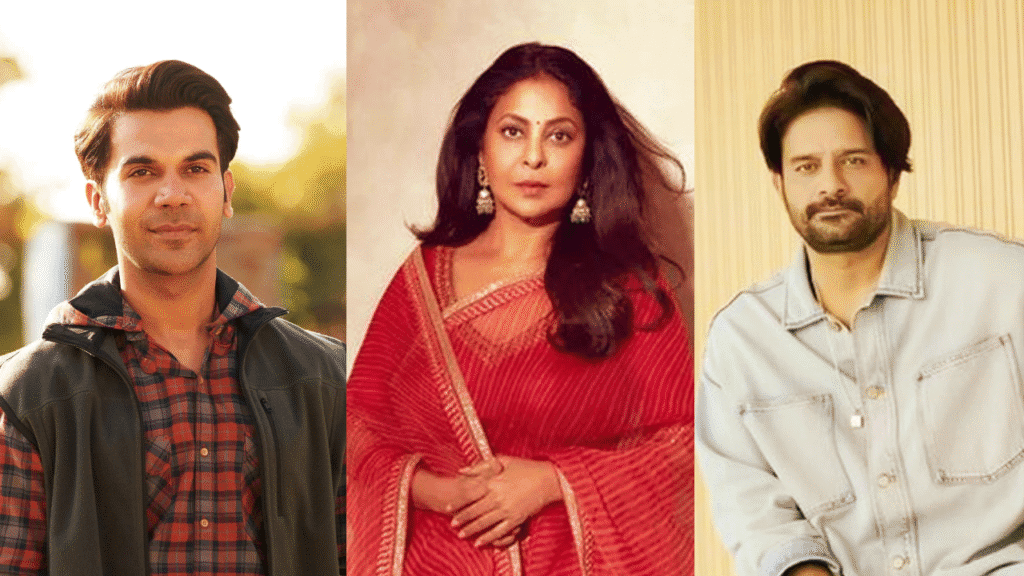
The roots of this shift lie in the transformation of the audience itself. The Indian viewer of today is not the same as the one who queued up outside single-screen theatres in the ’90s. With the explosion of digital platforms, exposure to global cinema, and access to behind-the-scenes truths, viewers have developed sharper instincts. They are less likely to be hypnotized by star power and more drawn to performances that feel lived-in, not performed. The rise of actors like Rajkummar Rao, Jaideep Ahlawat, or Shefali Shah, performers who once belonged to the margins, reflects a hunger for depth over glamour.
At the same time, mainstream stardom has struggled to evolve. For years, major actors have played versions of themselves, polishing their images rather than reinventing their craft. This predictability has dulled their appeal. The star who once felt aspirational now feels distant, rehearsed, and risk-averse. Social media has further stripped away the mystery that once surrounded celebrity; when fans see every vacation, brand deal, and PR-driven apology, they stop viewing the actor as larger than life. Stardom, once built on scarcity, now drowns in overexposure.
Another factor reshaping the value of actors is the economics of streaming. OTT platforms have democratized both access and opportunity. A well-written web series can turn an unknown performer into a household name overnight, without the machinery of stardom. Shows like Paatal Lok, Delhi Crime, and Scam 1992 have proven that it’s the content that builds stars now, not the other way around. The balance of power has quietly shifted from actor to story.
Yet, this change doesn’t mean that stars no longer matter. It means the definition of stardom is being rewritten. The new star is not the one with the biggest entourage, but the one who commands trust, someone whose choices feel intelligent, whose screen presence feels human. An actor’s social intelligence and adaptability have become as important as their looks or lineage. Audiences today reward sincerity, not perfection.
It’s also worth noting how marketing has begun to mimic this evolution. Earlier, posters were dominated by one face. Today, ensemble casts and director names are equally highlighted. The promotional language has changed, from “a star vehicle” to “a compelling story.” This subtle shift signals a deeper truth: that emotional engagement is the new currency of fame.
Of course, the industry still clings to its nostalgia. Major studios continue to gamble on surnames, hoping that brand recognition can rescue mediocre content. But each failure of a big-budget star film, and each quiet success of a performance-driven story, widens the gap between the old order and the new. The audience is sending a message: we no longer worship; we evaluate.
In the long run, this evolution could be healthy for Indian cinema. When stardom loses its artificial value, acting might reclaim its artistic dignity. The gap between the celebrated and the talented could finally narrow. We might see stars who are not built in PR rooms but born out of genuine performance, actors who understand that vulnerability, not vanity, is what endures on screen.
The Indian star system is not dead. It is simply undergoing correction, from inflated mythology to earned credibility. The ones who adapt will survive. The ones who keep mistaking popularity for relevance will slowly fade into the archives of their own fame.