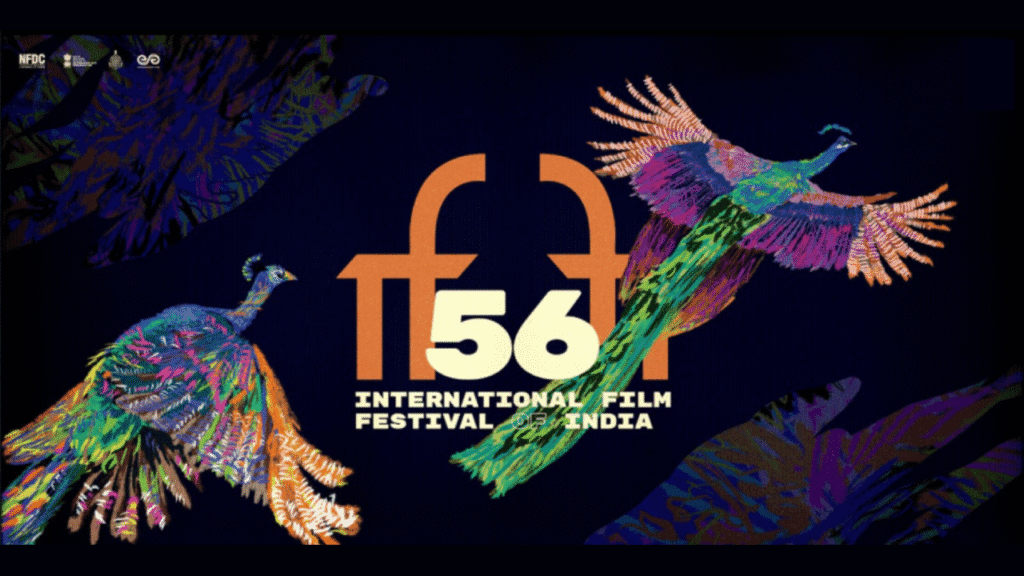
Goa is ready to echo with the “Sound of Cinema” as the 56th International Film Festival of India (IFFI 2025) begins its nine-day celebration of storytelling, creativity, technology, and artistic exchange. According to the Press Information Bureau, this year’s edition brings together an unusual convergence of heritage and innovation, reaffirming why IFFI remains South Asia’s most influential cinematic platform. The festival opened with a spectacular public parade across Panaji — a first-of-its-kind shift from auditorium-bound ceremonies to a citywide cultural celebration. Traditional tableaus from Andhra Pradesh, Haryana, and Goa moved through the streets, followed by an exuberant performance titled “Bharat Ek Soor,” uniting a hundred folk artists in rhythmic harmony. Popular animated characters such as Chhota Bheem, Chutki, Motu Patlu, and Bittu brought children and families into the fold, turning the inauguration into a carnival of colour, nostalgia, and welcoming cinematic exuberance.
This year’s cinematic journey officially opens with The Blue Trail (O Último Azul) by Brazilian filmmaker Gabriel Mascaro, winner of the Silver Bear Grand Jury Prize at Berlinale 2025. Selected as IFFI’s curtain-raiser, the film sets an introspective, visually rich tone for a festival that continues to broaden its artistic horizons while remaining rooted in the emotional power of cinematic storytelling.
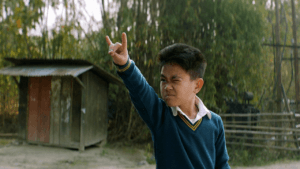
At the centre of this edition is a strong International Competition lineup featuring fifteen films from across the world. Among them is Fatih Akin’s Amrum, a German–Turkish historical coming-of-age drama; A Poet (Un Poeta) by Simón Mesa Soto, capturing the fragile bond between an aging writer and his protégé; Little Trouble Girls by Urška Djukić from Slovenia, exploring adolescent relationships through choral spaces; Mosquitoes (Le bambine) by Valentina and Nicole Bertani, set in 1990s Italy; and Sham by Japanese master Takashi Miike, a courtroom thriller woven with moral ambiguity. India’s Sarkeet (A Short Trip) by Thalava KV stands among global contenders for the Golden Peacock. Together, these films form a compact yet compelling slate that reflects IFFI’s emphasis on championing bold, diverse, and culturally rooted cinematic voices.
Beyond screenings, the festival’s industrial and creative backbone is reinforced through four major pillars — Creative Minds of Tomorrow (CMOT), WAVES Film Bazaar, the expanded technological initiatives including AI-driven programming, and the cultural platform IFFIESTA. CMOT welcomes 124 emerging creators selected from nearly 800 entries, offering mentorship and specialised skill development across filmmaking disciplines. WAVES Film Bazaar, now India’s largest marketplace dedicated to film and content creation, brings together more than 300 projects across market screenings, co-production meetings, pitch sessions, labs, and viewing rooms. International delegations, state incentive showcases, and a growing tech pavilion establish an ecosystem where ideas can translate into collaborations and deals with global impact.
One of the festival’s significant forward-looking elements this year is the spotlight on AI’s evolving role in cinema. Festival director Shekhar Kapur described in an interview that AI could be “the most democratic medium,” emphasising how technology can flatten hierarchies and give emerging creators unprecedented access to tools that were once limited to large studios. At the same time, he cautioned that no technology should erode the delicate “circle of trust” between a director and actors — a reminder that cinema’s emotional core remains human. Kapur also noted that integrating Goan communities more deeply into the festival is essential to IFFI’s growth, drawing parallels with global festivals that thrive when embraced by their host cities. His perspective aligns closely with this year’s carnival-style public opening and broader focus on accessibility.
This edition also asserts its cultural responsibility through extensive tributes and film preservation initiatives. Centenaries of Guru Dutt, Raj Khosla, Ritwik Ghatak, P. Bhanumathi, Bhupen Hazarika, and Salil Chowdhury are being marked through curated screenings, retrospectives, and scholarly conversations. A major highlight of IFFI 2025 is its showcase of restored Indian cinema classics, reaffirming the festival’s longstanding commitment to preserving the nation’s cinematic heritage. Among the restored films presented by Prasad are Umrao Jaan (1981) and Gaman (1978) by Muzaffar Ali; Rudaali (1993) by Kalpana Lajmi; Subarnarekha (1965) by Ritwik Ghatak; Muraliwala (1927) by Baburao Painter; Party (1984) by Govind Nihalani; Pyaasa (1957) by Guru Dutt; Susman (1987) by Shyam Benegal; Kireedam (1989) by Sibi Malayil; and Musafir (1957) by Hrishikesh Mukherjee. These restored works spotlight an extraordinary lineage of craftsmanship, music, visual storytelling, and narrative forms that continue to shape Indian cinema’s identity.
Adding to the celebratory spirit, legendary actor Rajinikanth is being honoured at the festival for completing fifty transformative years in Indian cinema — a milestone that resonates far beyond box office metrics and into the cultural imprint he has left across generations.
As screenings, masterclasses, premieres, conferences, cultural evenings, and industry interactions unfold across nine days, IFFI 2025 stands firmly at a rare intersection — grounded in its rich history while energetically embracing the future. This is a festival that honours timeless legacies, nurtures new creative forces, and continues to evolve with technology, society, and the expanding global language of cinema.
Read More: