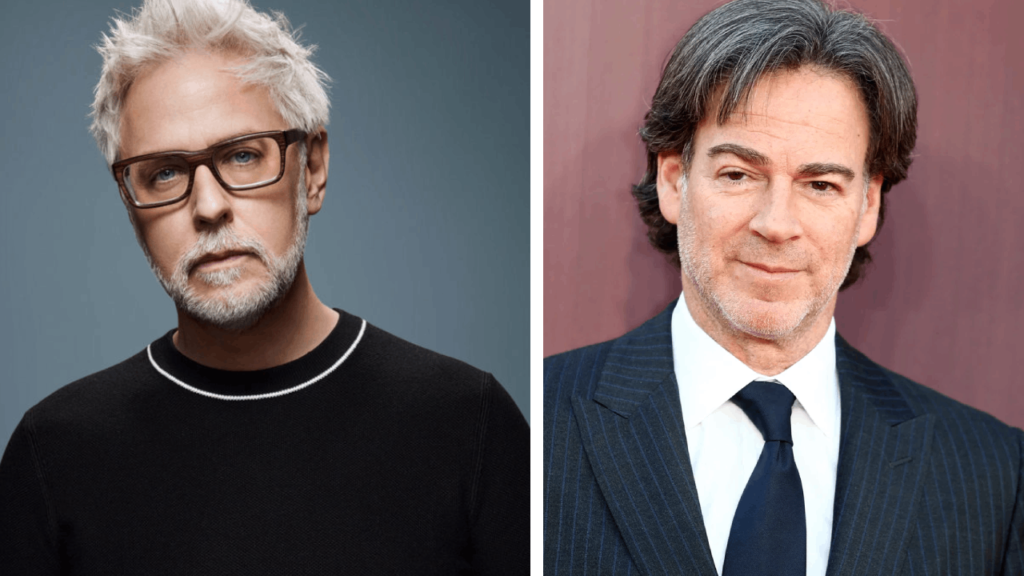
DC Studios is heading for another leadership change, with James Gunn and Peter Safran stepping down from their positions as co-CEOs and co-chairmen after four years at the helm. Marvel veteran Jeremy Latcham has been appointed as the studio’s new President and Chief Creative Officer, effective December 1, 2026. The announcement marks a significant shift in the leadership of DC’s film, television and animation operations, particularly as the studio enters a new phase under Skydance ownership following Paramount’s $111 billion acquisition of Warner Bros. Discovery.
The development comes as a surprise because Gunn and Safran were included in David Ellison’s business leadership team following the completion of the acquisition in October. Both executives had been entrusted with rebuilding DC’s comic-book properties under a unified creative strategy, and their continued involvement appeared to be part of the new company’s plans. However, they will now return to full-time creative work, while Latcham takes responsibility for overseeing the next phase of DC Studios.
Latcham brings considerable experience in superhero filmmaking, having played an important role in the development of the Marvel Cinematic Universe. He joined Marvel Studios in 2004 and eventually rose to the position of Senior Vice President of Production and Development, working closely with Marvel president and chief creative officer Kevin Feige. His credits include several films that helped establish and expand the MCU, including Iron Man, Iron Man 2, The Avengers, Guardians of the Galaxy, Avengers: Age of Ultron and Spider-Man: Homecoming.
During his time at Marvel, Latcham worked as an associate producer on Iron Man, a co-producer on Iron Man 2 and an executive producer on The Avengers, Guardians of the Galaxy, Avengers: Age of Ultron and Spider-Man: Homecoming. His experience covers different stages of the MCU’s development, from its early films to the expansion of its interconnected superhero franchises. His appointment at DC therefore brings in an executive familiar with the production demands and creative coordination involved in building a large-scale cinematic universe.
Latcham left Marvel in 2017 to establish his own production company, Latcham Pictures. The company secured first-look arrangements with 20th Century Fox, Hasbro and Wonder Project and produced films including Bad Times at the El Royale and Dungeons & Dragons: Honor Among Thieves. More recently, he held an overall deal at Hasbro Entertainment, where he was developing a Dungeons & Dragons sequel and an Action Man film. He was also producing Lionsgate’s live-action adaptation of Naruto, directed by Destin Daniel Cretton.
At DC Studios, Latcham will oversee the company’s film, television and animation slate, including its creative pipeline, production, talent and strategy. He will report to Dana Goldberg and Josh Greenstein, co-chairs of Skydance Motion Picture Group. The appointment places him at the centre of DC’s next phase, with responsibility for managing its established characters and properties across different formats.
In his statement following the announcement, Latcham described DC’s characters as among the most iconic in American popular culture and acknowledged the responsibility of leading the studio. He said he was looking forward to working with filmmakers, comic-book creators, artists and storytellers across film, television and animation. His stated objective is to develop projects that appeal to longtime DC fans while introducing the characters and their stories to new generations of audiences.
Gunn and Safran were appointed to lead DC Studios in 2022 by then Warner Bros. Discovery CEO David Zaslav. Their mandate was to bring the company’s previously fragmented comic-book operations under one creative vision and establish a stronger competitor to Disney’s Marvel Cinematic Universe. The duo subsequently restructured DC’s film and television strategy, introducing a new connected universe and expanding its storytelling into animation and streaming.
Their tenure produced mixed commercial results. Gunn’s Superman, released in 2025, collected approximately $618 million worldwide and provided an encouraging starting point for the new DC Universe. However, the subsequent performance of Supergirl was considerably weaker. The film collected approximately $126 million worldwide against a reported production budget of $170 million, making it a significant commercial disappointment. Clayface, an R-rated body-horror film released later in 2026, collected approximately $109 million worldwide against a reported $44 million budget, delivering a more modest theatrical performance.
The duo also expanded DC’s television presence through projects such as Peacemaker, Creature Commandos and Lanterns. Their broader strategy sought to establish greater continuity between the studio’s theatrical and streaming projects while allowing different characters and genres to occupy the same universe. Although the commercial performance of individual releases varied, their tenure represented a substantial restructuring of DC’s approach to its comic-book properties.
Gunn’s own comments following the announcement offered some insight into the decision to step away from the leadership role. In a statement shared on social media, he described his four years at DC Studios as challenging and acknowledged that he disliked the corporate nature of the job. He indicated that managing the studio’s business responsibilities had taken him away from the creative work that originally attracted him to filmmaking.
Gunn and Safran also released a joint statement reflecting on their time at DC. They said their initial objective had been to unite the studio under one creative vision and highlighted projects including Superman, Peacemaker, Creature Commandos, Lanterns and Clayface. They expressed pride in the actors, crews and executives who helped bring their plans to the screen. The duo also welcomed Latcham’s appointment, noting their creative history with him dating back to Marvel. They indicated that they were looking forward to returning to storytelling, including the next chapter of Clark Kent and Lex Luthor’s journey in Man of Tomorrow.
The leadership transition also raises questions about the future of DC’s upcoming projects. Gunn’s Man of Tomorrow, scheduled for 2027, remains one of the major theatrical releases on the studio’s slate. The film is expected to continue the story established by Superman, with Gunn remaining creatively involved. Meanwhile, The Batman: Part II, starring Robert Pattinson and directed by Matt Reeves, is scheduled for 2028 and belongs to a separate continuity from Gunn’s main DC Universe.
On television, The People v. Gorilla Grodd is among the upcoming projects associated with DC’s expanding slate. The 2027 series features Skyler Gisondo as Jimmy Olsen, reprising his character from Superman, alongside Jimmy Tatro as Gorilla Grodd. These projects illustrate the range of film and television properties that will form part of the transition to Latcham’s leadership.
David Ellison and Ynon Kreiz, co-CEOs of the newly formed Skydance, praised Gunn and Safran for launching a new era at DC Studios and leading the company through a period of transformation. They expressed gratitude for the duo’s contributions and said they had confidence in a smooth transition. Ellison also welcomed Latcham, while Dana Goldberg and Josh Greenstein highlighted his understanding of DC’s characters and their passionate fanbase.
The appointment of a Marvel veteran to lead DC is particularly significant because the two companies have spent years competing for audiences through their respective superhero franchises. Latcham’s experience working on some of Marvel’s most successful films gives him an understanding of how interconnected properties can be developed and managed across multiple productions. However, DC’s challenge will be to establish its own creative identity rather than simply replicate Marvel’s approach.
For Skydance, the immediate priority will be maintaining continuity across DC’s existing projects while establishing a long-term strategy for its film, television and animation divisions. Gunn and Safran’s departure from studio leadership does not automatically mean that the current DC Universe will be abandoned or rebooted. Instead, the transition places the franchise under an executive with extensive experience in superhero production at a time when the company is reassessing its broader entertainment operations.
Latcham’s appointment brings a new perspective to DC Studios, but his biggest challenge will be turning that experience into a consistent creative and commercial direction for the franchise. With established characters, upcoming theatrical releases and an expanding television slate already in place, the next phase will be closely watched by audiences and the wider film industry. Whether he can build on the foundation established by Gunn and Safran while giving DC a distinct identity will become one of the defining questions of the studio’s next chapter.