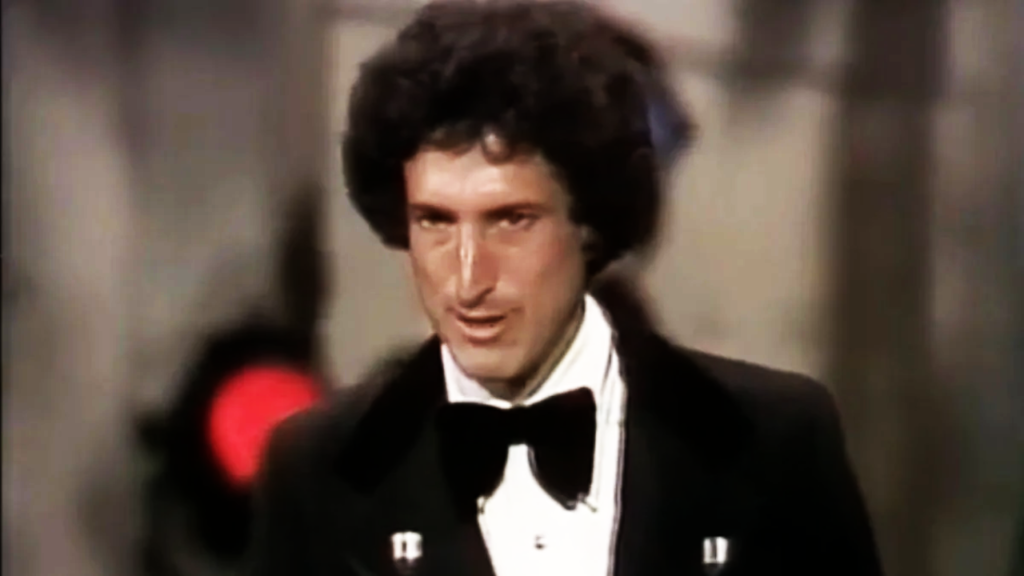
Jeremy Larner, the Oscar-winning screenwriter best known for penning the influential political drama The Candidate, has died at the age of 88. Larner passed away on February 24 at a nursing facility in Oakland, California, according to his family. His son Jesse Larner confirmed the news, noting that the writer had recently been diagnosed with lymphoma and had been living with Parkinson’s disease since 2013.
Larner was widely respected for bringing a sharp, insider’s perspective to political storytelling in Hollywood. His screenplay for the 1972 film The Candidate earned him the Academy Award for Best Original Screenplay and remains one of the most enduring political films of the New Hollywood era. Directed by Michael Ritchie and starring Robert Redford, the film follows an idealistic young lawyer who is persuaded to run for the U.S. Senate, only to discover that the compromises of modern political campaigning begin to reshape his identity and message.
The film’s memorable final line—delivered after the candidate unexpectedly wins his election—captures the cynical ambiguity of political victory and has since become one of the most quoted endings in political cinema. Over the decades, The Candidate has continued to resonate with audiences and scholars alike for its exploration of media strategy, political branding and the pressures that transform outsiders into establishment figures.
Larner’s ability to write convincingly about the machinery of politics came from direct experience. Before moving into filmmaking, he worked as a journalist and political speechwriter. Most notably, he served on the 1968 presidential campaign of Senator Eugene McCarthy, whose anti–Vietnam War campaign briefly galvanized young voters and challenged the Democratic Party establishment.
That campaign unfolded during one of the most turbulent political periods in modern American history. President Lyndon B. Johnson ultimately chose not to seek reelection, and the race was shaken by the assassination of Robert F. Kennedy before Vice President Hubert Humphrey secured the Democratic nomination. Larner later chronicled his experiences during that campaign in the book Nobody Knows: Reflections on the McCarthy Campaign of 1968, which drew attention after excerpts were serialized in Harper’s magazine.
Those experiences informed the tone and realism of The Candidate. Rather than presenting politics as heroic drama, Larner’s screenplay depicted campaigns as carefully constructed performances shaped by consultants, polling data and media strategy. The film became a defining work of the politically conscious cinema that flourished in the early 1970s, a period when Hollywood filmmakers increasingly tackled social and political themes with new frankness.
Although the success of The Candidate brought Larner the highest recognition in screenwriting, his career in Hollywood remained relatively limited. One of his other notable projects was Drive, He Said (1971), based on his debut novel published in 1964. The film adaptation starred Jack Nicholson and marked Nicholson’s directorial debut. Despite the acclaim surrounding his Oscar-winning screenplay, Larner largely stayed outside the Hollywood system, continuing to pursue writing in other forms.
Earlier in his career, Larner had built a reputation as a journalist and essayist. He contributed to major publications including Life, The New Republic and Harper’s, often writing about politics, culture and social issues. His background in journalism helped shape his clear, observational style and grounded approach to storytelling.
Over the years, Larner also authored several books addressing political and social topics, including The Addict in the Street, Poverty: Views From the Left and The Answer. In the late 1980s he turned increasingly toward poetry and began giving public readings of his work, adding another dimension to his literary career.
Jeremy Larner was born on March 20, 1937, in New York City and grew up in Indianapolis, Indiana. He later attended Brandeis University, graduating in 1958. His time at the university exposed him to influential thinkers of the era, including philosopher Herbert Marcuse, whose ideas about politics and society would resonate with many writers and intellectuals of Larner’s generation.
Though he never pursued a prolific career in Hollywood, Larner’s legacy rests firmly on the lasting impact of The Candidate. The film’s incisive look at political ambition and media manipulation remains strikingly relevant decades after its release, particularly in an era when campaign messaging and image management dominate public life.
Larner is survived by his sons Jesse and Zachary and by his brother Daniel. His passing marks the loss of a writer whose singular screenplay left an indelible mark on American political cinema and demonstrated how firsthand experience can shape storytelling that remains powerful long after its time.
Read More:
- Beyond Hype: The 10 Indian Films Defining Anticipation in 2026
- Hollywood Box Office Failures 2025 Explained — What The Year’s Biggest Misses Taught Us
- Why James Cameron’s Films Refuse to Fade — Even When the Box Office Is Done
- Best Santa Claus Movies of All Time, Ranked by Impact and Legacy
- 35 Years Later: From Traps to Triumphs: Where Are the Stars of ‘Home Alone’ Now?