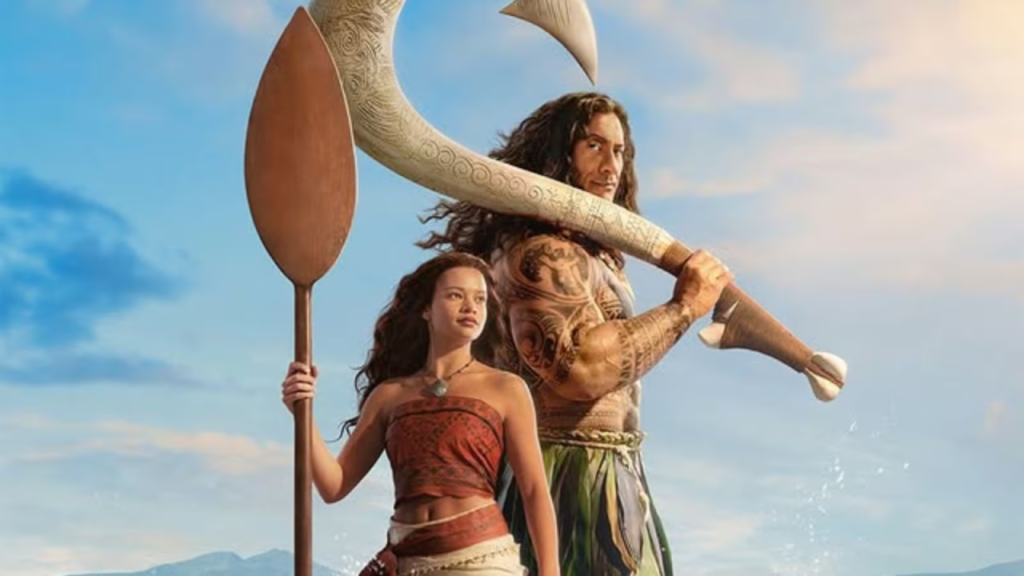
Disney’s Moana live-action trailer has finally unveiled, and rather than simply recreating a beloved classic, it positions itself as a reinterpretation shaped by scale, texture, and physicality. Set for release on July 10, 2026, the film brings back Dwayne Johnson as Maui while introducing Catherine Laga’aia in the lead role — a transition that defines the film’s central balance between familiarity and reinvention. Earlier Disney had offered a glimpse of the project back in November 2025, when the initial teaser for the film was released, setting the tone for its live-action reinterpretation.

What immediately stands out is how the world of Moana has been reimagined. The ocean — once fluid and stylized — now carries a tangible weight, stretching endlessly across the frame with a sense of unpredictability. The island landscapes feel less like designed environments and more like lived-in spaces. This is not animation translated into reality, but a world rebuilt to function within it.
Within that world, the story remains rooted in the same emotional foundation. A young girl chosen by the ocean sets out on a journey that challenges both her identity and her understanding of where she belongs. The trailer doesn’t attempt to redefine that arc — instead, it leans into it, allowing the scale of the visuals and the grounded performances to reshape how the journey is experienced.
Catherine Laga’aia’s presence is central to that shift. Her interpretation of Moana appears more internalized, focusing on quiet moments of doubt and resolve rather than overt expression. Even in brief glimpses, there is a sense that the character’s emotional journey may unfold with more restraint, allowing the performance to carry weight in a different way than its animated counterpart.
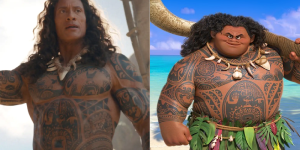
In contrast, Maui remains a force of energy. Dwayne Johnson’s return anchors the film in continuity, but the transition to live-action changes how the character is perceived. The exaggerated features of animation give way to a version shaped through prosthetics and physical performance, creating a Maui who still commands attention, but operates within a more grounded visual space. The humor remains, but it feels filtered through a slightly more restrained lens.
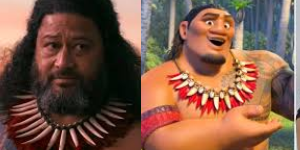
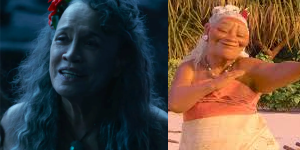

The film’s supporting characters further reinforce this tonal shift. Figures like Moana’s father and grandmother continue to represent opposing forces in her journey — caution and belief — but their presence now feels more immediate, more human. Their influence is not just thematic, but emotional, shaping the decisions that drive the story forward.
Beyond the characters, the trailer places a strong emphasis on the elements themselves. The ocean is not just a setting, but an active presence, guiding and reacting in ways that feel deliberate. Fire, in the form of the looming volcanic threat, appears more destructive and overwhelming, reinforcing the scale of what Moana is up against.
Even the film’s lighter elements undergo a subtle transformation. Creatures that once leaned heavily into exaggerated animation now exist within a more realistic framework. Their personalities remain intact, but their presence is integrated more naturally into the world, rather than standing apart from it.
What the trailer suggests is a film that is less concerned with retelling a story and more focused on re-experiencing it. The narrative beats are recognizable, but the way they unfold is shaped by a different cinematic language — one that prioritizes immersion over stylization.
This approach aligns with the creative team behind the film. Directed by Thomas Kail, with writing from Jared Bush and Dana Ledoux Miller and continued involvement from Lin-Manuel Miranda, the project brings together voices that understand both the emotional and musical foundations of the original, while approaching them from a new perspective.
The timing of the film’s release adds another layer to its significance. Unlike many of Disney’s remakes, Moana arrives while the original is still fresh in cultural memory and its sequel has already expanded the franchise’s reach. This positions the live-action version not as a nostalgic revisit, but as an extension of an already active property.
That positioning is reflected in the early response. The trailer has generated strong engagement, driven by curiosity around how these characters translate into live-action. At the same time, it has sparked debate — particularly around visual choices and the necessity of revisiting the story so soon. This contrast between excitement and skepticism mirrors the broader conversation surrounding Disney’s remake strategy.
Ultimately, what the trailer establishes is a clear creative direction. This is not about replacing the animated original, but about presenting it through a different lens — one that emphasizes realism, scale, and physical presence.
The story itself may be familiar, but the experience it offers is being reshaped. And that distinction may ultimately define how audiences connect with it when it reaches theaters.
Read More: