What happens when a story has already existed in people’s minds for generations? Do you really need to introduce it to them? Probably not.
And that is exactly where mythological cinema found one of its strongest advantages in post-Independence India.
India became independent in 1947, and Indian cinema was beginning to look at a country that was changing rapidly. Filmmakers were telling stories about poverty, family, society, modernity, nation-building, and the realities of everyday life. Yet alongside all of this, stories about gods, kings, devotees, and warriors continued to occupy the screen.
Mythology In Indian Cineman did not disappear with Independence. Instead, it slowly found a different place within an industry that was itself changing.
Filmmakers were beginning to look at new subjects and different realities, but that did not mean older stories suddenly lost their place. Hindu mythology, especially, already had a strong presence in the cultural and religious life of a large section of the country. Stories from the Ramayana, the Mahabharata, the Puranas, and the lives of different deities were already familiar to many people.
For filmmakers, that meant there was already an audience that understood the world they were entering.
But familiarity could only take a film so far. The audience may know the story, but they still have to want to watch it. And this is where cinema could do something different. It could turn these stories into spectacle through elaborate sets, costumes, music, performances, humour, drama, and visual effects. The story could remain familiar while the experience of watching it could keep changing.
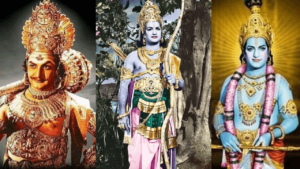
This became especially visible during the 1950s and 1960s. Different regional film industries developed their own connection with mythological cinema, with Telugu cinema becoming mainly associated with N. T. Rama Rao. He played several mythological figures, including Krishna, Rama, Venkateswara, and Ravana. Over time, his performances became closely connected with the way many Telugu-speaking audiences visualised these figures.
One of the most significant films from this period was Mayabazar (1957). Based on a story connected to the Mahabharata, the film did not simply retell something the audience already knew. It brought together fantasy, romance, comedy, music, and visual spectacle. There was mythology, but there was also entertainment. And that is what makes the film so fascinating even beyond its mythological source.
The fact that a story was familiar did not mean filmmakers had to tell it in only one way.
Other Telugu films followed with their own interpretations. Bhookailas (1958), Sri Venkateswara Mahatyam (1960), and Seeta Rama Kalyanam (1961) explored different stories and figures, while also showing how strongly mythology had become part of the regional film industry.
Tamil cinema had its own relationship with the form. Sivaji Ganesan’s portrayal of Shiva in Thiruvilaiyadal (1965), for instance, allowed the figure to exist through drama, emotion, humour, and larger-than-life storytelling. In the North, Homi Wadia’s Wadia Movietone and later Basant Pictures also produced films that moved between mythology, fantasy, and spectacle.
Mythological or religious cinema in India was not limited to Hindu traditions either.
Films rooted in Sikh traditions found a place in Punjabi cinema, with Nanak Naam Jahaz Hai (1969) being one of the notable examples. Muslim devotional cinema had films such as Mere Gharib Nawaz (1973), centred around the Sufi saint Moinuddin Chishti. Malayalam cinema brought the story of Jesus to the screen with Jesus (1973), while Hindi film Angulimaal (1960) drew from the Buddhist tradition and the story of Angulimala’s encounter with the Buddha.

Films about spiritual and devotional figures also found their place, such as Shirdi Ke Sai Baba (1977), which brought the life and teachings of Sai Baba to the screen. Sai Baba does not belong to Hindu mythology, but films centred on him became part of the wider devotional tradition in Indian cinema. The space given to such stories also shows how religious cinema could extend beyond ancient epics and include figures whose place in popular faith had developed through more recent traditions.
Not all of these films would technically fall under the same category of “mythological cinema.” Some are devotional films, some are religious stories, and some are based on spiritual or historical figures. But they are still part of the larger presence of religious storytelling within Indian cinema.
Hindu mythological cinema, however, remained much larger and more continuous. And there is a fairly straightforward reason for that. These stories already had a wide cultural presence, and a large section of the Indian audience was Hindu. That familiarity could become both a cultural connection and a commercial possibility.

Then came Jai Santoshi Maa in 1975. The film was released in the same year as Sholay, but that is almost where the similarities end. While Sholay represented the scale of the big commercial spectacle, Jai Santoshi Maa was made on a very small budget. Yet, it went on to become a major box-office success. Its devotional songs became popular, and the film helped make Santoshi Mata a much more widely recognised figure. What is interesting here is that the film did not need enormous sets or expensive visual effects to connect with its audience. It had devotion, music, connect, and a simple emotional story.
And that was enough.
In fact, the success of Jai Santoshi Maa says something important about the audience for this kind of cinema. Mythological and devotional films were not successful only because they could create giant worlds on screen. Oftentimes, the connection was much more direct. People already had a relationship with the material, and the film became another way of experiencing it.
A year later, Bajrangbali (1976), starring Dara Singh as Hanuman, offered something different again. Hanuman was already a known mythological figure, but the film also brought humour into his portrayal through hasya rasa. It did not have to treat the figure in only one way. There could be devotion, but there could also be humour and entertainment.
As Indian cinema moved into later decades, mythology itself started changing on screen. It did not always have to appear as a direct retelling.
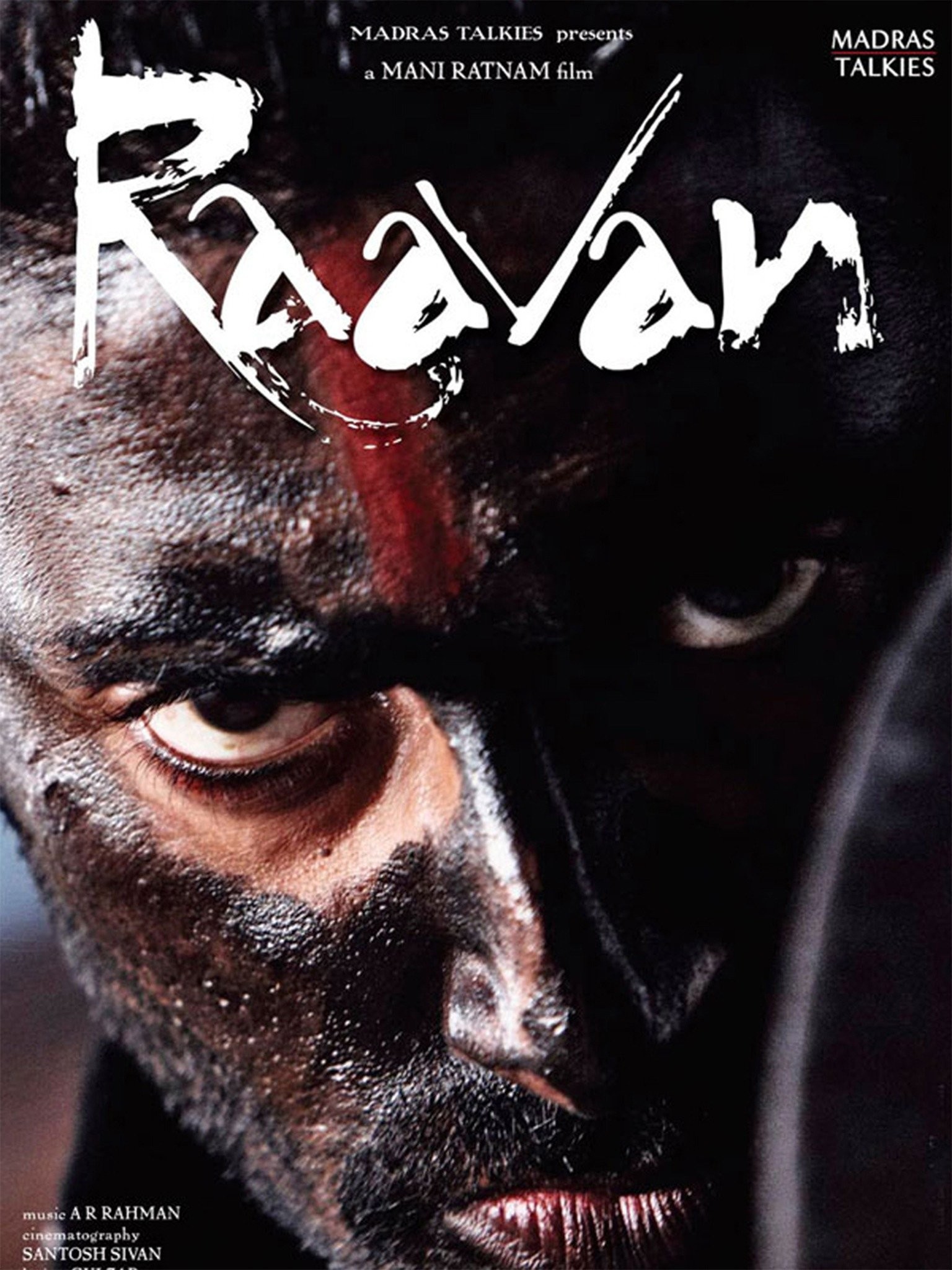
Arjun: The Warrior Prince (2012), for instance, used animation to reinterpret the story of Arjuna. Other films went even further away from the traditional mythological format. Trishul (1978), Kalyug (1981), Raajneeti (2010), and Raavan (2010) drew from mythological stories and structures while placing them in very different worlds.
Kalyug reworked the conflict of the Mahabharata through a modern family and business setting. Raajneeti drew parallels with the Mahabharata through a contemporary political family. The stories were no longer being presented as mythology itself, but the ideas underneath them remained recognisable, family, rivalry, loyalty, duty, revenge, and power. It does not always have to be visible for it to be present. A filmmaker can take an old story and change its setting completely. They can change the tone, the medium, or even the kind of world it exists in. What remains is something under the surface.
The development of modern visual effects opened up another possibility. Filmmakers could now create enormous fantasy worlds that drew from Indian epic and mythological storytelling without directly adapting a particular myth.
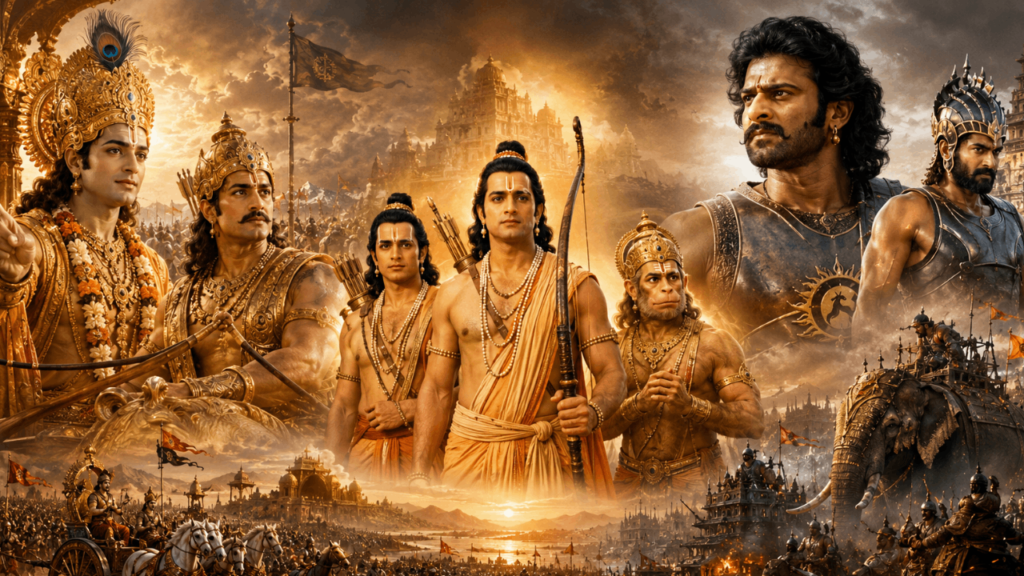
SS. Rajamouli’s Baahubali: The Beginning (2015) and Baahubali 2: The Conclusion (2017) are good examples. The films are not direct adaptations of Hindu mythology. However, their larger-than-life figures, family conflicts, moral struggles, and epic scale are influenced by Indian mythological storytelling. Here, mythology becomes part of the fantasy world rather than the story itself.
The same kind of movement can be seen in Brahmāstra: Part One – Shiva (2022), Karthikeya 2 (2022), and Ram Setu (2022). Each film approaches the material differently, but all three bring mythology, religious imagery, or questions of faith into contemporary cinematic worlds.

Then came Adipurush in 2023. The film was another large-scale attempt to bring the Ramayana to the modern screen. But its reception also showed why mythological cinema can be particularly difficult to make. When a filmmaker adapts a story that people have known for generations, the audience is not entering the theatre without any expectations. They already have an image in their minds. They already know the figures, the relationships, and have their own understanding of how the story looks and feels. So when a film presents it differently, the difference becomes impossible to ignore.
And this has probably always been the challenge, and also the possibility, of mythological cinema.
The filmmaker is working with something that is already familiar, but that does not mean the story has to remain untouched. It can be retold through a different region, a different performer, a different tone, animation, fantasy, or new technology. It can even disappear into another story and quietly remain underneath it, without bringing it to the front layer of the film.
From the mythological films of the 1950s and 1960s to the success of Jai Santoshi Maa, from regional interpretations to films that borrow from mythology without directly adapting it, Indian cinema has kept finding different places for these stories. That is where mythological cinema has found its space after Independence. Not by remaining frozen in the form in which it first appeared, but by changing with Indian cinema itself. The mythology has moved from elaborate studio sets to VFX-heavy spectacles, and sometimes back into ordinary human stories where it is not even named.
The stories may remain timeless, but the ways in which we tell them, and the ways in which we see them, continue to change.