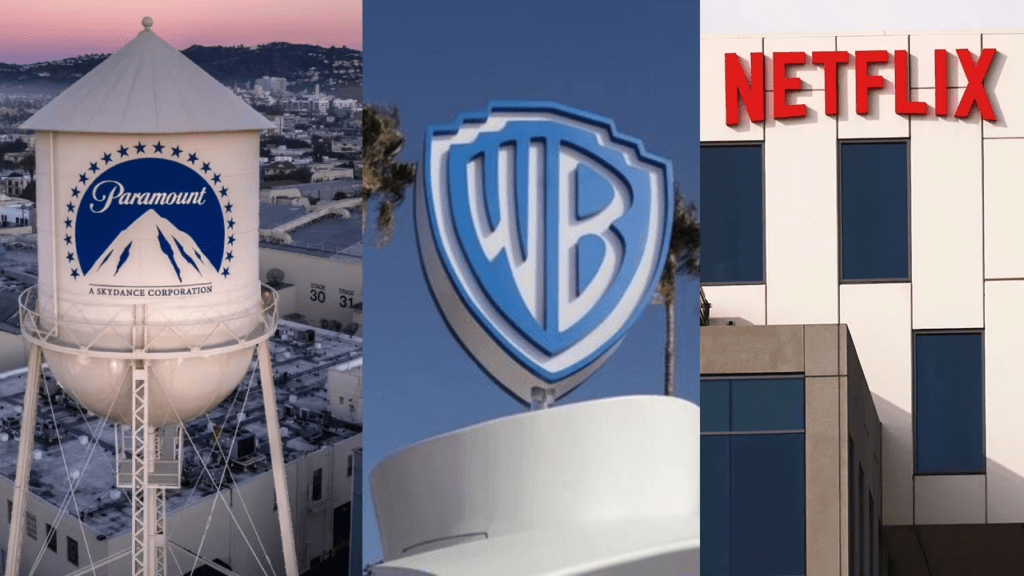
In a stunning reversal of one of the most closely watched deals in Hollywood history,, Netflix has formally declined to raise its offer for Warner Bros. Discovery, effectively clearing the path for Paramount Skydance to emerge as the winning bidder for the storied studio.
The withdrawal comes after Warner Bros. Discovery’s board determined that Paramount Skydance’s revised proposal constituted a “Superior Proposal” under the terms of Netflix’s previously negotiated merger agreement. Netflix had secured a deal in December 2025 to acquire most of Warner Bros. Discovery’s entertainment assets at approximately $27.75 per share, valuing the transaction at roughly $82.7 billion. However, Paramount Skydance countered with an enhanced all-cash offer of $31 per share, accompanied by additional financial protections designed to provide greater certainty and value to shareholders.
In a joint statement, Netflix co-CEOs Ted Sarandos and Greg Peters said the company would not match the higher bid, emphasizing that while the original transaction would have created shareholder value with what they described as a clear path to regulatory approval, the revised price required to compete was “no longer financially attractive.” They reiterated that the Warner acquisition was “always a ‘nice to have’ at the right price, not a ‘must have’ at any price,” underscoring a disciplined capital allocation strategy.
The statement thanked Warner Bros. Discovery leadership — including CEO David Zaslav, CFO Gunnar Wiedenfels and the board — for running what Netflix described as a fair and rigorous process. The executives added that they believed Netflix would have been strong stewards of Warner’s iconic brands and that their deal would have strengthened the entertainment industry and preserved production jobs in the United States. Still, the company made clear that valuation discipline ultimately prevailed.
Investors responded positively to the decision. Netflix shares surged more than 10 percent in after-hours trading following the announcement, suggesting Wall Street favored restraint over an aggressive bidding war. Netflix reaffirmed its strategic priorities, noting that its business remains strong and organically growing. The company confirmed it plans to invest approximately $20 billion in content this year and will resume its share repurchase program, signaling confidence in its standalone trajectory rather than pursuing transformational consolidation.
Paramount Skydance’s proposal distinguished itself not only through price but through structural enhancements. In addition to the $31 per share cash offer, the bid includes a ticking fee of $0.25 per share per quarter beginning after September 30, 2026, compensating shareholders in the event of delayed closing. Paramount also offered a $7 billion regulatory termination fee should the transaction fail due to antitrust barriers, a provision designed to mitigate deal uncertainty. Further strengthening its case, Paramount agreed to cover the $2.8 billion breakup fee Warner Bros. Discovery would owe Netflix upon terminating the prior agreement.
Warner Bros. Discovery’s board signaled that once it formally adopts the Paramount merger agreement, it believes the transaction will create “tremendous value” for shareholders. Zaslav expressed enthusiasm about the prospect of combining Warner Bros. Discovery with Paramount Skydance, pointing to the potential scale and storytelling power of a unified entity.
If completed, the merger would consolidate a vast portfolio of entertainment assets under one corporate umbrella. Warner Bros. Discovery brings Warner Bros. Pictures, HBO, DC Studios, CNN, Turner networks and Discovery’s nonfiction brands. Paramount Skydance contributes Paramount Pictures, CBS assets, and Skydance’s production pipeline. The combination would create one of the most vertically integrated entertainment companies in the world, spanning theatrical production, premium television, streaming, news and global distribution.
Yet the path to closing is far from guaranteed. U.S. and European regulators must approve the transaction, and political scrutiny is already intensifying. Senator Elizabeth Warren publicly criticized the proposed merger as an “antitrust disaster,” signaling potential resistance from lawmakers concerned about further consolidation in media and streaming markets. State attorneys general are also expected to weigh in. Given the size and scope of the combined company, regulatory review could be lengthy and contentious.
Netflix’s withdrawal represents a defining strategic moment for the streaming giant. For years, industry observers speculated that Netflix might eventually acquire a legacy Hollywood studio to secure intellectual property, production infrastructure and theatrical leverage. Warner Bros., with its century-old brand, extensive film library and premium television assets, would have marked the most transformative acquisition in Netflix’s history. Instead, the company chose capital discipline over scale expansion, reinforcing its long-stated philosophy of organic growth and heavy internal content investment.
The decision also reflects a broader industry tension between consolidation and independence. Paramount Skydance’s aggressive pursuit signals belief in scale as a competitive necessity in an increasingly fragmented entertainment marketplace. Netflix’s retreat suggests confidence that global subscriber growth, data-driven programming and a $20 billion annual content budget can sustain leadership without assuming integration risk.
Should the Paramount Skydance deal secure regulatory approval, it would stand among the largest and most consequential media mergers in recent memory, redrawing competitive lines across streaming, theatrical exhibition and broadcast television. If regulators intervene, however, the industry could see yet another recalibration in strategy and asset positioning.
For now, Netflix walks away with $2.8 billion in termination compensation and renewed investor confidence. Paramount Skydance stands poised to secure one of Hollywood’s most storied studios. And Warner Bros. Discovery enters the next phase of its corporate future amid a dramatically reshaped media landscape.
The battle for Warner is effectively over — but the regulatory fight, and the long-term implications for global entertainment, are only beginning.
Read More: