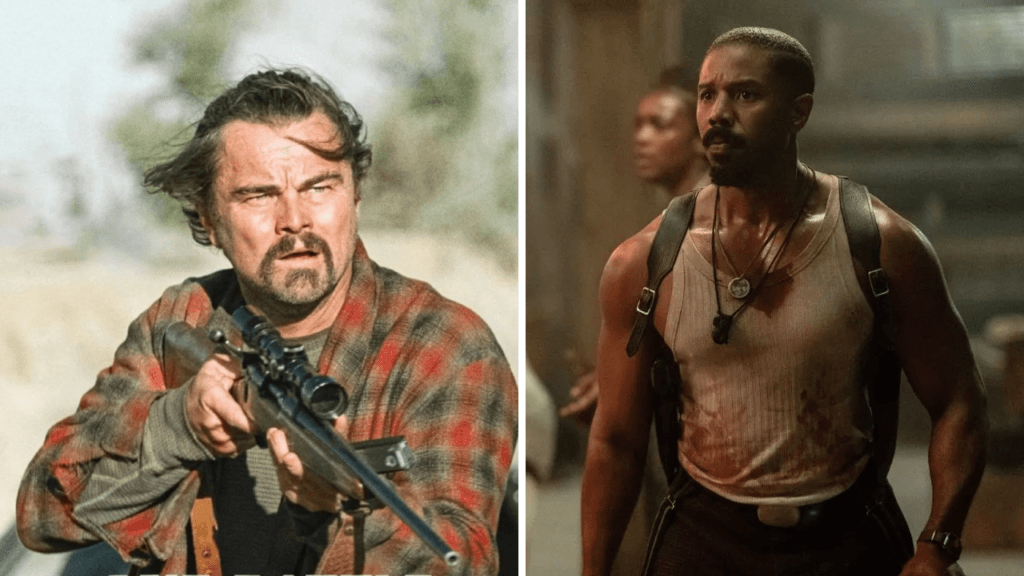
The 2026 Critics Choice Awards (31st) delivered one of the clearest statements yet about where critical consensus currently stands in cinema. At a ceremony that increasingly positions itself as a barometer of craft, authorship, and performance rather than popularity, One Battle After Another emerged as the night’s defining winner, taking home Best Picture while also securing Best Director for Paul Thomas Anderson. The dual triumph underlined a strong year for director-driven cinema, with critics rallying around a film defined by control, intent, and formal confidence.
Anderson’s dominance did not stop at the top prize. He also won Best Adapted Screenplay for the film, completing a rare awards-night sweep that reinforced his position as the evening’s most celebrated creative force. The recognition extended beyond headline categories, with the film also figuring prominently across technical nominations, reflecting how thoroughly it resonated with voters across departments. Rather than feeling like a consensus compromise, One Battle After Another was positioned as an unambiguous critics’ choice — a film that married scale with precision and vision with discipline.
If one film defined the night artistically, Sinners defined it in terms of breadth. The Warner Bros. release was the most decorated title of the ceremony, winning four major awards that spanned writing, performance, music, and casting. Ryan Coogler took home Best Original Screenplay, while Ludwig Göransson won Best Score, reaffirming the film’s musical and emotional architecture as one of the year’s most striking. Young performer Miles Caton was awarded Best Young Performer, and Francine Maisler won the newly introduced Casting and Ensemble award, highlighting the film’s collective strength rather than a single standout turn.
The acting categories reflected a similar emphasis on performance over persona. Timothée Chalamet won Best Actor for Marty Supreme, a performance that critics recognised for its physicality and internal control. Best Actress went to Jessie Buckley for Hamnet, continuing her reputation as one of the most daring and emotionally precise performers of her generation. In the supporting categories, Jacob Elordi won Best Supporting Actor for Frankenstein, while Amy Madigan claimed Best Supporting Actress for Weapons, a recognition that balanced emerging stars with veteran presence.
Animation and music found a rare point of crossover through Netflix’s viral success KPop Demon Hunters, which won Best Animated Feature and Best Song for its chart-topping track “Golden.” The double win reflected the film’s cultural reach beyond traditional animation audiences, positioning it as a global pop phenomenon as much as an awards contender. In the international category, The Secret Agent won Best Foreign Language Film, with critics recognising its political urgency and historical grounding amid strong competition from festival-backed titles.
Screenwriting emerged as one of the most competitive fields of the night. While Coogler’s Sinners claimed Original Screenplay, the category featured a notably diverse slate that included Jay Kelly, Marty Supreme, Weapons, Sentimental Value, and Sorry, Baby. On the adapted side, Anderson’s win for One Battle After Another stood out against heavyweight contenders such as Train Dreams, Frankenstein, Bugonia, and Hamnet, underscoring the importance critics placed on structural clarity and adaptation as an art form rather than a technical exercise.
The craft awards further reinforced the Critics Choice Awards’ expanding commitment to below-the-line recognition. Frankenstein led in Production Design and Costume Design, while Train Dreams won Cinematography. F1 dominated in Editing and Sound, and Avatar: Fire and Ash claimed Best Visual Effects, a reminder that large-scale spectacle continues to command respect when executed with technical rigor. The newly added Stunt Design category went to Mission: Impossible – The Final Reckoning, marking a significant step toward recognising physical performance and choreography as essential cinematic language.
The Best Picture lineup itself offered a snapshot of the year in film, blending prestige drama, auteur-driven projects, and genre filmmaking. Alongside the winner One Battle After Another, the slate included Bugonia, Frankenstein, Hamnet, Jay Kelly, Marty Supreme, Sentimental Value, Sinners, Train Dreams, and Wicked: For Good, reflecting a year where critics gravitated toward ambition and coherence rather than formula.