There are films we watch because everyone is talking about them, and there are films we remember long after the conversations around them have faded. Sometimes, they are the same film. At other times, they are not.
From the Academy Awards to the National Film Awards, from Sinners to Dhurandhar, one question continues to follow cinema: who decides what makes a film good? More importantly, does a film’s popularity tell us anything about its cinematic quality?
It is an old debate, but one that has become increasingly difficult to ignore in an age where every release is measured through box-office numbers, audience ratings, and social media conversations.
There is nothing wrong with a film being popular. Cinema has always been a form of entertainment, and there is something beautiful about a film finding its way into the lives of people who may otherwise have little in common. But when popularity becomes the primary measure of a film’s worth, we begin to overlook what makes cinema an art form in the first place.
Hindi cinema has never been short of films that bring these questions into focus.
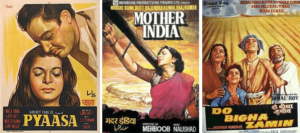
For a long time, Indian cinema was spoken of through the distinction between commercial and art cinema. The former was associated with stars, songs, romance, melodrama and larger-than-life stories, while the latter turned towards realism, social concerns, and the lives of ordinary people. The distinction was never entirely clear. Pyaasa (1957), Mother India (1957) and Do Bigha Zamin (1953) carried the weight of social realities while reaching audiences beyond the boundaries of what we now call parallel cinema.
The emergence of the New Indian Wave, influenced by movements such as Italian Neorealism, gave filmmakers another way of looking at the world. Satyajit Ray, Bimal Roy, Ritwik Ghatak and Mrinal Sen found so much to say in the lives of ordinary people. Their films did not need grand settings or extraordinary characters to move the audience. Oftentimes, it could just be a child watching a train pass through the countryside, and somehow, that moment held more of life than all the spectacle a film could offer.
Yet, somewhere along the way, art cinema came to be seen as something separate from the audience. It was often associated with film festivals, critical appreciation and a certain kind of viewer. Commercial cinema, meanwhile, continued to occupy the larger space of popular culture. The divide was not simply about the films themselves, but also about how we had learnt to perceive them.
And then, the lines began to blur.

Ram Gopal Varma’s Satya (1998) brought the Mumbai underworld to the screen without dressing it up as a glamorous world. Its gangsters felt like people living in a city that was as harsh and unforgiving as the lives they led. They were men shaped by violence, fear and the desire for power. The film became a commercial success while introducing a different kind of storytelling into mainstream Hindi cinema.
Dibakar Banerjee’s Khosla Ka Ghosla (2006) found its story in something as ordinary as a family trying to reclaim its land. Oye Lucky! Lucky Oye! (2008) looked at a thief through the world he inhabited, while Gangs of Wasseypur (2012) brought together the violence of a crime saga and the texture that came with it of their everyday life. These films did not have to abandon entertainment to make room for something more thoughtful.
Cinema doesn’t have to choose between reaching people and saying something meaningful. A film can be loved by many and still leave us with something to think about.
The question, then, is not whether popular cinema can be quality cinema. It clearly can. The question is whether popularity, on its own, is enough to establish that quality.
Consider a film like 3 Idiots (2009). It found a huge audience by making the pressures of education and the fear of failure feel personal, while also reminding us that life cannot be measured by marks alone. Dangal (2016) brought the struggles of two women athletes to a much wider audience. Andhadhun (2018) kept playing with what we thought we knew, and Badhaai Ho (2018) found humour in a subject many families would rather not talk about.
These films were popular, but there was more to them than their box-office success. The stories they told, the performances that stayed with us and the choices they made as films gave them a life that went well beyond the numbers.

And yet, a film can also become popular for reasons that have little to do with its cinematic craft. A familiar star, a catchy song, a striking trailer, a controversial subject or the sheer scale of a production can bring audiences into theatres. The songs of Hum Aapke Hain Koun..! (1994), the nostalgia surrounding Gadar 2 (2023), or the controversy that followed The Kashmir Files (2022) each show how a film’s appeal can extend beyond the film itself. Sometimes, the work lives up to that excitement. Sometimes, the excitement begins to stand in for the work.
There is no single reason why people watch a film. We may go because we love an actor, because a friend recommends it, because we want to be part of a conversation or just because we need a few hours away from our routine lives. None of these reasons are obviously wrong. The problem begins when the number of people who watch a film becomes the only reason we consider it good.
A film’s box-office success tells us that it has found an audience. It does not necessarily tell us how well its story has been told, how thoughtfully its characters have been written, how well sound has been incorporated within storytelling or whether its visual language adds anything to the experience. These are different questions, and they deserve to be asked independently.
This is also where the idea of being cinematic becomes important.
Cinema is not simply a story placed before a camera. It is the way a story is told through images, sound, editing, movement, performances and the space between them. A scene can be powerful without a single line of dialogue. A character can say so much without speaking. Sometimes, it is in the way they look away, or in the silence they leave between them. And a camera can make us feel the distance between two people, even when they are standing right beside each other.
When these choices become secondary to the need to keep a film constantly engaging, something gets lost. A film may have all the elements that make it popular, yet leave little room for the audience to experience anything beyond the immediate excitement of watching it.
This does not mean that every film needs to be slow, serious or difficult to understand. Nor does it mean that spectacle, melodrama or songs are somehow less cinematic. The question is whether these elements belong to the film, whether they contribute to the story and whether the filmmaker has something to say through them.
The songs in Pyaasa, for instance, are not interruptions in the narrative. They become an extension of the poet’s inner world. The scale of Mother India is inseparable from the world it seeks to portray. And the violence in Satya is not merely a way of creating excitement, it is part of the world the characters inhabit.
Cinema can take many forms. What matters is not the form itself, but what the filmmaker does with it.
Maybe this is why the distinction between popular and art cinema has become less useful over the years. A film like Newton (2017) can engage with political realities while remaining accessible to an audience. Pink (2016) can take up questions of consent through the framework of a courtroom drama. Article 15 (2019) can bring the realities of caste into a mainstream narrative. These films may not all approach their subjects in the same way, but they demonstrate that popular cinema has the ability to make room for stories that deserve to be told.
At the same time, it is important not to assume that a film becomes better because it deals with a serious subject. A film about social injustice can be poorly made. A film about love can be extraordinary. The subject alone does not determine the quality of cinema, just as the size of its audience does not.
There is also something worth considering about the way we watch films today. Social media has made it easier than ever to participate in conversations around cinema, but it has also made the conversation increasingly dependent on immediate reactions. A film is declared a masterpiece or a disaster within hours of its release. Box-office numbers become arguments. Awards become evidence of either artistic merit or institutional failure. The film itself can sometimes disappear beneath the noise surrounding it.
And when we begin to see cinema this way, we risk reducing the experience of watching a film to a question of whether it succeeded or failed.
I find myself returning to a simpler thought. A film does not become less meaningful because it is popular, and it does not become more meaningful because it is not. Some films are made to entertain us, some to unsettle us, some to make us look at the world differently. Many do all three.
The audience has every right to enjoy what it enjoys. Filmmakers have every right to make the films they want to make. But as viewers, we can also look beyond the numbers and ask what a film has offered us or the world of cinema at large.
Because a film’s popularity may tell us how many people watched it. What it tells us about cinema is a different question altogether.