Sony Pictures and Neal Street Productions are scaling up what is already one of the most ambitious theatrical experiments in modern studio filmmaking. Sam Mendes’ The Beatles – A Four-Film Cinematic Event has added Harry Lawtey, Farhan Akhtar, Lucy Boynton and Morfydd Clark to its ensemble as production continues in the UK, with all four films set for a simultaneous theatrical release on April 7, 2028. What was initially pitched as an unprecedented structural gamble — four standalone features, each told from the perspective of one member of The Beatles — is now taking clearer shape as a prestige-driven, globally positioned cinematic event.
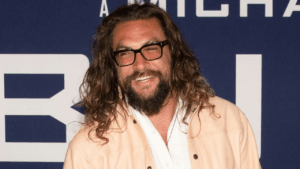
The newly announced cast deepens the narrative canvas beyond the core quartet of Harris Dickinson (John Lennon), Paul Mescal (Paul McCartney), Joseph Quinn (George Harrison) and Barry Keoghan (Ringo Starr). Harry Lawtey will portray Stuart Sutcliffe, often referred to as the “Fifth Beatle” and the band’s original bassist before he left to pursue painting in Hamburg. His inclusion suggests that the Lennon-focused film, in particular, may lean into the art-school and pre-fame mythology of the group, exploring the fragile chemistry and creative tensions that defined their formative years. Sutcliffe’s complicated relationship with McCartney and his tragic early death have long been pivotal but underexplored chapters in the Beatles’ origin story; dramatizing them signals that Mendes is interested in character psychology as much as cultural iconography.
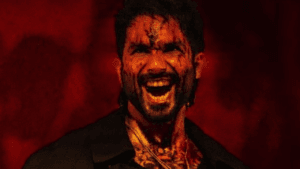
Farhan Akhtar’s casting as sitar virtuoso Ravi Shankar expands the scope of the Harrison narrative and underscores the global dimensions of the project. Shankar’s mentorship and spiritual influence on George Harrison marked a turning point in the band’s sonic evolution and introduced Indian classical elements into mainstream Western pop music. By foregrounding this relationship, the film series appears poised to situate the Beatles within a broader cultural exchange rather than confining them to a strictly British or American frame. The move also subtly strengthens the films’ resonance in key international markets, particularly India, where both Harrison’s legacy and Akhtar’s star profile carry weight.
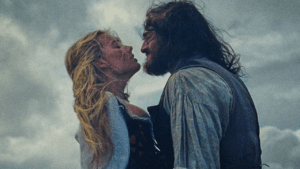
Lucy Boynton joins as Jane Asher, Paul McCartney’s former fiancée and an important creative influence during the band’s mid-1960s ascent. Asher’s relationship with McCartney coincided with some of the band’s most melodically adventurous songwriting, and her presence suggests that the McCartney installment may focus as much on artistic partnership and emotional upheaval as on chart dominance. Morfydd Clark will portray Cynthia Lennon, John Lennon’s first wife and the mother of Julian Lennon, whose marriage unraveled amid fame, substance experimentation and Lennon’s relationship with Yoko Ono. The inclusion of Cynthia indicates a willingness to examine domestic fissures rather than lean solely on mythologized rebellion.
Beyond the cast, Sony also unveiled a formidable below-the-line team that signals serious awards-season intent. Oscar-winning cinematographer Greig Fraser, whose recent credits include Dune and Dune: Part Two, joins Oscar-winning editor Lee Smith. Production design duties are shared by Stefania Cella, Mark Tildesley and Neal Callow, while costume design comes from Sinéad Kidao. Giles Martin — son of Beatles producer George Martin — serves as executive music producer, lending authenticity and musical continuity to the undertaking. The accumulation of top-tier craft talent suggests the films are being mounted with the scale and precision of prestige historical epics rather than nostalgia-driven jukebox dramas.
What makes the project historically singular is the level of access granted. Apple Corps and the estates of John Lennon, Paul McCartney, George Harrison and Ringo Starr have provided full life story and music rights, marking the first time such comprehensive authorization has been extended for a narrative feature project of this scale. Mendes, producing alongside Neal Street’s Pippa Harris and Julie Pastor, has described the films as interlocking but standalone perspectives, each reframing shared events through a different lens. Sony’s Tom Rothman previously characterized the concept as “the first bingeable theatrical experience,” an attempt to bring the serialized psychology of streaming to multiplex exhibition.
The production logistics are correspondingly complex. Filming began in late 2025 and is expected to continue through much of 2026, with back-to-back shooting designed to maintain continuity across intersecting timelines. Recreating Liverpool in the early 1960s, Hamburg’s club circuit, London’s cultural explosion and the band’s transatlantic breakthroughs demands sustained coordination. Reports that certain iconic locations, such as Abbey Road, have presented logistical challenges underline the scale of reconstruction required.
Commercially, the four-film simultaneous release strategy remains the industry’s most closely watched variable. Releasing all installments on the same day in April 2028 is a high-wire act: theaters must determine programming patterns, and audiences will decide whether to consume one film, several, or all four in quick succession. The model could encourage repeat visits and event-style ticketing packages, but it also risks internal competition if marketing fails to differentiate each perspective clearly. Sony appears to be banking on cultural urgency — and on the Beatles’ enduring cross-generational appeal — to transform the release into a destination moment rather than a conventional rollout.
The timing positions the series within an evolving music-biopic landscape. In the past decade, titles like Bohemian Rhapsody, Rocketman, Elvis and Bob Marley: One Love have proven that legacy music narratives can translate into significant global box office. Mendes’ experiment goes further by fragmenting the band into individual character studies while preserving the collective mythology. If successful, it could recalibrate expectations for how musical legacies are adapted for the screen, moving from single-arc biopics to multi-perspective storytelling.
Risk remains inherent. Marketing four interconnected films simultaneously demands precision, and awards campaigns could splinter attention. Yet the upside is equally substantial. A coordinated release across major territories, bolstered by full musical access and a prestige creative team, positions The Beatles – A Four-Film Cinematic Event not merely as another music biopic, but as an industrial-scale theatrical bet. With production now fully underway and the ensemble expanding, the project increasingly resembles less a nostalgic revisit and more a redefinition of how event cinema might function in the late 2020s. If Mendes and Sony execute successfully, April 7, 2028 may mark more than a release date — it could signal a structural shift in the way studios conceive cinematic storytelling around globally recognized cultural icons.
Read More: