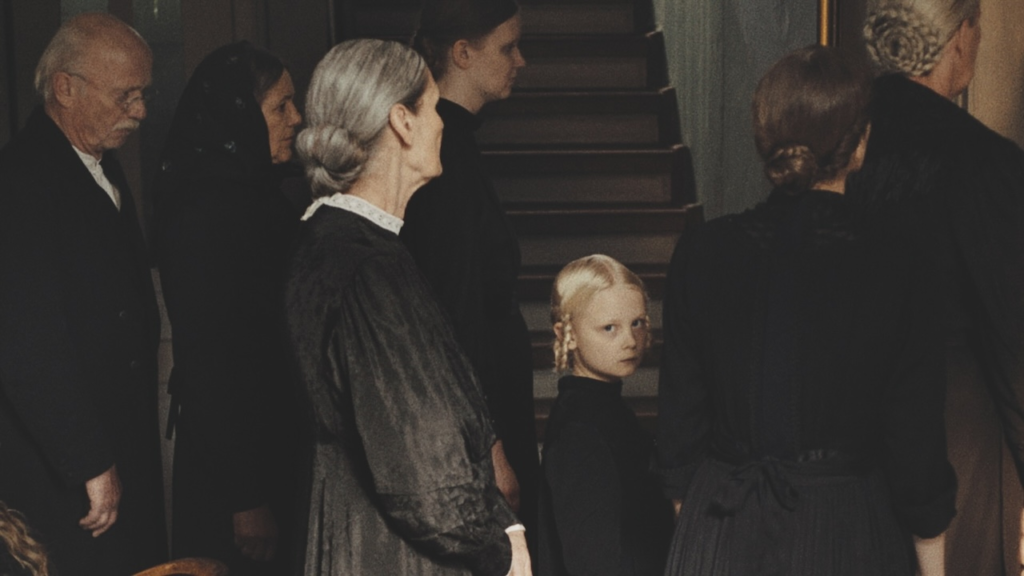
Sound of Falling cemented its position as one of the defining European arthouse films of the year after dominating the 2026 German Film Awards, known as the Lolas, with a massive haul of 10 awards including Best Film and Best Director for Mascha Schilinski.
The experimental period drama entered the ceremony as the leading nominee with 11 nominations and emerged as the night’s overwhelming winner, reportedly taking home every award in the categories where it was nominated. The victory extends the film’s extraordinary awards-season momentum that began at the Cannes Film Festival last year, where the movie premiered to critical acclaim and won the Jury Prize.
Set across multiple generations in rural East Germany, Sound of Falling traces the interconnected lives of four young women living in different historical periods. The film’s fragmented narrative structure, haunting visual style, and emotionally unsettling atmosphere quickly established it as one of the most talked-about international films on the festival circuit.
Critics throughout the awards season praised Mascha Schilinski’s ambitious storytelling approach, particularly the way the film explored intergenerational trauma, inherited memory, repression, and loneliness through ghostly imagery and experimental cinematic language. The movie’s atmospheric sound design and emotionally fractured structure became defining elements of its international critical reception.
Alongside Best Film and Best Director, Sound of Falling also won awards for Best Cinematography, Best Editing, Best Sound Design, Best Costume Design, Best Production Design, Best Hair and Make-Up, and Best Supporting Actress for Lena Urzendowsky.
The sweep further strengthens Mascha Schilinski’s growing reputation as one of the most important emerging voices in contemporary European cinema. Before Sound of Falling, the filmmaker attracted attention through her debut feature Die Tochter, but the success of her sophomore effort has elevated her profile internationally in a much larger way.
Meanwhile, Yellow Letters, directed by İlker Çatak, entered the ceremony with nine nominations but was largely shut out during the night. The Berlin Film Festival winner ultimately picked up the Silver Lola for Best Film along with Best Score for composer Marvin Miller.
Several other major awards were spread across Germany’s film landscape during the ceremony. August Diehl won Best Actor for his performance in The Disappearance of Josef Mengele, where he portrays the infamous Nazi doctor hiding in South America following the Second World War.
One of the evening’s most emotional moments came when veteran actress Senta Berger won Best Actress for Ach, diese Lücke, diese entsetzliche Lücke. At 85 years old, Berger accepted the first Lola award of her career, receiving a warm reception from the audience in Berlin. The film also earned a supporting actor victory for Michael Wittenborn.
Hosted by Christian Friedel, the 76th edition of the German Film Awards was widely described as emotional, politically charged, and deeply reflective about the current cultural climate in Germany.
One of the ceremony’s most talked-about moments came when Berlinale director Tricia Tuttle received a standing ovation while presenting the Best Director award. The reaction was seen as a strong show of support following months of controversy surrounding political pressure connected to statements made during this year’s Berlin Film Festival.
Producer Ingo Fliess also directly addressed German Culture Minister Wolfram Weimer during an acceptance speech connected to Yellow Letters, criticizing the political scrutiny surrounding the Berlinale leadership.
Another major highlight of the night came when legendary filmmaker Wim Wenders received the honorary Lola for lifetime achievement. During his speech, Wenders reflected critically on his own filmmaking legacy and spoke about changing perspectives in cinema over the decades.
The director specifically discussed a controversial scene from his 1975 film Wrong Move involving actress Nastassja Kinski, who was 13 years old during filming. Wenders admitted he would not shoot the scene today and openly questioned whether it should remain part of the film permanently.
The ceremony ultimately belonged to Sound of Falling, whose dominance at the Lolas further confirmed its place as one of the major European cinema success stories of the past year. What began as a haunting discovery on the Cannes Croisette has now evolved into the biggest force of Germany’s awards season.
Read More: