
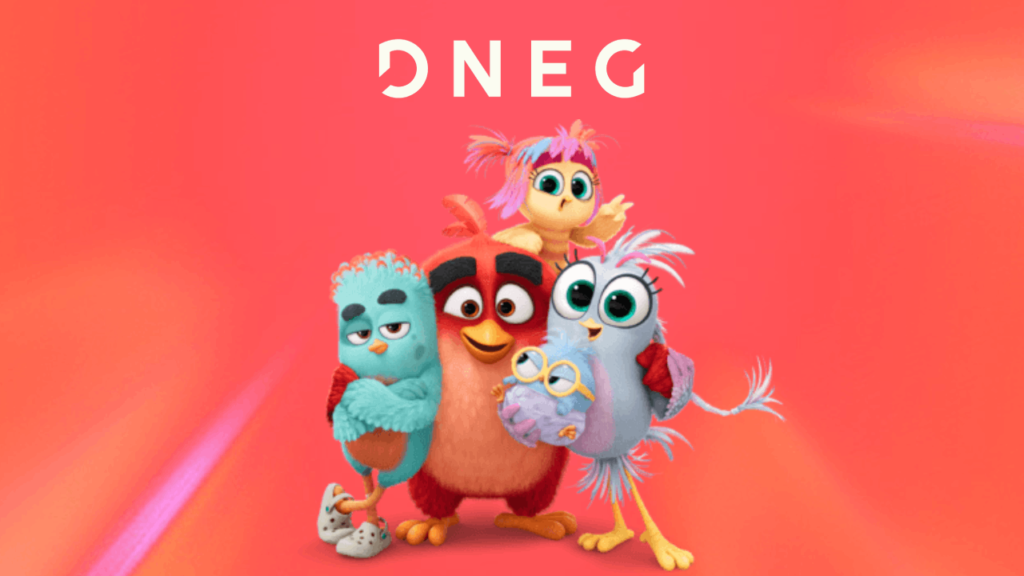
DNEG Animation had to rebuild Red from the ground up for The Angry Birds Movie 3, but the technological overhaul did not mean changing the character audiences already know. Since the proprietary tools used for the previous films could not be transferred to DNEG’s pipeline, the animation team reconstructed Red’s digital model, redesigned his facial controls and refined his feathers. The studio also developed an automated system that eventually handled character-effects work on approximately 75% of the film’s shots. Speaking at the VIEW Conference in Turin, DNEG Animation visual effects supervisor Patrick Harboun explained how the team balanced technical demands with the responsibility of preserving a familiar animated character.
The reconstruction began with an unusually bare version of Red. Without access to the tools used on the earlier productions, artists could not simply transfer his existing model into their workflow. Instead, they stripped away his feathers and surface details, returning to basic geometry before rebuilding his appearance. Harboun jokingly described this starting point as a plucked-chicken version of Red. From that foundation, the team reconstructed the details needed to bring the familiar bird back to life.
The work involved more than restoring Red’s plumage. DNEG redesigned his facial rig, which allows animators to control his expressions, and adjusted the materials covering his eyes and beak. His feathers were made softer, while his eyes and beak received a firmer, more toy-like finish. The challenge was to make these changes work across different expressions, movements and lighting conditions without compromising Red’s recognisable appearance.
Harboun described the creative philosophy behind the redesign as being similar by choice. Rather than using the opportunity to reinvent Red, the team studied the earlier films frame by frame, examining how his face moved and which details made his expressions distinctive.
The artists documented the angles of his beak, the shape of his narrowed eyes and the limits of his facial movements. These observations informed a style guide designed to help animators maintain consistency across scenes. The objective was to establish clear boundaries for expression rather than allow the redesigned rig to push Red into unfamiliar territory.
Harboun explained that once an intellectual property becomes popular, it belongs to its fans, and filmmakers have a responsibility to respect that connection. DNEG therefore avoided unnecessary changes made simply to leave its own creative signature. The technology could evolve, but Red still needed to feel like Red.
Reconstructing the characters also gave the studio an opportunity to improve its effects workflow. Building on its experience with The Garfield Movie, DNEG developed a system for character effects, including feather and fur simulation, as well as the smaller movements that follow an animated performance.
Once animators approved a shot, the system could apply prepared effects setups, generate previews and identify shots requiring additional attention. Artists refined reusable templates as production progressed, allowing the workflow to process more shots without manually repeating every step.
According to Harboun, approximately 25% of shots could use the automated process early in production. By the later stages, that figure had climbed to roughly 75%. He clarified that this progress depended on artists continually improving the templates rather than machine learning independently generating the effects.
The distinction is important. Automation did not replace animators or complete three-quarters of the film on its own. Instead, it reduced repetitive technical work, freeing artists to concentrate on complex shots that required individual solutions.
Directed by John Rice and written by Thurop Van Orman, The Angry Birds Movie 3 reunites Jason Sudeikis as Red and Josh Gad as Chuck. DNEG Animation is handling the film’s storyboards, art development and animation, while Paramount Pictures is scheduled to release the film theatrically on December 23, 2026.
For DNEG, the achievement lies in rebuilding the production process without losing sight of the characters themselves. The feathers, facial controls and effects workflow may have changed, but the creative benchmark remains the same: audiences should recognise the birds immediately, without having to think about the technology that brings them to life.