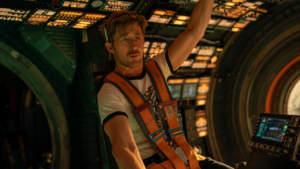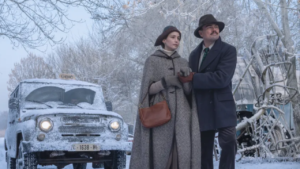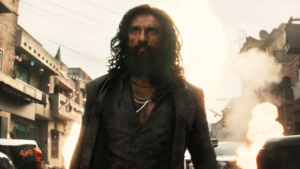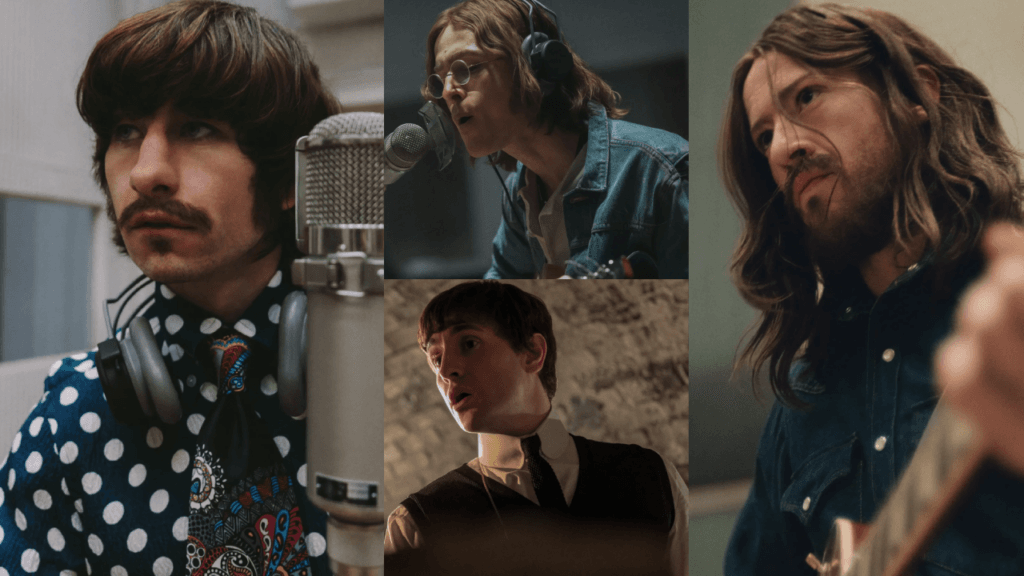
Sony Pictures has unveiled the first official look at The Beatles — A Four Film Cinematic Event, revealing the actors set to portray the Fab Four in one of the most ambitious music biopic projects ever attempted. The newly released images show Paul Mescal as Paul McCartney, Harris Dickinson as John Lennon, Joseph Quinn as George Harrison and Barry Keoghan as Ringo Starr—offering the first tangible glimpse of a cinematic undertaking slated to reach theatres in 2028.
The reveal itself was staged less like a traditional studio announcement and more like a cultural event designed to echo The Beatles’ own mythology. Before the images appeared online, first-look photographs were distributed as postcards at the Liverpool Institute for Performing Arts, the school co-founded by McCartney. From there, the postcards quietly surfaced across a series of locations deeply tied to the band’s history, turning the casting reveal into a global scavenger hunt for fans.
In Liverpool, postcards appeared at John Lennon’s childhood home, while Hamburg—where the band famously sharpened its sound in the early 1960s—saw them delivered to landmarks such as The Beatles Monument, the Cavern Club, the Kaiserkeller and the Star-Club. In New York City, the rollout extended to Strawberry Fields in Central Park, New York University, Columbia University and a selection of record stores, vintage clothing shops, cafés and bars. Tokyo was also part of the reveal, with postcards distributed at Abbey Road Live, Tower Records in Shibuya, Broadway Diner in Yoyogi, Tsutaya and The Capital Hotel Tokyo. Sony Pictures then formally released the images online the following day, confirming the cast to the wider public.
The unconventional rollout speaks to the scale of the project itself. Unlike traditional biopics that compress decades of music history into a single film, The Beatles — A Four Film Cinematic Event is structured as four interconnected theatrical features, each centred on one band member. The approach signals an attempt to move beyond the familiar rise-and-fall template and instead offer a more intimate, character-driven exploration of the group that reshaped popular music.
Casting has been one of the most closely watched aspects of the project, and the selections underline the studio’s prestige ambitions. Mescal, Dickinson, Quinn and Keoghan represent a generation of actors who have recently balanced critical acclaim with mainstream success, making them high-profile but still malleable enough to disappear into roles that carry enormous cultural weight. Playing McCartney, Lennon, Harrison and Starr is not simply a matter of likeness; each role comes with decades of public memory, myth-making and emotional attachment.
The decision to anchor the first look in physical, historically charged locations also underscores the filmmakers’ intent to ground the project in authenticity. From Liverpool and Hamburg—where the band was forged—to New York and Tokyo, symbols of their global afterlife, the locations trace The Beatles’ journey from a local act to a worldwide cultural force. In an era dominated by digital marketing, the tactile postcard reveal leaned into nostalgia and discovery, mirroring the analog world in which the band first emerged.
While specific story details remain tightly guarded, the four-film structure suggests a deliberate refusal to flatten the band’s history into a single narrative. Industry observers have noted that previous music biopics often struggle to balance individual perspective with group dynamics. By dedicating a film to each Beatle, the project has the space to explore personal tensions, creative divergences and parallel journeys without forcing them into a single, condensed arc.
The long runway to a 2028 release further signals Sony’s intention to position the films as event cinema rather than content designed for rapid consumption. With years still to go before audiences see the finished work, the studio appears focused on building anticipation slowly, allowing the project to exist as a cultural conversation rather than a one-cycle marketing push.
Expectations, inevitably, are immense. The Beatles’ story has been told and retold through documentaries, books and dramatizations, and any new interpretation is bound to face intense scrutiny from fans and historians alike. The challenge for the filmmakers will be balancing reverence with reinvention—honouring a legacy while finding new ways to make it resonate for audiences who may know the music but not the context in which it was created.
For now, the first look marks the opening note of a very long composition. By choosing discovery over spectacle and place over press release, The Beatles — A Four Film Cinematic Event has announced itself not just as a film series, but as a carefully orchestrated cultural moment—one that will unfold over the next several years as cinema prepares to revisit the story of the most influential band in popular music history.
Read More: