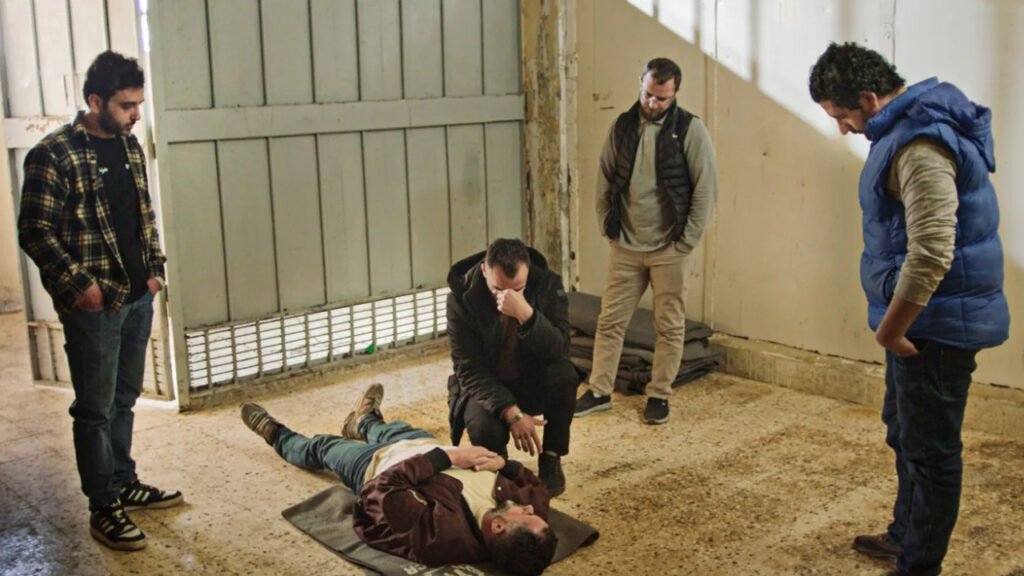
Syria has selected Tawfik Sabouni’s documentary The Other Side of the Sun as its official submission for the International Feature Film category at the 99th Academy Awards. The film, which explores the experiences of survivors of the infamous Sednaya prison, will now enter the Oscar race as Syria’s submission under the country’s newly established Oscar selection committee.
The selection comes as The Other Side of the Sun continues its international festival run and expands its reach to audiences in the United States. Icarus Films has acquired U.S. distribution rights to the documentary, adding another significant step to the film’s international journey and giving it a U.S. platform as it enters the awards conversation.
Directed by Sabouni, The Other Side of the Sun is rooted in his own experience as a former prisoner at Sednaya. Following the fall of the Assad regime and the liberation of Syria’s prisons in December 2024, Sabouni returned to the former prison to confront memories of his captivity.
He was joined by four fellow survivors, who also returned to the spaces where they had been imprisoned. The decision to bring the survivors back to the former prison forms a central part of the documentary’s approach, allowing the physical location to become more than a backdrop and instead play an important role in the way their memories are revisited.
Rather than relying only on conventional interviews or testimony, the documentary uses carefully constructed reenactments. Sabouni and the other survivors revisit daily rituals, gestures and moments from their time in captivity inside the former prison itself.
The reenactments allow the survivors to express memories and experiences that, according to the film’s official description, can be difficult to communicate through language alone. Instead of asking the survivors only to describe what happened, the film uses their physical return to the prison and their recreation of aspects of their experiences as a way of exploring memory and survival.
Sednaya, also spelled Saidnaya, has become one of the most recognized symbols of Syria’s former prison system. The documentary focuses on the personal experiences of those who survived imprisonment there, using the physical location as an important part of the storytelling.
The film’s approach is centered on memory, survival and the lasting effects of imprisonment rather than simply documenting the prison as a historical site. By placing the survivors themselves at the heart of the story, Sabouni uses the documentary to explore what remains after captivity and how traumatic experiences can continue to shape those who lived through them.
The documentary has already received international attention through its festival screenings. It was presented at the 2026 Berlinale and has also appeared at festivals including SXSW London and the Durban International Film Festival.
At the Amman International Film Festival, The Other Side of the Sun received both the FIPRESCI Award and the Audience Award in the Arab Feature Documentary competition. Those festival recognitions add to the film’s international profile as it now moves into the Academy Awards process and prepares for a wider U.S. release.
The Oscar submission gives The Other Side of the Sun another opportunity to reach an international audience. Syria’s choice is particularly notable because it was made through the country’s new Oscar selection committee, marking a new stage for Syria’s official participation in the Academy Awards process.
The documentary has also secured a U.S. distribution home through Icarus Films. The distributor lists the film as a 2026 release and describes it as a 92-minute Arabic-language documentary with English subtitles.
Icarus Films’ release description highlights Sabouni’s return to Sednaya with four fellow survivors and the use of reenactment to explore memory, absence and survival. The U.S. acquisition therefore gives the film a path to audiences beyond its festival screenings while placing it within a broader international distribution context.
For Icarus Films, the acquisition brings a documentary with an established festival profile to U.S. audiences. For Sabouni, the deal provides the film with a wider platform at a time when it is entering the Academy Awards conversation.
The combination of the Oscar submission and U.S. distribution expands the documentary’s reach at an important point in its international journey. After beginning with festival screenings, the film is now moving toward a broader audience while continuing to draw attention to the experiences of the survivors at its center.
The Other Side of the Sun is ultimately built around the experiences of the five survivors at its center. By returning to the former prison and recreating aspects of their lives there, Sabouni uses the documentary to preserve their memories and give greater visibility to experiences that might otherwise remain difficult to convey.
The film’s emphasis on memory and personal experience also distinguishes its approach from a conventional historical documentary. The former prison provides the physical setting, but the focus remains on the people who survived it and on the memories they carry with them.
For Sabouni, the project is deeply connected to his own experience of imprisonment and his return to the site after the fall of the Assad regime. The presence of four other survivors broadens that personal perspective into a collective exploration of what it means to return to a place associated with captivity.
With Syria now putting the film forward for the 99th Academy Awards and Icarus Films preparing its U.S. release, The Other Side of the Sun is moving from the international festival circuit into a broader awards and theatrical conversation.
Its journey so far combines a personal filmmaking approach, international festival recognition and a U.S. distribution deal. The Oscar submission now places the documentary in another significant stage of its international run, while the Icarus Films release gives audiences in the United States an opportunity to encounter Sabouni’s account of survival, memory and return.
For a documentary built around five survivors revisiting one of the most recognizable symbols of Syria’s former prison system, the move from the festival circuit into the Academy Awards process represents a wider platform for their experiences. The Other Side of the Sun now enters that next stage with both international recognition and a U.S. distributor behind it.