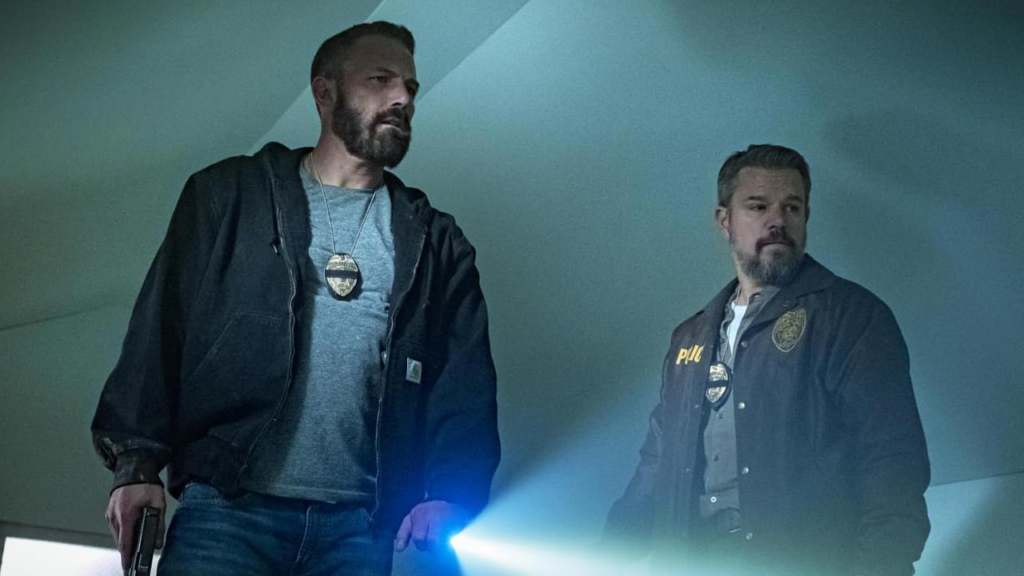
Ben Affleck and Matt Damon’s Artists Equity has paid a performance bonus to the cast and crew of The Rip after the Netflix crime drama crossed a key success threshold on the platform. The move is notable because Netflix films are usually structured around upfront payments rather than viewership-based incentive bonuses.
According to reports, the additional compensation was paid to the film’s 1,200-person cast and crew team. Artists Equity had negotiated a unique arrangement with Netflix that allowed the company to receive a bonus if The Rip met certain viewership targets. After receiving the bonus, the studio passed it on to the people who worked on the film, in line with its talent-focused business model.
Affleck and Damon said in a statement that Artists Equity was built on the belief that filmmakers should share in the value they bring to a project. They added that the cast and crew of The Rip each played a critical role in the film’s success and thanked Netflix for supporting the unusual structure around the movie.
The development gives Artists Equity an early example of the model it has been promoting since launch. The company was founded in 2022 by Affleck, Damon and investor Gerry Cardinale, with backing from RedBird Capital Partners. Its stated aim has been to rethink how value is shared in Hollywood by giving more participants a stake in a project’s success.
The Rip premiered on Netflix in January 2026 and reportedly opened strongly, drawing 41.6 million views over its first three days. The crime drama was directed by Joe Carnahan and starred Affleck and Damon, bringing together the two longtime collaborators both in front of the camera and behind the production banner.
Planet of Films earlier reported that Artists Equity signed a multiyear first-look film deal with Netflix following the success of The Rip, expanding the company’s streaming pipeline while preserving its ability to continue developing theatrical projects through other studio partnerships.
That earlier deal now looks even more important in light of the performance bonus. The Netflix agreement positioned Artists Equity as lead studio on films it produces for the streamer, formalizing a relationship that had already produced measurable results. The Rip was not just a successful title for Netflix; it became the project that helped deepen the partnership between the streamer and Affleck and Damon’s company.
The performance bonus also arrives at a time when Hollywood continues to debate compensation in the streaming era. For years, one of the major criticisms of streaming economics has been the lack of transparent backend participation compared with theatrical releases, where box office performance can be tracked more openly. Streaming platforms often pay talent and producers upfront, but the long-term value generated by successful titles is harder to measure and share.
Artists Equity’s deal for The Rip attempts to address that gap by tying additional compensation to performance. While the exact threshold and financial terms have not been disclosed, the fact that a bonus was triggered and distributed to the cast and crew makes the arrangement significant. It shows that streaming deals can be structured in a way that rewards success beyond the initial fee.
For Affleck and Damon, this has been central to Artists Equity’s identity from the beginning. The company has repeatedly positioned itself as a creator-first studio that wants to give filmmakers, actors and crew members a more direct connection to the value their work creates. In the case of The Rip, that idea has now moved from theory to practice.
The bonus may also become a reference point for future negotiations between producers and streamers. If more production companies push for similar performance-linked structures, the streaming model could slowly move toward a system where success is not only measured internally by platforms but also reflected in compensation for the people who made the content.
Artists Equity’s growing relationship with Netflix is also continuing through future projects. The company’s next Netflix film is Animals, a crime thriller directed by Affleck. The film stars Affleck alongside Steven Yeun, Kerry Washington and Gillian Anderson. Its story follows a mayoral candidate and his wife who take extreme measures to pay their son’s ransom, exposing dark secrets they never intended to reveal.
Beyond Netflix, Artists Equity has already built a diverse slate since its launch. The company has been involved with films including Air, The Instigators, Small Things Like These, Unstoppable and The Accountant 2. This gives the studio a growing footprint across both streaming and theatrical spaces.
The significance of The Rip bonus is not only financial. It also strengthens Artists Equity’s broader argument that Hollywood compensation can be redesigned. In an industry where crews often work on projects that generate major value without sharing in that upside, a performance bonus distributed across a 1,200-person team sends a clear message about the kind of model Affleck and Damon want to build.
Whether this becomes common across Netflix or the wider streaming business remains to be seen. But for Artists Equity, The Rip has already become a meaningful proof point. The film delivered strong viewership, helped secure a larger Netflix partnership and has now resulted in additional compensation for the people who helped make it.
That makes the bonus more than a celebratory payout. It is a practical example of how Artists Equity wants to operate: not only producing successful films, but also ensuring that success is shared more widely across the creative and production team.
Read More: