Kaouther Ben Hania’s The Voice of Hind Rajab is one of 2025’s most emotionally charged and politically resonant films. A docudrama rooted in real, harrowing events, the film reconstructs the final moments of Hind Rajab, a six-year-old Palestinian girl who called the Palestine Red Crescent while trapped in a car under fire. Her voice, preserved in actual emergency audio, forms the backbone of a cinematic reconstruction that is both urgent and heartbreaking.
At its Venice Film Festival premiere the film received an extraordinary standing ovation — widely reported at around twenty-three to twenty-four minutes — with audience members chanting “Free Palestine” as the screening concluded. Critics have described the film as fierce, urgent and heart-shattering, noting that Ben Hania’s docudramatic method places Hind’s voice at the centre of a searing moral confrontation. The film went on to win the Silver Lion (Grand Jury Prize) at Venice and later took the Audience Award at San Sebastián, signposting strong festival momentum .
What Critics Are Saying about The Voice of Hind Rajab
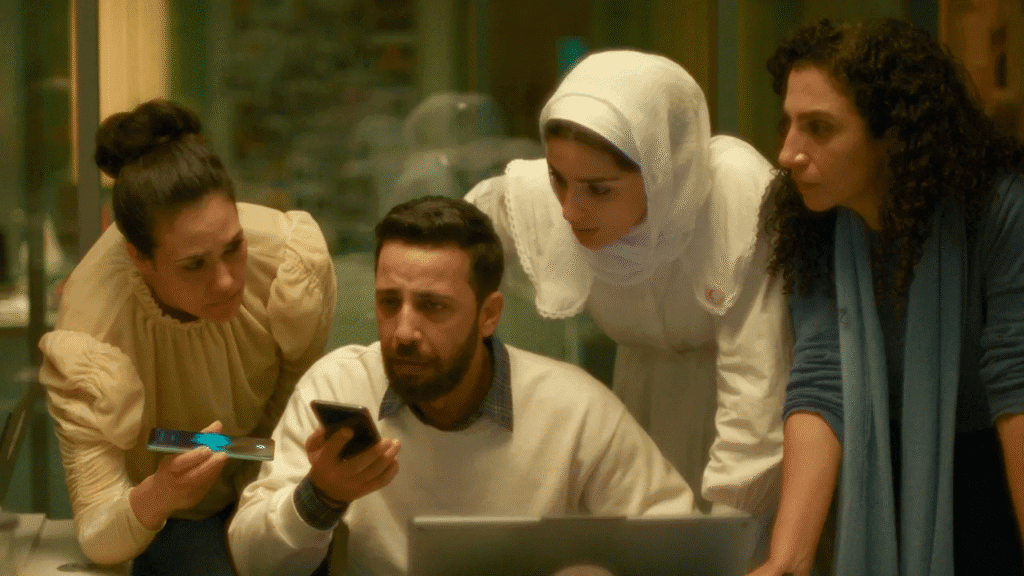
Reviewers from leading outlets converge on the film’s emotional force even as they debate its ethics and form. The Hollywood Reporter called the film a gripping drama, praising Ben Hania’s careful staging of the call-centre environment and the actors’ commitment to the material while acknowledging the moral complexity of using real audio in dramatised form. BBC Culture praised the film’s formal restraint and the power of close-in cinematography on the performers’ faces during the film’s musical silences, while also asking whether the film’s political charge shapes audience response as much as its aesthetics Rotten Tomatoes aggregates a very high Tomatometer for the film — currently reported at 98% based on dozens of critic reviews — with a critics’ consensus stating that the film “incorporates real-life elements that are as difficult to witness as they are impossible to forget”.
Further shaping the film’s critical landscape is Guy Lodge’s perspective in Variety, where he observes that The Voice of Hind Rajab “brooks no political debate on the matter,” positioning its moral framing as unwavering and absolute. Lodge adds that the film is likely to spark discussion on “other fronts,” particularly because of its “bold docufiction conceit,” a hybrid approach familiar to viewers who know director Kaouther Ben Hania’s earlier Oscar-nominated work, Four Daughters. His reading places the film within Ben Hania’s continuing exploration of truth, performance, and emotional reconstruction, noting that her stylistic choices are deliberately provocative without being ambiguous.
Many critics singled out the film’s formal choices as its greatest strength. By situating most of the action within the Red Crescent dispatch centre and foregrounding procedural detail — calls, coordinates, hesitations, protocol — Ben Hania intensifies the moral pressure on viewers; the horror arrives in the recorded voice, not in graphic imagery. For some reviewers, this method is an act of bearing witness that refuses spectacle; for others, it raises ethical questions about dramatizing a child’s real last words.
Controversy & Distribution Realities
The controversy around The Voice of Hind Rajab is twofold: ethical debate and distribution hesitancy. Ben Hania says she obtained permission from Hind’s mother to use the audio and defends the film as an act of testimony; critics and commentators nonetheless worry about reproducing trauma and whether the film can avoid instrumentalisation . After Venice, the director and producers reportedly received harassment and pushback online — a sign of how politically fraught the film’s subject matter is.
Voice and visibility remain the film’s central themes: Hind’s recorded pleas become a haunting, literal voice-over that demands to be heard. Reviewers point out the film’s restraint — no large set-piece recreations of the battlefield, but intense, claustrophobic work in the dispatch centre — and interpret that restraint as a moral choice. Critics also flag the political valence: in multiple festival screenings, reception blended cinematic appreciation with political solidarity, complicating the film’s path through awards and distribution channels.
Festival audiences have responded with overwhelming emotion, and the film’s Venice prize and San Sebastián audience award confirm a strong groundswell of support. Rotten Tomatoes currently lists a very high Tomatometer (98% at time of checking) and a positive critics’ consensus, which together bolster the film’s awards credentials (Rotten Tomatoes). The film was selected as Tunisia’s official submission for the Best International Feature category at the Academy Awards, and a U.S. Oscar-qualifying release by Willa is listed for December 17, 2025, positioning the film for awards season campaigning — though its politically sensitive subject and questions about distribution could complicate the process.
The Voice of Hind Rajab: Film Details
The Voice of Hind Rajab is directed and written by Kaouther Ben Hania and produced by companies including Mime Films and Tanit Films; its runtime is 89 minutes. The principal cast includes Saja Kilani, Motaz Malhees, Clara Khoury and Amer Hlehel.