Aneek Chaudhuri’s Indian independent feature The Zebras has received a fresh international push, with Los Angeles-based Adler & Associates Entertainment picking up worldwide distribution rights to the film. The psychological drama, set in a near-future Kolkata, now has a renewed global pathway through an indie sales and distribution outfit that works with international and foreign-language cinema.
The new deal gives The Zebras access to international sales opportunities outside North America, with Adler & Associates expected to focus on curated theatrical circuits, streaming services and institutional screenings. For a film built around artificial intelligence, digital manipulation and the loss of human creativity, that route may prove more suitable than a conventional mainstream release.
The development is important because The Zebras is not a newly surfaced project. The film has already had an earlier distribution journey under the title The Zebras: Dark Start, including India release plans, an international festival premiere and a planned limited US theatrical run. Its latest international sales push now arrives after the film has moved through multiple stages of positioning.
The latest Adler & Associates deal was first reported by Deadline, which noted that the Los Angeles-based outfit will handle international sales outside North America. The development gives the film renewed global momentum at a time when Indian independent cinema is increasingly looking toward curated platforms, festival markets and institutional circuits to reach audiences beyond the domestic theatrical system.
The Zebras had earlier been linked to an India release through Indywood Distribution Network. At that stage, the film was expected to release locally in early 2025 after its world premiere at the Indian Film Festival of Melbourne. A limited US theatrical release was also planned through Double Exposure from September 13, serving as an Oscar-qualifying run.
The film later received its Indian censor certificate on December 31, 2025, adding another layer to its release timeline. This makes the Adler & Associates deal less of a first launch and more of a renewed international sales step for a completed Indian independent film that has already been part of the festival and distribution conversation.
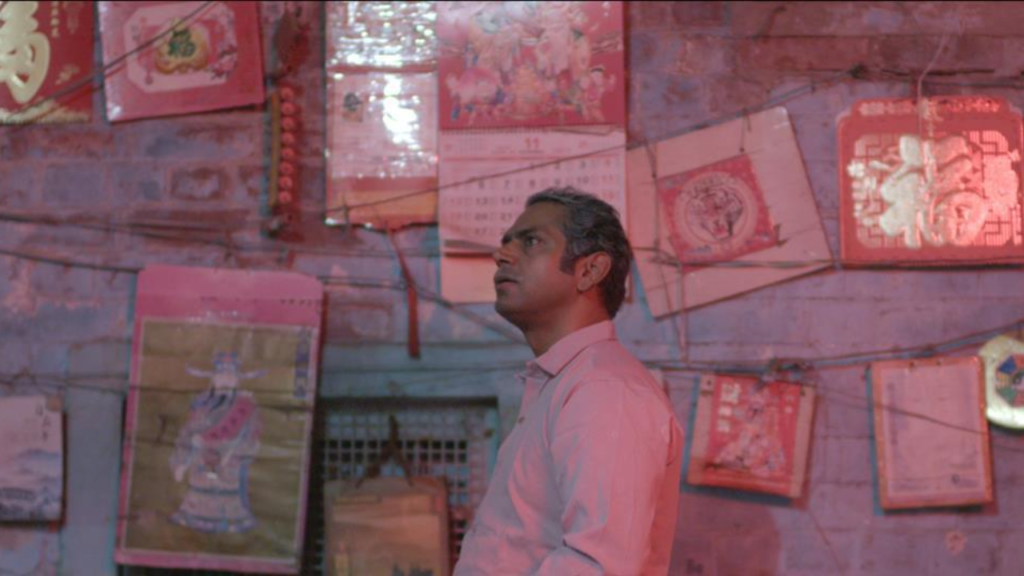
The story follows a photographer in Kolkata who uses artificial intelligence to create virtual monsters and fake online horror imagery. What begins as an attempt to gain attention gradually blurs the boundaries between reality and digitization, creating panic and turmoil in the city’s photography and fashion industries.
That premise gives The Zebras a timely edge. The film is not only about artificial intelligence as a tool, but about what happens when synthetic images begin replacing real human imagination, labour and emotion. In an era when AI-generated visuals and manipulated online content can spread quickly, the film’s near-future setting feels closely tied to present-day anxieties.
Chaudhuri wrote the screenplay and has previously said the idea was inspired by reports of models in India being replaced by AI. That context makes the film more than a general technology thriller. It becomes a commentary on the human cost of digital replacement, especially in image-based professions where appearance, creativity and emotional presence are central to the work.
The filmmaker has also framed the film as a warning about balance. While AI may offer enormous possibilities for cinema and visual industries, The Zebras argues for the importance of preserving the human element in storytelling. Its concern is not simply whether machines can create images, but whether machine-made creativity can weaken the humanity that gives art its meaning.
One of the most interesting details around the film is its planned marketing approach. Chaudhuri had said that the campaign would rely heavily on hand-painted banners and posters, deliberately distancing the film from promotional material created or enhanced by AI. That choice gives the film’s publicity strategy the same philosophical position as its story: technology may be powerful, but human-made art still carries its own emotional value.
The cast is led by Sharib Hashmi, Priyanka Sarkar and Usha Banerjee. Hashmi’s presence gives the film a familiar face for Indian audiences, while Sarkar brings strong regional cinema recall. The film is produced by Akhil Murali and Ashik Murali of Yulin Productions.
Adler & Associates should not be described as a major studio distributor in the way companies like Neon, A24, Mubi, IFC Films or Sony Pictures Classics are often positioned. It is better understood as a Los Angeles-based boutique indie sales and distribution outfit working with independent, international and foreign-language content. That distinction is important because The Zebras is being positioned for a targeted global route rather than a mainstream studio-style rollout.
The company’s association with Chaudhuri also appears to be part of a continuing relationship. Adler & Associates previously picked up his A White Horse’s Neigh at the Cannes market and later acquired his feature documentary The Place Once Known as Earth and We, Homo Sapiens. That context suggests the company sees international value in Chaudhuri’s cinema beyond a single acquisition.
Indywood Distribution Network also adds relevant background to the film’s earlier release journey. The Kerala-based sales and distribution outfit, founded by Sohan Roy, has handled titles including Jude Anthany Joseph’s 2018, which was India’s submission for the international feature film category at the Oscars, and Blessy’s The Goat Life, one of the highest-grossing Indian films of 2024. Its earlier involvement placed The Zebras within a distribution ecosystem connected to notable Indian titles.
The Adler & Associates deal also comes during a wider moment of visibility for Indian independent and regional cinema at Cannes 2026 and the Marché du Film. India’s official festival presence this year includes Shadows of the Moonless Nights in La Cinef and the restored Malayalam classic Amma Ariyan in Cannes Classics. While the official selection may be limited, the market side has shown a broader Indian footprint.
Several Indian films have been part of the Cannes market conversation this year, including Balan: The Boy, Lakadbaggha 2: The Monkey Business, Chardikala, September 21, Spirit of the Wildflower and other regional or independent projects. This spread shows that Indian cinema’s global presence is no longer dependent only on mainstream Hindi titles. Regional, independent and documentary projects are increasingly using Cannes and its market ecosystem to build international visibility.
In that context, The Zebras fits into a larger pattern. Indian filmmakers are exploring global pathways through sales companies, festival markets, institutional circuits and streaming platforms. For films that may not have the marketing scale of mainstream theatrical releases, these routes can be essential. They allow smaller films to find specific audiences interested in theme, form and cultural perspective.
The AI angle may also help The Zebras travel internationally. The fear of artificial intelligence replacing human labour and creativity is not limited to India. Artists, writers, photographers, actors and filmmakers around the world are asking similar questions. By placing those concerns inside a psychological drama about fame, fear and fabricated images, the film gives a cinematic shape to a debate that is already happening across industries.
The photographer at the centre of the story becomes a symbol of that conflict. His use of AI-generated imagery is not simply a tool, but a moral compromise. The fake horror content he creates for attention becomes dangerous when audiences begin reacting to it as if it were real. That collapse between fiction, image and public panic is what gives the film its psychological tension.
At a time when digital platforms reward shock, speed and visibility, The Zebras appears to question what happens when an artist chooses attention over authenticity. The story is not only about artificial intelligence, but also about the human hunger for recognition in an online culture where images can be manufactured faster than truth can be verified.
That makes the Adler & Associates deal significant beyond the basic acquisition headline. It gives an Indian independent film with a topical global subject a chance to move through international channels at a time when audiences and institutions are actively discussing AI’s impact on creativity. For Chaudhuri, it also strengthens his relationship with a distributor that has already shown interest in his work.
The Zebras now enters the international market with a premise that feels sharply connected to the present moment. Its near-future Kolkata setting, AI-driven conflict and psychological tone give it a distinct identity within the Indian indie space. With Adler & Associates handling international sales outside North America, the film has a clearer route toward global audiences looking for stories about technology, creativity and the fragile line between reality and illusion.
Read More: