As the Sundance Film Festival prepares for its final edition in Utah before relocating to Boulder in 2027, the 2026 gathering carries unusual emotional weight. It is not only a farewell to Park City after decades as a defining hub for independent cinema, but also the first public tributes to founder Robert Redford following his passing in late 2025. For many filmmakers and industry observers, this year feels like the closing of an era — one built on Redford’s belief in human-centered, filmmaker-driven storytelling.
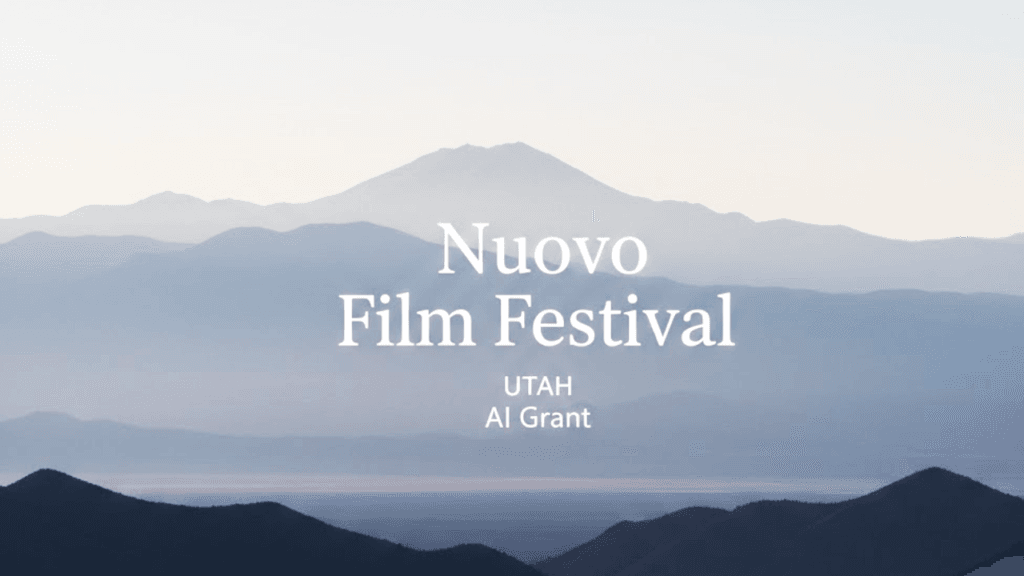
Yet even as Utah reflects on that legacy, the state is quietly repositioning itself for a different cinematic future. In early January, Utah’s Governor’s Office of Economic Development approved a $2 million grant recommendation for a new venture called the Nuovo Film Festival, an initiative centered on artificial intelligence and filmmaking. The proposal is now in a due-diligence phase before final award, but its broader implications are already resonating. The funding is widely seen as part of Utah’s strategy to operationalize AI-driven film activity and fill the economic and cultural gap Sundance will leave behind when it departs in 2027.
The symbolism is hard to ignore. As the state bids farewell to a festival synonymous with independent human expression, it is simultaneously investing in algorithm-assisted creation. But framing the moment as a simple clash between tradition and technology would miss the nuance. Artificial intelligence is already embedded across the global film industry, from studio backlots to independent editing suites.
Major studios and streamers now use AI-assisted tools for script breakdowns, scheduling logistics, previsualization, visual effects clean-up, automated subtitling and audience-targeted marketing. Netflix has published internal guidance governing the responsible use of generative AI in content production, permitting certain applications while requiring disclosure and human oversight. Generative video platforms have accelerated the speed and scale at which filmmakers can create high-end imagery, lowering technical barriers that once demanded extensive budgets.
At the same time, AI’s rise has triggered some of the most contentious debates Hollywood has seen in years. The unveiling of Tilly Norwood, a hyperreal AI-generated “actress,” sparked widespread backlash from performers and talent representatives who questioned whether synthetic entities could or should be treated as industry talent. The controversy sharpened concerns about digital doubles, voice cloning and the potential erosion of working actors’ livelihoods.
In response, SAG-AFTRA negotiated contractual protections addressing digital replicas, requiring consent and compensation when performers’ likenesses or voices are replicated through AI systems. Similar safeguards have extended into interactive media agreements. Abroad, Germany implemented one of the first collective agreements specifically governing generative AI in film production, emphasizing transparency and remuneration. Meanwhile, the European Union’s AI Act has begun active enforcement, introducing compliance obligations that affect how generative systems operate across member states.
Utah’s support for an AI-focused film initiative therefore unfolds within a global framework of negotiation and regulation. The technology’s adoption is no longer speculative; it is structured, contested and increasingly formalized.
Importantly, the tension is not purely between the state and the festival it is losing. Earlier this year, Sundance itself launched a $3 million AI Literacy Initiative supported by Google.org, aimed at equipping filmmakers with critical understanding of generative tools. The program reflects an acknowledgment that AI is neither an optional curiosity nor an inevitable villain, but a tool whose impact depends on informed and ethical usage. Even institutions rooted in humanist storytelling are seeking ways to integrate technological literacy into their future.
Legal complexities add another layer. Generative models capable of producing hyperrealistic imagery have faced scrutiny over training data transparency and intellectual property rights. Studios and rights holders have pushed for safeguards against unauthorized likeness use, while policymakers grapple with how to balance innovation and protection. Any publicly funded AI festival or incubator will inevitably confront these issues, particularly as enforcement mechanisms become more active.
Beyond Hollywood, AI experimentation is accelerating in markets such as India, where filmmakers are exploring de-aging techniques, automated dubbing and multilingual localization strategies that reduce costs and expand distribution reach. Across Europe and Asia, festivals are programming AI-assisted shorts and immersive works, testing how algorithmic tools might complement rather than replace traditional craft. In this context, Utah’s move appears less anomalous and more aligned with a broader global recalibration.
For Utah, the economic motivations are clear. Sundance’s departure threatens not only cultural identity but also tourism revenue and industry visibility. By positioning itself as a hub for AI-driven filmmaking, the state can attempt to attract startups, technologists and new forms of production investment. The Nuovo initiative may represent a bid to transform Utah’s film ecosystem from an indie prestige enclave into a technology-forward innovation center.
The deeper question remains philosophical. Does artificial intelligence expand creative possibility by democratizing access to sophisticated tools? Or does it risk homogenizing artistic expression through algorithmic pattern recognition? Redford’s legacy was built on championing singular voices and personal storytelling. The 2026 tributes underscore that tradition. Yet the industry he helped nurture is now negotiating how to preserve those values within a rapidly evolving technological landscape.
Utah’s $2 million grant may appear modest in financial terms, but symbolically it marks a turning point. Public institutions are not merely tolerating AI in cinema; they are actively investing in its development. As Sundance prepares to leave in 2027, one chapter of American independent film history closes in Utah. Another, shaped by code, contracts and cautious experimentation, is beginning. Whether that shift ultimately enriches or unsettles the art form will depend not on the algorithms alone, but on the human choices guiding them.
Read More: