In an era where blockbuster franchises reign and digital realism dominates the screen, Wes Anderson feels like a beautiful anomaly — a filmmaker who stubbornly refuses to let go of whimsy, color, and handcrafted detail. His work is unmistakable. You can spot a Wes Anderson film from a single frame — the pastel color palette, the symmetrical shots, the quirky characters who seem like they’ve stepped out of a storybook but are carrying the weight of the world inside them.
And that’s the magic of Anderson: his films look like dioramas but feel like poetry. They’re hilarious and heartbreaking, charming and complex, naive and wise — all at once. You don’t just watch a Wes Anderson movie. You walk into a world where every detail, every note, every line of dialogue has been placed with obsessive care, like items in a cabinet of curiosities.
So what is it that makes Wes Anderson so singular in the landscape of modern cinema? It’s not just his style — it’s the soulful symphony of all his choices, working in perfect harmony.
A World Built Frame by Frame
 To step into a Wes Anderson film is to enter a meticulously designed dream. His visual style is so iconic that it’s practically its own genre. Everything is symmetrical, color-coded, and framed like a Renaissance painting. But it’s not just for show — these visuals create a world that feels wholly original, almost like a pop-up book for adults.
In The Grand Budapest Hotel, the candy-colored facades and dollhouse interiors create a fictional Eastern Europe that’s as enchanting as it is nostalgic. In Moonrise Kingdom, the amber glow of the island gives boyhood romance the feel of a sepia-toned memory. Anderson’s visuals aren’t just aesthetic — they’re emotional. They evoke longing, loss, childhood wonder.
He builds his films the way a child might build a model train set — with imagination, discipline, and a reverence for detail. It’s no surprise that his production designers and set decorators become as crucial to his storytelling as his screenwriters.
Whimsy with a Wounded Heart
 People often describe Anderson’s work as quirky, but that word undersells the emotional complexity underneath all the visual charm. Yes, there are eccentric characters, oddball scenarios, and plenty of deadpan humor — but beneath all that lies a deep undercurrent of melancholy.
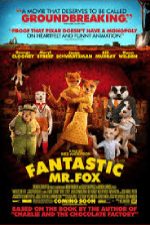
Look closer at The Royal Tenenbaums: it’s not just about a dysfunctional family dressed in matching tracksuits. It’s about disappointment, parental failure, unfulfilled genius, and the ache of trying to reconnect. In Fantastic Mr. Fox, even a talking fox battles a midlife crisis. These stories are laced with loneliness and longing — but they’re told with such tenderness, you hardly notice the heartbreak until it’s lodged in your chest.
Anderson doesn’t shout his emotions — he lets them simmer. His characters rarely cry. Instead, they stare blankly, say something awkward, or go out of their way to fix a broken telescope. The pain is always there, just hidden under layers of costumes, rituals, and witty banter.
Storytelling That Feels Literary
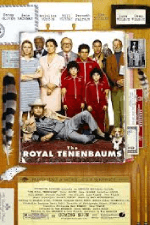 Wes Anderson’s films often feel like well-loved novels you return to again and again. They’re structured like literature — with narrators, chapters, and internal monologues. The narration isn’t just a tool for exposition; it’s part of the charm. It makes you feel like you’re being told a bedtime story with a twist of existential dread.
Think of Alec Baldwin’s soothing voice in The Royal Tenenbaums, or Bob Balaban calmly explaining ecological doom in Moonrise Kingdom. The narrators in Anderson’s worlds are part-author, part-observer — guiding us gently through chaos.
Books live inside his movies, too. Characters are often authors, readers, or romanticizers of their own lives. The French Dispatch is a full-blown love letter to journalism, styled as a literary magazine in motion. Anderson doesn’t just tell stories — he curates them, layering narratives within narratives, like nesting dolls of meaning.
The Wes Anderson Ensemble
Anderson has assembled one of the most consistent and beloved acting troupes in modern cinema. Bill Murray, Jason Schwartzman, Tilda Swinton, Edward Norton, Owen Wilson, Adrien Brody — they appear and reappear like characters in an old photograph. These actors have learned the peculiar rhythm of his dialogue: fast, flat, funny, and just a little heartbreaking.
But what’s remarkable is how he directs them to hold back. Emotions are rarely loud. Smiles are slight. Tears are rare. It’s all about the small reveals — a sudden outburst, a half-finished sentence, a long silence in a meticulously decorated room. That restraint creates space for the audience to lean in, to feel more deeply.
Even newcomers to the Andersonverse — like Frances McDormand or Timothée Chalamet — quickly fall into step. Because in Anderson’s world, acting isn’t about stealing scenes. It’s about inhabiting them.



Soundtrack as Soul
If you ever find yourself unexpectedly emotional during a Wes Anderson montage, thank the music. His soundtracks are legendary — packed with vintage gems, British invasion hits, and melancholy acoustic ballads that feel like secret messages to your heart.
Who else would score a revenge montage with The Rolling Stones, or make a David Bowie song in Portuguese sound like a lullaby? Whether it’s Nico, The Kinks, or Alexandre Desplat’s original scores, the music in Anderson’s films doesn’t just set the mood — it is the mood.
Every track is curated with the precision of a mixtape made for someone you’re secretly in love with. His musical choices are emotional detonators — unexpected, affecting, and often unforgettable.
Beautifully Unreal
 Realism? That’s someone else’s game. Anderson is after something more magical. His films don’t try to mimic real life — they reimagine it. His stories unfold in invented countries, on stylized trains, in pastel-colored apartments filled with artifacts and oddities. And yet, somehow, they feel more emotionally honest than most “realistic” films ever do.
It’s a paradox: the more artificial his worlds become, the more real they feel. Maybe it’s because we’re so disarmed by the whimsy that we let our guard down. Or maybe it’s because Anderson understands something vital — that truth can wear a costume and still be truth.
Whether it’s a fox wearing corduroy or a boy scout falling in love, the emotions remain recognizably human. Anderson’s unreality becomes a mirror — one that reflects our own longing, confusion, and nostalgia, but makes it look a little more beautiful.
A Cinema of One
Wes Anderson isn’t just a director — he’s an auteur in the purest sense. Every film he makes is a personal universe, assembled with the care of a clockmaker and the soul of a poet. In a cinematic world that often feels automated and interchangeable, he remains stubbornly, gloriously himself.
His movies remind us that storytelling is an art, not just a business. That design can be emotional. That style can carry meaning. That there is still room for the handmade, the heartfelt, the strange, and the sincere.
Wes Anderson doesn’t just make movies. He creates worlds where melancholy is beautiful, where the oddballs are heroes, and where every frame is a painting of what it feels like to be alive.
And in doing so, he gives us something rare: a reason to fall in love with cinema all over again.
Read More: