A funeral or a cremation usually has a lot of people. It is not just the family of the person gone. It is the family’s relatives, neighbours and their families, friends of the deceased, friends of the family, and people who simply are there to support those dealing with the loss. In all, it becomes a gathering of many people.
Most of them are not the centre of attention. They are not the most important people in the room. Yet their presence is important. Remove them, and the atmosphere changes completely. The occasion feels emptier, less real, less human.
That is pretty much what junior artists do in films.
A wedding sequence, a busy street, an airport proposal, a school corridor, a college campus, a marketplace, what do all these places have in common? People. Realistically, these spaces are never empty. Main characters cannot simply walk through them alone and have the audience believe it. You need people in the background depending on the situation, doing what would feel natural in the situation, or whatever the story might require.
That is where junior artists come in.
They add value into storytelling by simply being present. They help create a believable world around the characters. Many iconic scenes would feel empty and unrealistic without them. Their job may appear simple, but it needs discipline, professionalism, and patience.
Junior artists are given call sheets. They’re tested on whether they can perform the smallest of tasks convincingly, whether it is walking down a street, talking to someone in the background, or reacting to an event. They are expected to do their job properly because if they don’t, the scene falls short. And if the scene falls short, the eventual suffering is that of the film.
Wouldn’t a film be considered weak or incapable if the world it created did not feel real?
The irony is that audiences rarely notice junior artists when they are doing their job well. We focus on the lead actors, the stars, and the people at the centre of the frame. The people behind them become invisible. Yet, if they’re absent, the effect is grave. The moment those people are removed from a scene, something feels off. We criticize the film. We say it feels staged or artificial. What we are really reacting to is the absence of the people we never paid attention to in the first place.
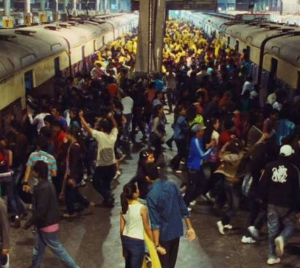
Some of cinema’s most memorable films owe part of their authenticity to junior artists. There is probably no film, or at least very few, that can function without them, especially today. Some epic examples include Saving Private Ryan (1998), an American epic war film directed by Steven Spielberg and written by Robert Rodat; The Lord of the Rings: The Return of the King (2003), an epic fantasy film directed by Peter Jackson, based on The Return of the King, the third volume of J. R. R. Tolkien’s The Lord of the Rings; Lagaan (2001), an Indian Hindi-language epic period sports drama written and directed by Ashutosh Gowariker; Dunkirk (2017), an English historical war film produced, written, and directed by Christopher Nolan; and Slumdog Millionaire (2008), a British drama film directed by Danny Boyle and written by Simon Beaufoy.
What all these films have in common is that their worlds would feel significantly different without the people in the background. In war films, where chaos, scale, loss, and emotion are essential, junior artists are the ones helping create that atmosphere. The people you look past are often the very people adding to the experience, making you feel the intensity of battle, the pain of loss, or the magnitude of a moment. Remove them, and the feeling changes. In these films, authenticity comes from thousands of costumed performers on battlefields, villagers reacting during a tense cricket match, soldiers waiting silently on a beach, and crowded streets, stations, and marketplaces bringing a city to life. Junior artists may not be the focus of the frame, but they are often a massive part of what makes the frame believable.
Despite the constant contribution, junior artists are often overlooked by both audiences and the industry itself. The industry frequently overlooks the hard work, discipline, and patience required from junior artists. As much as a film is everyone’s daily bread, it is theirs too. They are expected to be available when called, often arriving before time because on time is late. They are always there. Yet they are often treated as dispensable.
Lead actors may arrive late, postpone shoots, or request schedule changes, and entire productions adjust around them. Schedules are changed, deadlines are moved, locations are altered, plans are modified according to their convenience because they are the stars of the film. Junior artists, despite also appearing on screen and contributing to the final product, are rarely afforded basic consideration.
Many work long hours under challenging conditions for relatively modest pay. Their roles may be small, but their responsibility certainly isn’t. They must maintain continuity, follow precise instructions, and perform the same actions across multiple takes without complaint.
Their work requires commitment even when recognition feels scarce or entirely absent. And, it is often absent.
Social media campaigns rarely celebrate them. Promotional material almost never highlights them. Award ceremonies do not acknowledge them. Audiences generally do not know their names. Lack of screen time leads to limited visibility, and limited visibility leads to a lack of appreciation.
Ironically, many successful actors began their journeys as junior artists. For some, it was a learning platform. For others, it was a stepping stone towards bigger opportunities. Who knows? There may be a hidden Tom Hanks standing somewhere in the crowd of junior artists we’re looking past.
Just because they’re looked through, does that make them unimportant?
Every frame on screen represents teamwork. Every believable world requires people to inhabit it. Every crowd scene, every marketplace, every classroom, every wedding, every battlefield, and every street owes part of its authenticity to those standing in the background.
Junior artists are not the centre of attention, and perhaps that is exactly why we overlook them. But they are indispensable.
Their success lies in making us believe the world on screen exists beyond the main characters. Their presence makes stories feel real. And perhaps it is time we gave them the recognition they have consistently and quietly earned for decades.
Read More: